

Alabama Oversize Permits: Spring Road Posting Season Guide
Carriers moving loads through Alabama in spring rely on Alabama oversize permits to stay compliant and keep freight on schedule. ALDOT sets clear thresholds for width, height, length, and weight, and any load above those limits needs a permit before it moves. This guide walks through the requirements, the routing factors that shift in spring, and the steps for getting a permit approved with ease.
Understanding Alabama Oversize Permits
Alabama oversize permits cover any commercial vehicle that goes past 8’6″ in width, 13’6″ in height, 40′ in single-vehicle length, or 57′ in truck-semi-trailer length. Weight limits sit at 80,000 pounds gross, with 20,000 pounds allowed on a single axle and 34,000 pounds allowed on a tandem axle. Carriers who confirm these figures early keep their applications accurate and ready for quick approval.
Alabama keeps permit weight limits steady year-round. States such as Michigan and Minnesota apply seasonal frost law programs that lower weight limits during spring thaw, and Alabama runs a different system built on year-round consistency. This steady approach gives carriers a clear, predictable path for planning this permit type at any point on the calendar.
What Changes for Alabama Oversize Permits in Spring
Spring in Alabama brings a rise in road construction and bridge maintenance projects, and this shift affects routing far more than permit thresholds. ALDOT schedules more paving and resurfacing work as the weather warms, and this activity often changes detours and closures along popular freight corridors. Carriers who check current road conditions before filing their application save time and avoid last-minute route changes.
Bridge postings also play a steady role in spring planning. A posted bridge lowers the weight a structure can safely carry, and this limit stays in place regardless of season, so a route that worked in winter may need a fresh check before Alabama oversize permits move through the state in spring. ALDOT also pauses permitted travel during select holiday periods, and a spring shipment that lands near a holiday weekend benefits from early planning around that window.
Alabama Size and Weight Limits at a Glance
| Category | Legal Limit Before Permit Is Required |
| Width | 8’6″ on roadways 12 feet and wider |
| Height | 13’6″ |
| Length, single vehicle | 40 feet |
| Length, truck semi-trailer | 57 feet |
| Legal overhang | 5 feet, front and rear |
| Gross weight | 80,000 pounds |
| Single axle weight | 20,000 pounds |
| Tandem axle weight | 34,000 pounds |
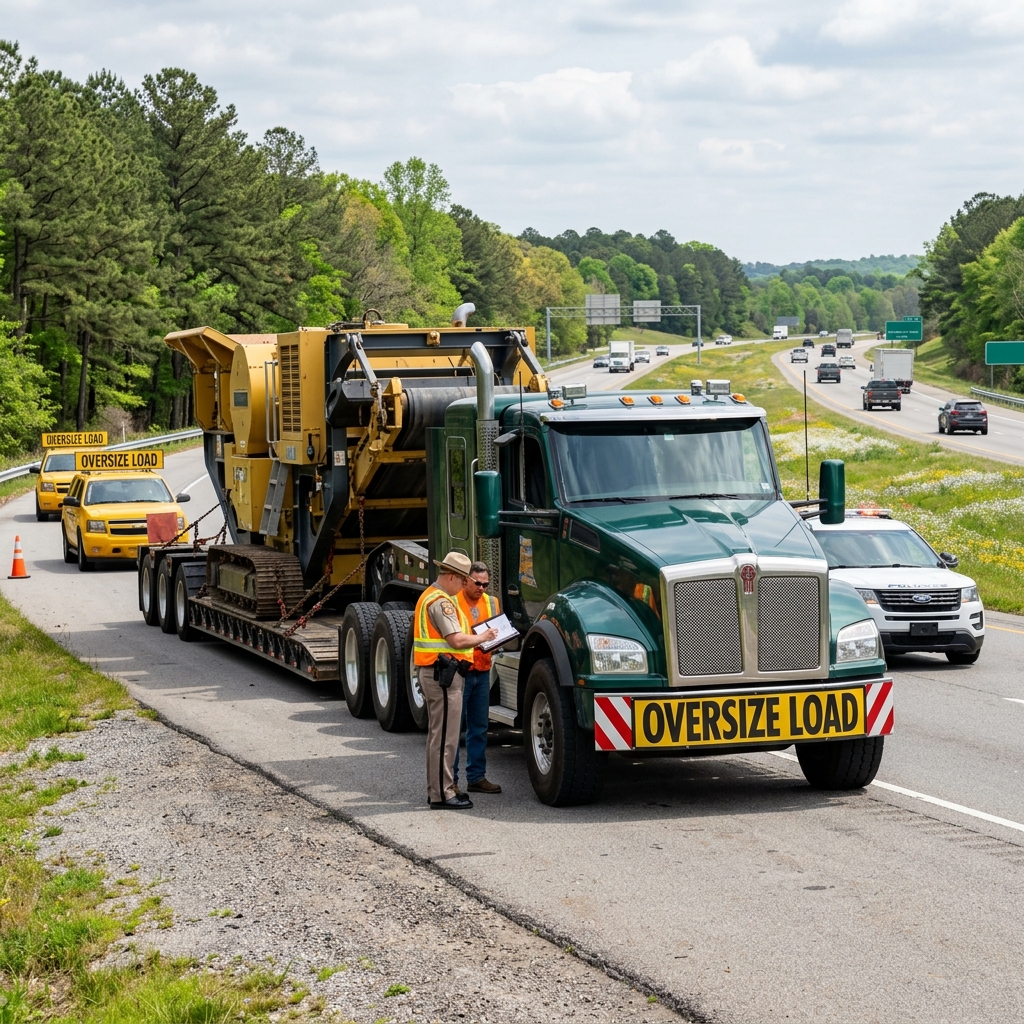
These figures form the baseline for every application, and escort requirements build on them as dimensions increase. Loads over 12 feet wide call for one escort, and loads over 14 feet wide call for a front and rear escort together. A load standing 15 feet 6 inches or taller also calls for a front escort carrying a height pole, and every oversize load carries an “OVERSIZE LOAD” sign along with corner flags for visibility.
How To Apply for Alabama Oversize Permits
The process starts with locking in final dimensions and weight, since ALDOT reviews every application against these exact figures. Next, you select a route, and it must be checked against current closures and bridge postings before submission, since route conflicts are one of the most common reasons an application is delayed. Most standard Alabama oversize permits move through ALDOT’s online portal, while a superload or a route requiring advance approval needs additional documentation, such as a route survey or an engineering review.
Fees scale with dimensions, route length, and permit duration, and a single-trip permit uses a different fee structure than an annual permit. Processing moves quickly for standard applications, while a complex move calling for multiple agency approvals benefits from extra lead time. Carriers working with a permit specialist gain a faster path through each step, since a specialist catches routing conflicts and paperwork gaps before ALDOT ever sees the application.
Planning Tips for Spring Hauls Through Alabama
A route check before every haul keeps a carrier ahead of new construction detours, since spring activity shifts these details with unusual frequency compared with any other season. Loads approaching superload thresholds benefit from early filing, since advance routing and engineering review both add time to the process. Escort and signage requirements deserve a final check against actual load dimensions before dispatch, since this step protects a carrier from a costly stop at the scale.
A rate estimate gathered before a bid keeps permit and routing costs within the numbers a carrier commits to well before the load moves. <a href=”/estimates”>A rate quote</a> from a specialist covers this ground quickly, and it pairs well with a route review handled by the same team. Carriers who build these two steps into their spring planning keep permits moving through approval with fewer surprises along the way.
Get Your Alabama Oversize Permit Fast
Reliable Permit Solutions brings over 20 years of experience in oversize, overweight, and superload permitting, and we stay closely aligned with Alabama’s construction season and bridge posting changes. We handle the routing, paperwork, and follow-up so a carrier’s Alabama oversize permits move through approval quickly and accurately. Call (888) 949 4220 for help today, and ask about our Spanish-speaking agents for support in either language.
<a href=”/overweight-oversize-load-permitting”>Start your Alabama oversize permit today</a>
Frequently Asked Questions
Does Alabama apply seasonal weight restrictions in the spring?
Alabama keeps permit weight limits steady year-round, unlike states that lower limits during the spring thaw. Carriers planning Alabama oversize permits through Alabama work with the same thresholds in spring as any other time of year. This consistency gives fleets a predictable baseline for every load moving through the state.
What size load calls for an oversize permit in Alabama?
A load over 8’6″ in width, 13’6″ in height, or 40 feet in length requires an ALDOT oversize permit, with 57 feet allowed for a truck semi-trailer combination. Weights over 80,000 pounds gross also require a permit. These figures form the starting point for every application filed with the state.
What is a bridge posting in Alabama?
A bridge posting is a weight limit sign placed on a specific bridge, set below the standard legal limit due to the structure’s condition or design. This posting stays active year-round and can shift a route even when a load has full permit approval. Checking current postings before filing keeps a route accurate from the start.
How long does approval take for Alabama oversize permits?
Standard oversize and overweight permits move quickly through ALDOT’s online system in most cases. A superload or a move requiring advance routing, bridge review, or multiple agency approvals takes longer and benefits from extra lead time. Filing early gives every step room to clear before a scheduled haul date.
Does an oversize load in Alabama need an escort?
An escort is needed for loads over 12 feet wide, and a load over 14 feet wide requires two escort vehicles. A load over 14 feet wide requires both a front and rear escort, and a load standing 15 feet 6 inches or taller requires a front escort with a height pole. Every oversize load also carries required signage and corner flagging for visibility.
Are there holiday travel restrictions for oversize loads in Alabama?
ALDOT pauses permitted oversize and overweight travel during select holiday periods due to increased traffic. A spring shipment landing near a holiday weekend benefits from a schedule built around this pause. Planning pickup and delivery windows with this in mind keeps a load moving smoothly.
Which roads work best for oversize freight in Alabama?
Interstate 65, Interstate 20, Interstate 59, and Interstate 85 serve as the main corridors for oversize freight across Alabama. Local roads and bridges along a route often have their own weight or clearance limits, so it’s worth checking case by case. A route review ahead of filing catches these details before they become a delay.
Can an approved route change after a permit is issued?
A new bridge posting or construction closure can affect an approved route, and this shift may call for an amended permit before travel continues. Checking current road conditions before filing reduces this risk from the start. A carrier working with a permit specialist gains an extra layer of route review throughout the process.
Does spring construction affect Alabama oversize permit routes?
ALDOT schedules a heavier share of paving and bridge work in spring, and this activity shifts detours along popular freight corridors more frequently during this season. A route confirmed in winter benefits from a fresh check before a spring haul begins. This step keeps a permitted route accurate and ready for travel.
How does a specialist help with this permitting process?
A specialist checks dimensions, routes, and paperwork before an application reaches ALDOT, catching conflicts early and keeping the process moving. This support pairs well with a rate estimate gathered ahead of a bid, giving a carrier full visibility into permit and routing costs. Working with a specialist keeps every step on schedule.