
Seven Ways an Oversize Permit Gets Voided at the Scale (and What Each One Costs You)
An oversize permit is a promise. It says this truck, carrying this load, at these dimensions, will run this route, inside this window. Break any piece of that promise and the paper in your hand stops being a permit. The officer at the scale isn't being difficult when he tells you it's void. He is reading what is on the page and looking at what is on the trailer.
I've been issuing permits since September 2006. In twenty years, the ways a good permit turns into a bad one haven't changed much. Here are the seven I see most, what each one costs when it goes wrong, and how to keep it from happening to you.
In this article
- The load isn't the size on the permit
- You're not on the route
- You're moving at the wrong time
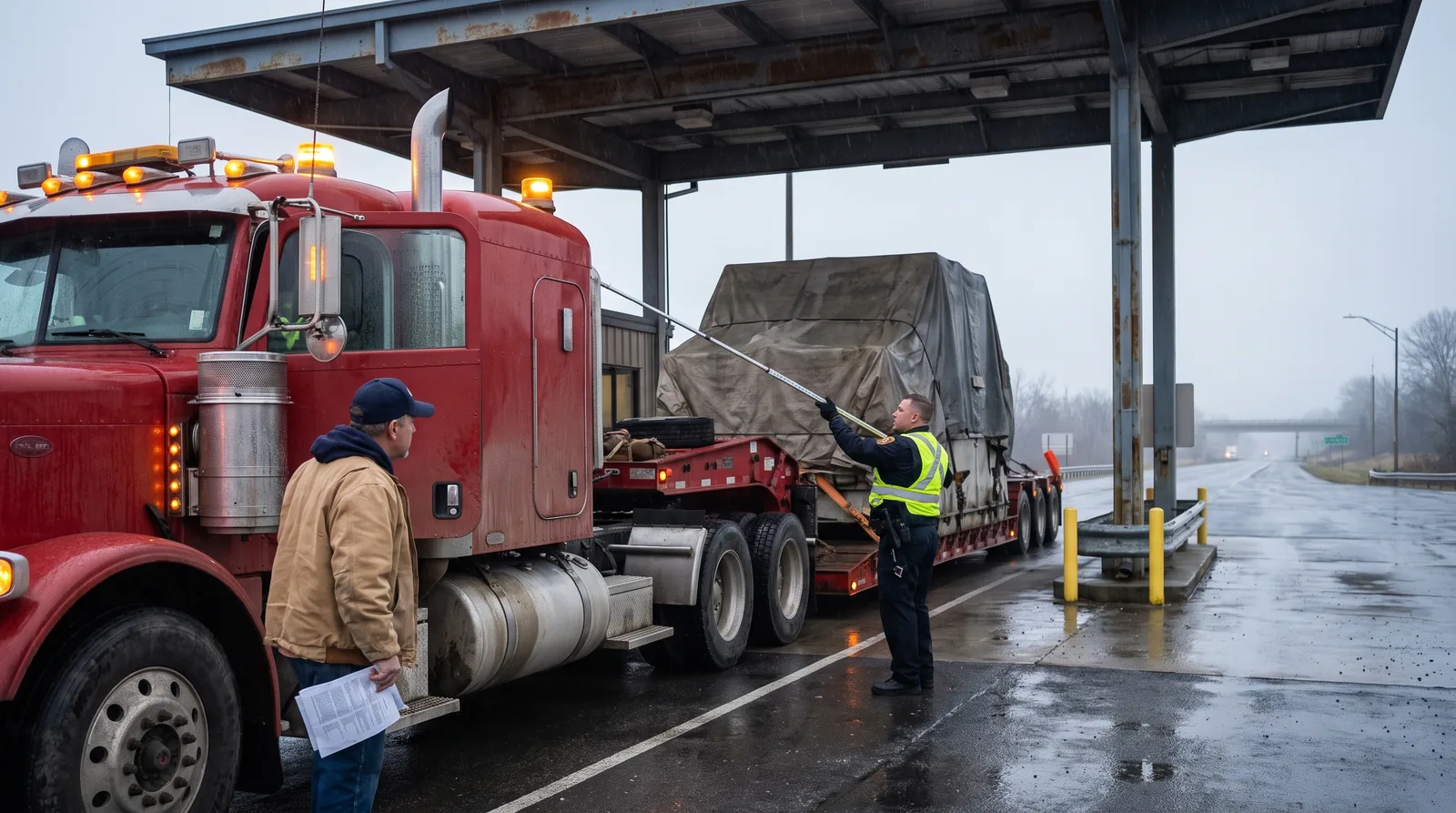
- The truck on the permit isn't the truck under the load
- The permit expired before you got there
- Your escorts, signs and flags don't match the permit
- You went around the scale
- What happens after a permit is voided
- How we keep this from happening
- Questions drivers ask us
1The load isn't the size on the permit
Two inches voided a permit in Arkansas. A load came in sitting on a wooden skid, the yard turned it ninety degrees when they reloaded it, and the driver figured the skid was square. It measured 144 inches one way and 142 the other. The permit said one width. The trailer showed another. The trooper did not care that it was close. The permit was voided, the driver was ticketed, and the truck sat until a new one came through.
Measure the truck, not the freight. The number that matters is the widest, tallest and longest point of the whole combination as it rolls down the road. The skid under the machine. The tarp and the dunnage. The handle somebody forgot to fold in. The door that swings an inch past the frame. The chain binder hanging off the side. If you're a hair over on height, that isn't a rounding error. In a lot of states it's a different permit, and sometimes a different route.
Drivers argue about whether to permit "a little high" to be safe. Here's my honest answer: permit the real load. Overstate the width and the permit office may route you around a bridge you could have cleared, and now you're running eighty extra miles with an escort you didn't need. Give us the actual numbers and we'll tell you what they trigger.
2You're not on the route
Your GPS doesn't know you're sixteen feet tall. It knows you're a vehicle, and it knows a shorter way. The route printed on your permit is the only road the permit covers. Not the road that runs parallel to it. Not the detour around the wreck. Not the shortcut that saves twenty minutes. The state picked that route because every bridge and overpass on it was checked against your height and your weight. Leave it, and nobody has checked anything.
A driver in Washington State learned that with a 232,000-pound rig. He got off onto county roads, broke down, and when the troopers arrived they worked out that he had crossed a bridge posted for 105,000 pounds. The citations added up to more than $40,000, written to him personally.
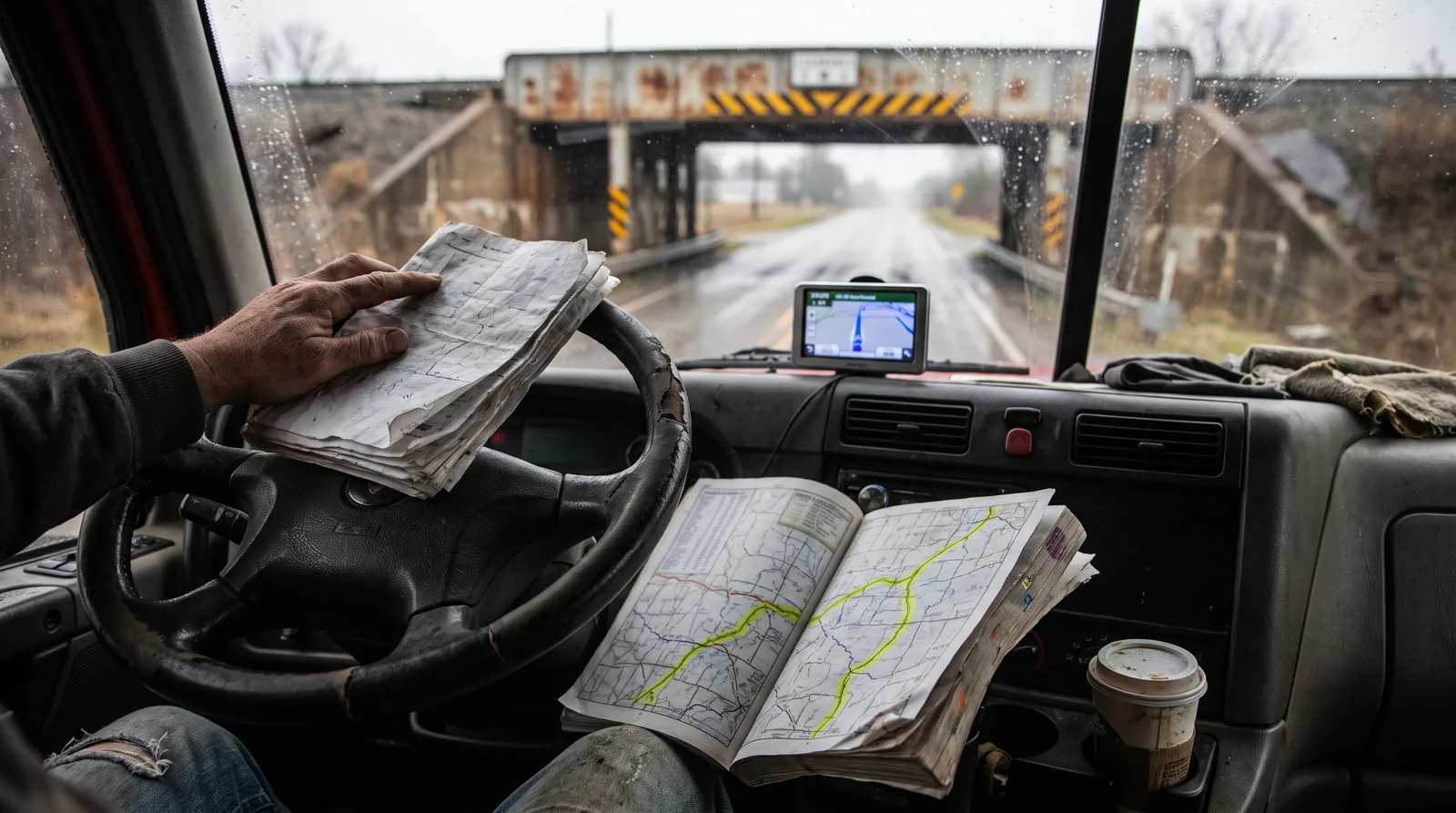
When the road is closed, stop. Call the state permit office, or call us. In most states a route can be amended before you move. It cannot be forgiven after you've moved.
3You're moving at the wrong time
Most states only let oversize loads move in daylight, and many define daylight tightly, something like a half hour before sunrise to a half hour after sunset. On top of that come weekend bans for the wider loads, rush-hour curfews around the big cities, and holiday closures that start at noon the day before and don't match from one state line to the next.
Florida doesn't just fine you for this one. It parks you. A permitted vehicle caught moving outside its travel hours is assessed $1,000 and, in the rule's own words, "parked at owner's expense and responsibility" until the next legal travel period. Cross the line at 5:40 on the Friday of a holiday weekend and you may be looking at that rest area until Tuesday morning. The hotel is on you.
Read the travel-hours line on every permit before the wheels turn, not when the sun gets low. Our holiday closure list puts every state and province side by side, and we update it ahead of each holiday. For the year-round rules, see our state-by-state travel restrictions guide.
4The truck on the permit isn't the truck under the load
A permit is issued to a specific vehicle. Plate, VIN, USDOT number, and in many states the trailer too. Swap tractors in the yard because the first one threw a code, and the permit stays with the truck that's parked. Hook a different trailer, and the axle spacing on the permit no longer matches the axle spacing under the load. Overweight permits are built on axle spacing.
Then there's the typo. A VIN is 17 characters. Get one of them wrong and the permit describes a truck that doesn't exist. This is the one that keeps me up at night, because it's the one my office can cause. It's why we don't retype your information. When your dimensions come in by email, our system reads them straight into the order, about twenty seconds from your email to a structured order, with nobody transcribing in between. When you call, our phone system listens and prompts the specialist if a dimension hasn't been captured yet. And if we ever do put a wrong character on your permit, that's our mistake and we pay for it, not you.
5The permit expired before you got there
A single-trip permit lives inside a window. Depending on the state, that window is somewhere between three and ten days. A breakdown, a weather day, a shipper that loads you a day late, and the permit that was good on Monday is just paper on Friday. An expired permit is treated the same as no permit.
Most states will extend a permit if you ask before it runs out. Almost none will after. If the delay shows up on a Thursday afternoon, make the call Thursday afternoon.
6Your escorts, signs and flags don't match the permit
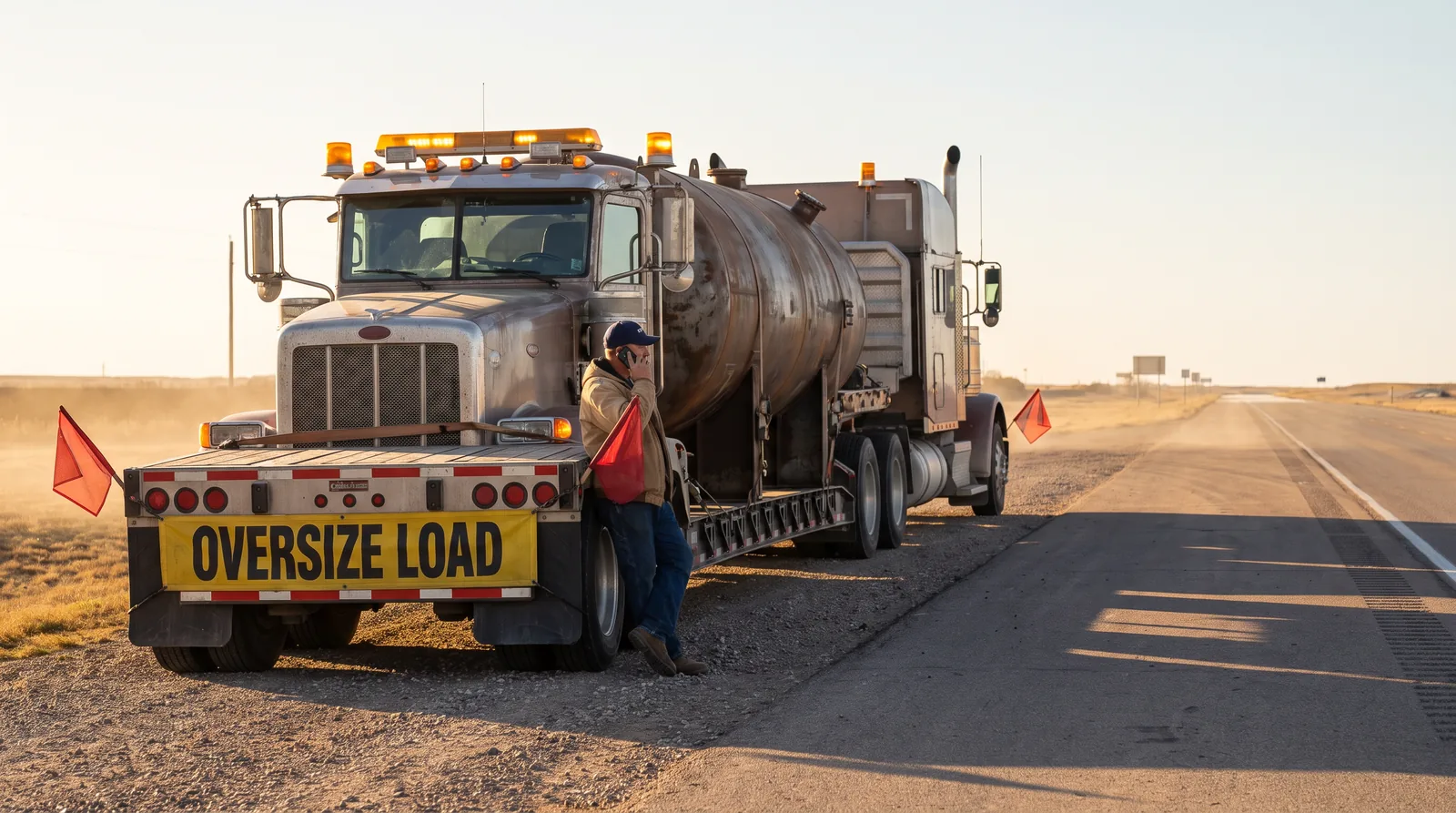
The permit tells you how many escorts you need, where they ride, and what has to hang on the load. North Carolina's fine for running without the proper number of certified escorts is $1,500, three times what it charges for most other permit violations. Flags are generally red or orange, 18 inches square, at the widest points and the extremities. Banners have to say OVERSIZE LOAD in letters big enough to read, and many states also want a sign with the owner's name and phone number on both sides of the truck. Faded, torn, undersized or missing, and the officer now has a reason to look hard at everything else.
Escort certification is its own trap. Several states require pilot-car drivers to hold that state's certification, and a card that's good in one state isn't automatically good in the next. When we coordinate your pilot cars, the escort count, placement and certification are matched to the permit, not guessed at. The state-by-state escort rules are on the blog if you want the detail.
7You went around the scale
When you're fourteen feet wide, the scale is where they expect to see you, and the officer in the booth is the one person on the road who knows exactly what your permit says. Going around it does two things at once. In Florida, a permitted vehicle that bypasses an open weigh station is assessed $1,000 on its own. And the road you took around it isn't on your permit, so you're back to number two. Pull in. If the permit is right, the stop takes ten minutes.
What happens after a permit is voided
- You stop moving. The truck is held until it's legal: a new permit, a smaller load, or the next travel window. Florida's rule requires the vehicle to correct every irregularity or obtain a new permit for the actual load before it's released.
- The ticket goes to the owner. North Carolina assesses its civil penalties against the registered owner of the vehicle, not the driver. If you're an owner-operator, that's the same person.
- The permit office remembers. North Carolina's handbook says plainly that a violation or repeated violations may result in denial, suspension or revocation of the state's permit privileges. Other states keep similar files.
- Your safety record can feel it. Weight and permit citations can show up in a carrier's FMCSA safety data, where they follow you into audits and insurance renewals.
How we keep this from happening to our customers
Four thousand jurisdictions, each with its own quirks, and the same handful of mistakes over and over. Here's what twenty years taught us to build into every order.
- We ask for the loaded combination, not the freight. Overall width, height, length and weight as it will go down the road, with the odd pieces called out.
- We don't retype what you send. Your email becomes a structured order in about twenty seconds, with no transcription in between.
- The permit reaches you the moment it's issued. Every permit we process goes out to you automatically, so there's no gap between "approved" and "in the cab."
- We know the local gotchas. The county that wants its own permit for the off-ramp. The city with a curfew that isn't on the state permit. The bridge that got re-posted last spring. That is the whole reason a permit service exists.
- You can call from the road. Most of our customers get the first state's permit, start rolling, and call for the next states from the cab. That's how this business has worked since 2006, and it's why the phone is our front door.
If you ever need a permit, click to call.
A specialist picks up. Oversize, overweight, superload, trip and fuel permits in every U.S. state and Canadian province.
Call (888) 949-4220Questions drivers ask us
What voids an oversize permit?
Anything that makes the truck on the road different from the truck on the paper: different dimensions or weight, a different route, moving outside the permitted travel hours, a different tractor or trailer than the one listed, an expired permit, or missing escorts, flags and signs. Many states also void the permit if you bypass an open weigh station.
Can I take a detour on an oversize permit?
No. The route on the permit is the only route it covers. If a road is closed, stop and call the state permit office or your permit service to have the route amended before you move. Detouring without an amendment is treated as operating without a permit.
What happens if I'm caught oversize without a permit?
The truck is stopped until it is legal, which means a new permit for the actual load, a smaller load, or waiting for the next legal travel window. Fines are set by each state. North Carolina, for example, assesses the registered owner $500 plus a civil penalty of up to $10,000, and Florida penalizes overweight by the pound and oversize by the foot.
Can an oversize permit be extended?
In most states, yes, if you ask before it expires. After it expires you are generally buying a new permit. Call as soon as you know you will be late.
How wide can a load be before it needs a permit?
On the Interstate and the National Network, federal rules set the standard maximum width at 102 inches, which is 8 feet 6 inches. There is no federal height limit; states set their own, usually 13 feet 6 inches to 14 feet. Gross weight on the Interstate is capped at 80,000 pounds. A non-divisible load over any one of those limits needs a permit from every state it crosses.
Sources
Rules checked October 13, 2026. Penalties change, and the permit in your cab plus the issuing state's current rule are always the final word.
- Florida Administrative Code Rule 14-26.015, Penalties (Cornell Legal Information Institute)
- North Carolina DOT Oversize/Overweight Permit Handbook (PDF)
- FHWA, Federal Size Regulations for Commercial Motor Vehicles
- TruckersReport, Driver Fined $40,000 for Overweight Truck
- TruckersReport forum, Illinois Oversize Load Questions (the 144 by 142 inch skid)
- Patch Danbury, Overweight Trucker Hit With Heavy Fine