

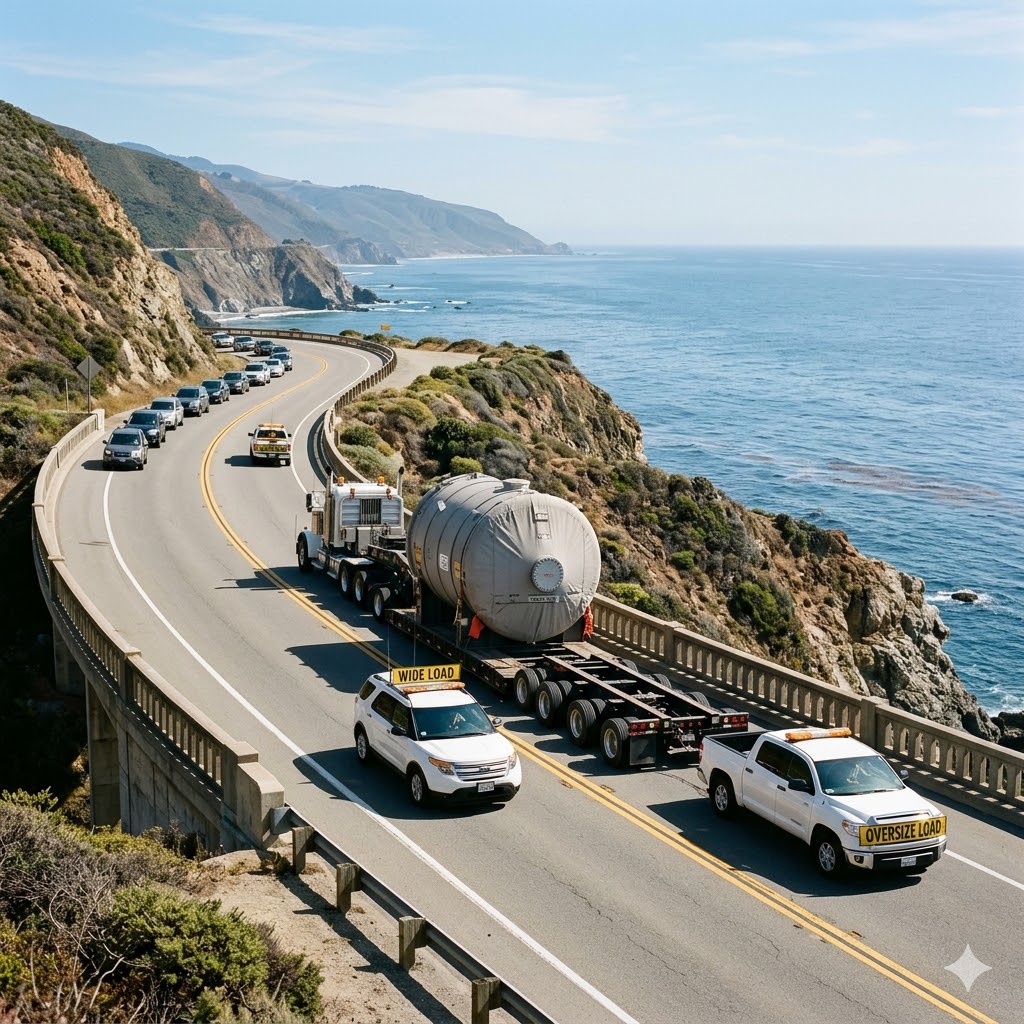
California’s position as the nation’s largest economy creates a complex regulatory environment for oversize load operations. Caltrans oversees comprehensive regulations that balance massive commercial transportation needs against infrastructure protection, environmental concerns, and public safety. Understanding California’s unique approach to oversize regulation proves essential for carriers serving the Golden State’s diverse markets and challenging terrain.
Caltrans Authority and Jurisdiction
The California Department of Transportation maintains authority over oversize load regulations on state highways and interstates throughout California. Caltrans develops policies, reviews permit applications, and enforces compliance across California’s extensive highway system. Their jurisdiction covers routes carrying the vast majority of California’s interstate and intrastate commerce.
Local control complicates California operations as cities and counties maintain authority over local roads. Major metropolitan areas including Los Angeles, San Diego, San Francisco, and Sacramento each have complex local regulations layering onto Caltrans requirements. Some cities require separate permits for oversize loads on city streets even when state permits authorize state highway travel.
Port authorities add another regulatory layer for loads moving to or from California’s major ports. Los Angeles, Long Beach, Oakland, and other port facilities have specific requirements for oversize cargo moving through their jurisdictions. Coordinating port authority, city, and Caltrans permits becomes necessary for complete authorization.
California Size and Weight Limits
Width limits in California restrict legal loads to 8 feet 6 inches without permits. Caltrans permits typically authorize widths up to 12 feet on most routes, with loads between 12 and 14 feet requiring special review. Widths exceeding 14 feet face significant restrictions and may be prohibited entirely on many routes due to California’s heavy traffic and infrastructure constraints.
Height restrictions account for California’s numerous overhead structures including bridges, signs, and utility lines. Standard legal height reaches 14 feet, with permitted loads potentially reaching 15 feet on verified routes. California’s diverse geography from coastal areas to mountain passes creates dramatic height clearance variations. Detailed route analysis becomes critical for taller loads.
Length regulations distinguish between vehicle types and configurations. Single units face 40-foot limits without permits, while combination vehicles have complex rules based on trailer types and overall length. California’s length regulations rank among the nation’s strictest, reflecting dense traffic conditions and challenging urban navigation. Weight limits of 80,000 pounds apply on interstates, with lower limits on many state routes and all local roads.
Permit Categories and Types
Ordinary permits cover standard oversize loads on established routes during normal operating conditions. These permits process relatively quickly when applications meet requirements and proposed routes prove feasible. Ordinary permits work well for regular commercial hauling within California’s common dimensional ranges.
Annual permits serve carriers with consistent California oversize needs. These permits establish pre-approved routes and load specifications valid for entire years. While requiring substantial upfront investment, annual permits dramatically simplify operations for frequent California haulers. Caltrans reviews annual permits periodically and may require modifications based on infrastructure changes.
Special transportation permits address unusual loads including superloads exceeding standard oversize dimensions. These permits require extensive engineering review, detailed route surveys, and often structural assessments. Processing times extend significantly, sometimes requiring months for complete approval. Special permits may impose unique conditions including time restrictions, utility coordination, or infrastructure modifications.
Environmental Regulations
California Air Resources Board requirements affect truck operations including oversize hauling. CARB regulations address emissions from vehicles operating in California, requiring compliance with California’s strict emission standards. Older vehicles may need upgrades or face restrictions on California operations, affecting fleet planning for carriers serving the state.
Idling restrictions limit engine operation while stationary, affecting loading, unloading, and staging activities. California’s anti-idling regulations apply to all commercial vehicles including those hauling oversize loads. Carriers must plan operations accounting for idling restrictions that may affect route timing and rest periods.
Environmental review requirements apply to some superload operations particularly those affecting sensitive areas. Loads crossing protected environmental zones may need additional assessments beyond standard permitting. This environmental scrutiny adds layers to California’s already complex permitting environment.
Urban Area Challenges
Los Angeles metropolitan area presents perhaps the nation’s most challenging environment for oversize operations. The region’s massive population, dense development, and heavy traffic create practical limitations beyond formal regulations. Many LA-area routes effectively prohibit oversize loads due to congestion, narrow streets, or parking patterns even without official restrictions.
Operating hours restrictions protect peak traffic flow in urban areas. Many California cities prohibit oversize loads during morning and evening rush hours when congestion peaks. Some routes face weekend restrictions during high-traffic periods. Urban time restrictions require careful scheduling coordinating deliveries with permitted travel windows.
Local permit requirements in California cities add complexity to urban operations. Cities like San Diego, Sacramento, and San Jose each maintain distinct requirements beyond Caltrans permits. Some require advance notice, others demand specific routing approvals, and many charge separate permit fees. Coordinating these local requirements with state permits prevents gaps in authorization.
California Highway Restrictions
Turnpike and toll facility restrictions affect major California corridors. Facilities like Bay Area bridges impose specific requirements for oversize loads including advance notification and sometimes peak-hour prohibitions. Toll authority coordination becomes necessary for routes using these critical crossings.
Mountain pass considerations present significant challenges for oversize operations. Routes through the Sierra Nevada, across coastal ranges, or through southern California mountains face steep grades, sharp curves, and seasonal closures. Winter conditions can make passes impassable, requiring lower-elevation alternatives. Route planning must account for elevation changes affecting vehicle performance and braking capacity.
Coastal route complications include drawbridge schedules, tourist traffic, and scenic highway restrictions. Pacific Coast Highway and other coastal corridors attract heavy recreational traffic during peak seasons. Some scenic routes face outright prohibitions or severe restrictions on commercial oversize loads protecting tourism and environmental resources.
Bridge and Infrastructure Limitations
California maintains thousands of bridges with varying ages and capacities. Earthquake retrofitting programs have strengthened many structures but also created temporary restrictions during construction. Bridge analysis forms critical components of California permit applications as authorities verify structure capacities for heavy loads.
Seismic considerations affect load routing particularly in earthquake-prone regions. Some bridges have restrictions based on seismic risk assessments, limiting loads during certain periods or under specific conditions. These seismic-based restrictions reflect California’s unique geological challenges.
Ageing infrastructure throughout California creates increasing capacity constraints. Many bridges and road segments date from mid-twentieth century with original designs not anticipating modern traffic volumes or load sizes. Caltrans manages this aging infrastructure through careful permitting that protects structures while accommodating essential commerce.
Time and Travel Restrictions
Daylight operation requirements limit most California oversize loads to one-half hour after sunrise to one-half hour before sunset. This standard recognizes that California’s heavy traffic makes oversize operations more hazardous after dark. Some routes allow nighttime travel with enhanced safety measures including additional lighting and escort vehicles.
Rush hour prohibitions protect peak traffic flow in urban areas. Many routes prohibit oversize loads during morning rush from 6 to 9 AM and evening rush from 3 to 7 PM. These restrictions mean urban deliveries must occur during narrow mid-day windows or early morning hours before traffic builds.
Holiday and weekend restrictions activate during high-volume travel periods. Major holidays see outright bans on oversize loads throughout California. Summer weekend restrictions protect recreational traffic on routes serving tourist destinations. These restrictions require flexible scheduling accommodating substantial blackout periods.
Escort Requirements
California establishes detailed escort requirements based on load dimensions. Loads between 12 and 14 feet wide typically need one escort vehicle. Widths exceeding 14 feet or heights over 15 feet generally require front and rear escorts. Extremely large loads may need police escorts providing traffic control authority beyond civilian escorts.
Escort vehicle specifications cover equipment, signage, and lighting. California requires specific oversize load signs, amber rotating lights, and communication capability between escorts and permitted vehicles. Escort equipment standards ensure consistent warning systems throughout California’s diverse operating environments.
Certified escort services provide professional operators meeting California requirements. While state certification isn’t mandatory, experienced California escort companies understand regional routing challenges and regulatory nuances. Professional escorts navigate California’s complex urban environments, mountain passes, and heavy traffic conditions effectively.
Compliance and Enforcement
California Highway Patrol enforces oversize regulations through weigh stations, mobile units, and fixed checkpoints. CHP officers verify dimensional compliance, permit validity, and equipment requirements. California’s enforcement intensity reflects the state’s strict regulatory approach and infrastructure protection priorities.
Weigh station procedures include thorough dimensional verification and documentation review. Officers measure loads, check weights, and verify permits match load specifications. California weigh stations operate 24/7 on major corridors, making avoidance impractical and illegal. Carriers must maintain complete documentation readily accessible for inspection.
Violation penalties in California rank among the nation’s steepest. Operating without required permits risks substantial fines, vehicle impoundment, and criminal charges for serious violations. Infrastructure damage claims can result in civil liability beyond criminal penalties. California’s strict enforcement makes compliance essential for carriers serving the state.
Seasonal Considerations
Fire season restrictions activate during high fire danger periods typically from summer through fall. California prohibits or restricts travel in high-risk areas when fire danger peaks. These restrictions protect against vehicle breakdowns or accidents potentially sparking wildfires in tinder-dry conditions.
Winter weather in mountain regions creates seasonal closures and restrictions. Sierra Nevada passes may close entirely during storms or require chain installations that complicate oversize operations. Winter restrictions often force lower-elevation routing that adds distance and time to mountain crossings.
Agricultural season impacts affect rural areas during planting and harvest periods. Heavy agricultural vehicle traffic combines with oversize loads on rural roads serving farming regions. Coordination and timing prevent conflicts during peak agricultural seasons.
Interstate Commerce Coordination
California’s position as a major destination and origin point means most California oversize loads involve interstate commerce. Coordinating California permits with neighboring state requirements ensures seamless operations. Differences between California and neighboring state regulations create compliance challenges at borders.
Port operations connecting international commerce to inland destinations require coordinating multiple jurisdictions. Loads moving from Los Angeles or Long Beach ports to inland destinations must navigate city, county, and state requirements. This multi-jurisdictional complexity makes California among the most challenging states for oversize permitting.
Border crossing coordination with Oregon, Nevada, and Arizona involves understanding how different state regulations interact. What qualifies for permits in one state may exceed limits in another, requiring load modifications or specialized routing. Professional permit services coordinate these interstate considerations efficiently.
Recent Regulatory Developments
Electronic permitting systems have modernized California’s application processes. Online portals expedite submissions and approvals for standard permits while maintaining thorough review standards. However, complex loads or routes still require detailed review and coordination extending processing times.
Infrastructure assessment programs affect routing as Caltrans evaluates bridge conditions and updates capacity ratings. Structures downgraded from previous ratings require route modifications for heavy loads. Ongoing infrastructure work creates temporary restrictions and closures affecting permit routing.
Policy updates addressing climate change and environmental protection increasingly affect oversize operations. California leads in environmental regulation, and these policies extend to commercial transportation including oversize hauling. Staying current with policy developments prevents compliance issues from evolving requirements.
Professional California Services
Reliable Permit Solutions brings extensive California experience including deep knowledge of Caltrans requirements and local jurisdiction regulations. Our specialists understand urban routing challenges, mountain pass limitations, and seasonal restrictions throughout the Golden State. We coordinate complex multi-jurisdictional permitting ensuring complete authorization for California operations.
Established Caltrans relationships help expedite permit processing and resolve application questions efficiently. Our volume of California permits and professional reputation facilitate smooth interactions with authorities. These relationships prove particularly valuable for complex loads or routes requiring detailed coordination.
Route consulting addresses California’s unique challenges including urban congestion, mountain passes, bridge limitations, and seasonal restrictions. We develop practical routing that accounts for real-world conditions rather than theoretical paths. Our expertise prevents delays from routing that proves impractical during actual operations.
Contact Reliable Permit Solutions at (888) 949-4220 for expert California oversize permitting and route consulting. Our specialists deliver fast turnaround while ensuring complete compliance with Caltrans and local jurisdiction requirements throughout the Golden State.