

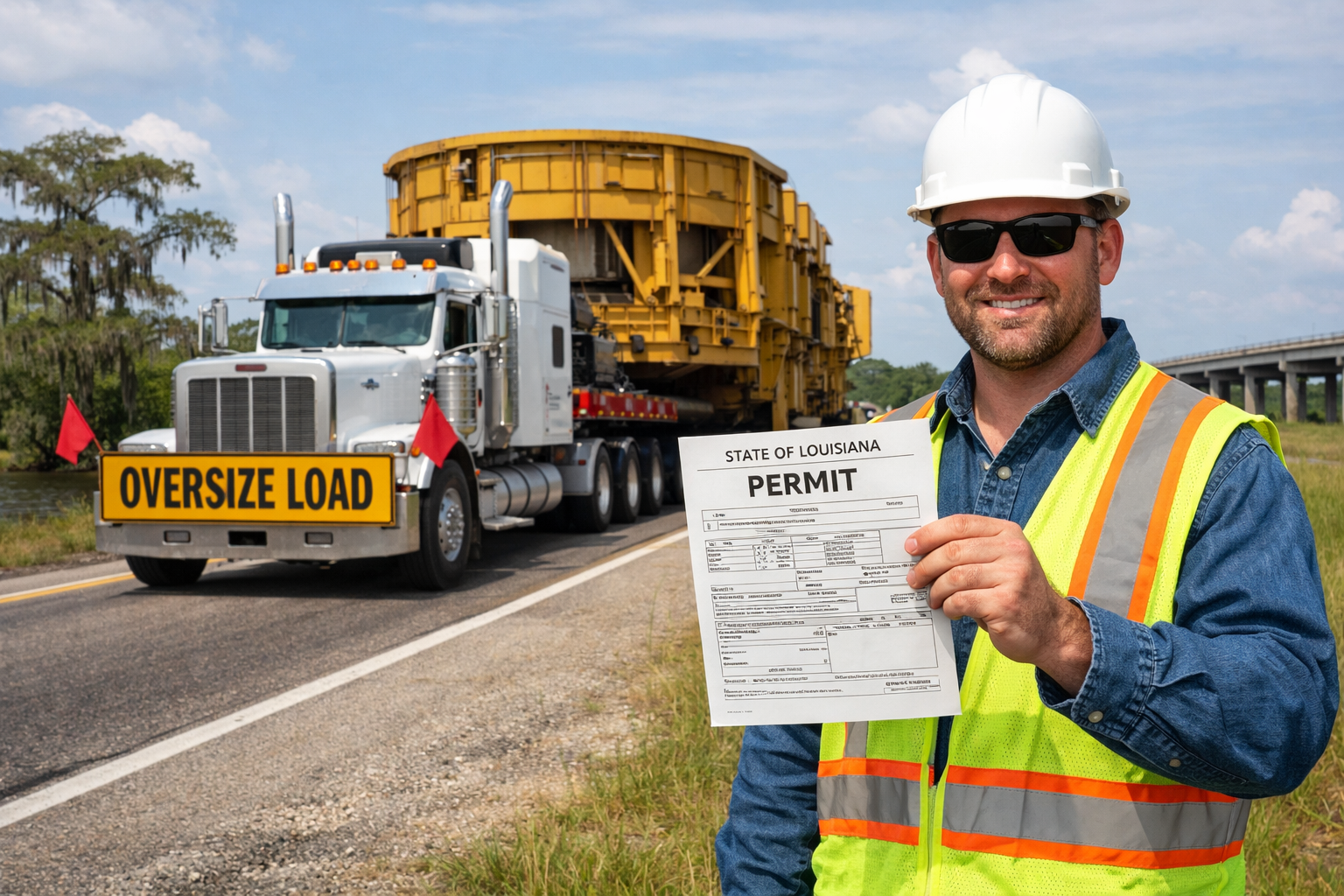
Operating oversized loads through Louisiana requires careful navigation of state regulations and permitting requirements. Whether you’re hauling construction equipment, modular buildings, or industrial machinery through the Pelican State, understanding Louisiana oversize permit requirements ensures compliance and prevents costly delays.
When Do You Need a Louisiana Oversize Permit?
Louisiana requires oversize permits when your commercial vehicle exceeds standard legal dimensions. The state defines oversize loads as vehicles or loads that exceed any of the following thresholds:
- Width over 8 feet 6 inches
- Height over 14 feet 6 inches
- Length over 53 feet for a single unit or 65 feet for combinations
- Gross weight over 80,000 pounds
Even if only one dimension exceeds these limits, you’ll need an oversize load permit to travel legally through Louisiana.
The Louisiana Department of Transportation and Development oversees all oversize permitting. They evaluate each permit application based on load dimensions, weight distribution, route conditions, and bridge capacities throughout your intended path. This comprehensive review protects Louisiana’s infrastructure while accommodating the commercial trucking industry’s needs.
Louisiana Size and Weight Limits
Understanding Louisiana’s specific dimensional limits helps carriers determine when permits are necessary. For width, Louisiana allows up to 8 feet 6 inches without a permit, but permits can authorize widths up to 12 feet on most routes. Exceptional circumstances may allow wider loads with special routing and escort requirements.
Height restrictions in Louisiana account for numerous bridges and overpasses throughout the state. The standard legal height of 14 feet 6 inches applies statewide, though some routes have lower clearances. Louisiana’s diverse terrain, from coastal areas to northern parishes, means height restrictions vary significantly by location. Permit applications must include specific routing to verify adequate clearance throughout the journey.
Length regulations distinguish between single units and combination vehicles. Louisiana permits single units up to 53 feet and combinations up to 65 feet without permits. Longer loads require special permitting with route analysis to ensure safe navigation through intersections, curves, and urban areas. Weight limits of 80,000 pounds gross vehicle weight apply to most interstate highways, while state routes may have lower limits requiring careful load distribution and permitting.
Types of Louisiana Oversize Permits
Louisiana offers several permit types to accommodate different hauling needs:
- Single trip permits cover one specific journey with defined origin, destination, and dates. These work well for unique loads or infrequent oversize hauling through Louisiana. The permit specifies your exact route, travel dates, and any conditions like escort requirements or travel time restrictions.
- Multi-trip permits provide cost efficiency for carriers making multiple trips over the same route with similar loads. Valid for up to 30 days, these permits reduce paperwork while maintaining compliance with Louisiana regulations. Carriers must ensure each trip matches the permit specifications regarding load dimensions and routing.
- Annual permits serve carriers with consistent oversize hauling needs throughout Louisiana. These permits establish predetermined routes and load parameters for an entire year, streamlining operations for companies with regular oversize transportation requirements. While annual permits cost more upfront, they deliver significant savings and operational efficiency for frequent haulers.
- Superload permits address extremely large or heavy loads exceeding standard oversize dimensions. These specialized permits require extensive engineering analysis, route surveys, and often bridge inspections. Processing times extend significantly as Louisiana authorities evaluate infrastructure capacity and determine necessary precautions for these exceptional loads.
Louisiana Permit Application Process
Applying for Louisiana oversize permits requires detailed information about your vehicle, load, and intended route. The application process begins with gathering essential documentation including:
- Vehicle registration
- Proof of insurance with adequate coverage limits
- Complete load specifications including precise measurements for width, height, length, and weight
- Load descriptions and axle configurations
Route planning forms a critical component of permit applications. Louisiana evaluates proposed routes for bridge capacities, road conditions, overhead clearances, and traffic patterns. Applications must include complete routing details from entry point to exit point, including any state highways, parish roads, or local streets. Alternative routes may be required if your preferred path has limitations.
Processing times vary based on load dimensions and routing complexity. Standard oversize permits typically process within two to five business days, while superloads may require weeks or months for engineering reviews and approvals. Submitting accurate, complete applications accelerates the process and prevents delays from requests for additional information.
Travel Restrictions and Timing Considerations
Louisiana imposes specific travel restrictions on oversize loads to maintain safety and minimize traffic disruption:
- Holiday restrictions prohibit oversize load movement on major holidays and often during holiday weekends. These blackout dates protect travelers during peak traffic periods when oversize loads would create additional congestion and safety concerns.
- Time-of-day restrictions limit oversize load travel to daylight hours on most routes. Permits typically authorize movement from 30 minutes after sunrise to 30 minutes before sunset. Some routes allow nighttime travel with additional safety measures including enhanced lighting and escort requirements.
- Seasonal considerations affect permitting in Louisiana, particularly during hurricane season. Coastal routes may face restrictions during severe weather threats, and authorities may suspend permit validity for safety during tropical systems. Southern Louisiana’s unique challenges require flexibility in scheduling and route planning to accommodate weather-related restrictions.
Permit Costs and Fee Structure
Louisiana oversize permit costs vary based on load dimensions, permit duration, and routing requirements. Base permit fees start around $15 for the smallest oversize loads, with costs increasing as dimensions grow. Width exceeding 12 feet, height over 15 feet, or length beyond 75 feet triggers higher fee tiers reflecting the increased complexity and infrastructure impact.
Additional fees may apply for specific circumstances, including:
- Bridge analysis fees for engineering reviews on heavy loads crossing sensitive structures
- Special routing requirements
- Parish approvals
- Utility company notifications
Understanding the complete fee structure helps carriers accurately bid loads and maintain profitability on Louisiana routes.
Multi-trip and annual permits offer per-trip cost reductions despite higher upfront fees. A single trip permit might cost $50, while an annual permit allowing unlimited trips over established routes could run several thousand dollars. For carriers making regular runs through Louisiana with consistent oversize loads, annual permits deliver significant savings and operational convenience.
Common Challenges With Louisiana Permits
Bridge restrictions present frequent obstacles for oversize hauling in Louisiana. The state’s extensive river systems, bayous, and wetlands mean countless bridges with varying load capacities and clearances. Older bridges in rural parishes may have weight restrictions well below state highway standards, requiring route modifications that add miles and time to journeys. Drawbridges along coastal routes introduce additional complications with opening schedules that must align with permit conditions.
Parish-specific regulations add complexity to Louisiana permitting. While state permits authorize travel on state highways, crossing through parish roads often requires additional local approvals. Some parishes maintain their own permitting systems with different fees, requirements, and restrictions. Carriers must coordinate multiple permits for routes traversing several parishes, each potentially introducing delays in the approval process.
Rural route limitations affect carriers hauling through Louisiana’s less-populated areas. While major corridors like I-10, I-20, and I-49 accommodate most oversize loads, delivery to rural destinations presents challenges. Narrow parish roads, low-hanging utility lines, tight curves, and limited turnaround space complicate routing. Some destinations may be effectively inaccessible to certain oversize loads without significant additional work like temporary utility line raising or tree trimming.
If you’re operating across multiple states, the permitting process follows a similar structure in neighboring states. Our guides for Tennessee oversize permits, North Carolina oversize permits, and Illinois oversize permits cover each state’s specific requirements in detail.
How Reliable Permit Solutions Streamlines Louisiana Permitting
Navigating Louisiana’s permitting requirements demands expertise and time that many carriers cannot spare. Reliable Permit Solutions specializes in Louisiana oversize permits with over 20 years of experience handling the state’s unique regulatory environment. Our permit specialists understand Louisiana DOT requirements, parish regulations, and the nuances that affect permit approval and routing.
Our team provides fast permit turnaround without sacrificing accuracy. We handle complete applications including route planning that accounts for bridge clearances, parish requirements, and seasonal restrictions. This comprehensive service means your permits arrive approved and ready for travel, with routing that avoids common obstacles and delays. Our established relationships with Louisiana authorities and local jurisdictions help expedite approvals and resolve issues quickly.
Route consulting services form a key part of our Louisiana permit expertise. Instead of proposing a route and hoping for approval, our specialists analyze your origin, destination, and load specifications to develop optimal routing from the start. This proactive approach prevents application rejections and route modifications that delay permit issuance. We identify potential obstacles before they become problems, saving you time and preventing lost revenue from delayed loads.
In addition to oversize permitting, we also handle temporary trip permits and fuel trip permits for carriers who need to travel through states where they aren’t currently registered or credentialed. If you’re unsure whether you need one, our guide on what the rules are for temporary trip permits is a good starting point. We also coordinate pilot car requirements for loads that need escorts, tapping into our extensive network of experienced escort companies across the region.
For carriers bidding on loads through Louisiana, accurate cost estimates make the difference between winning profitable business and losing money on underestimated expenses. Our experienced agents understand the costs associated with Louisiana permitting including base fees, parish approvals, escort requirements, and potential route-related expenses. We provide detailed estimates that help you bid confidently and protect your profit margins.
When you need Louisiana oversize permits fast, contact Reliable Permit Solutions at (888) 949-4220. Our permit specialists handle everything from initial application through approved permit delivery, keeping your trucks moving and your operations running smoothly through the Pelican State.