

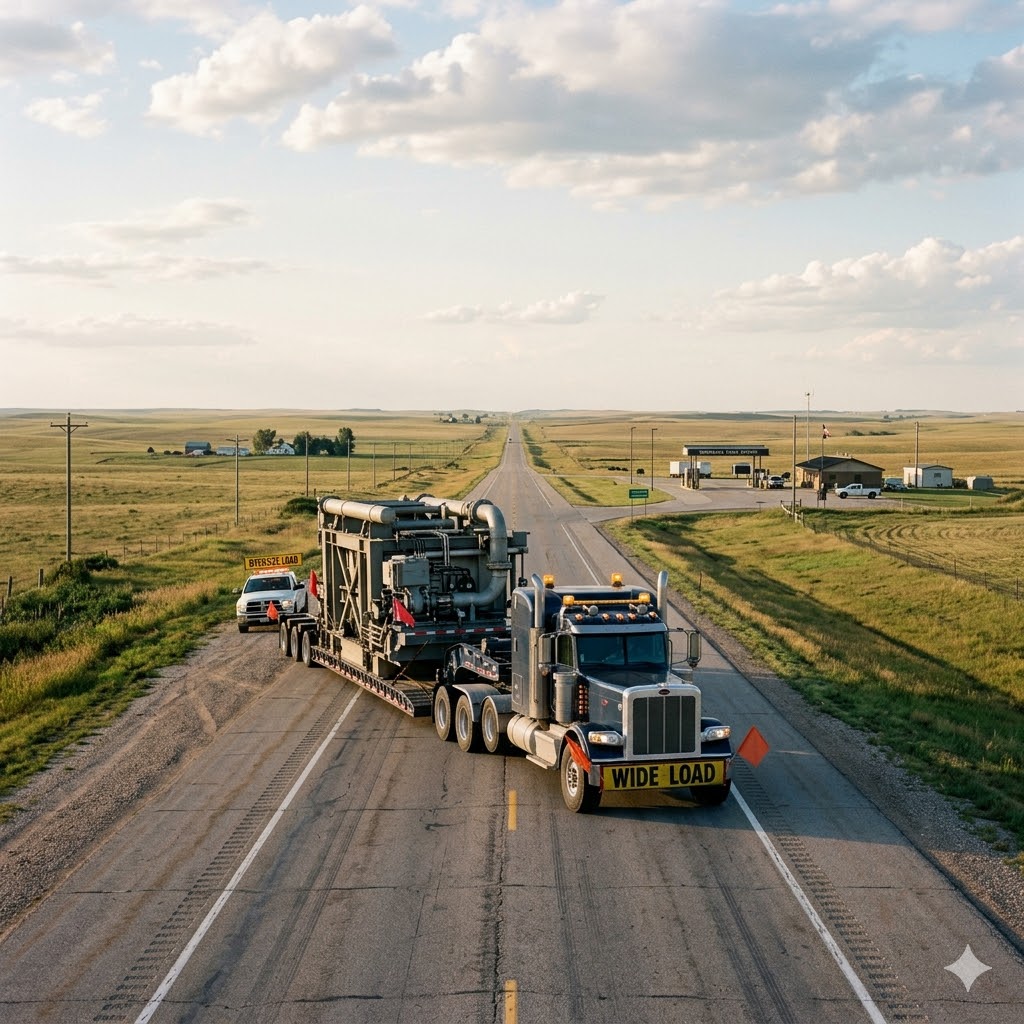
The Nebraska Department of Transportation establishes comprehensive regulations governing oversize load operations throughout the Cornhusker State. These regulations protect infrastructure while accommodating agricultural commerce and industrial transportation essential to Nebraska’s economy. Understanding regulatory requirements ensures compliant operations and prevents costly violations or delays.
Size and Weight Standards
Nebraska regulations define legal limits for vehicle dimensions and weight. Width restrictions limit vehicles to 8 feet 6 inches without permits, with permitted widths potentially reaching 16 feet on suitable routes. Height limits typically cap at 14 feet 6 inches legally, with permitted loads sometimes reaching 15 feet on verified routes.
Length regulations vary by vehicle configuration. Single units face 50-foot limits without permits, while combinations have complex rules based on trailer types and overall configuration. Nebraska measures length differently for various combinations, requiring careful calculations before permit applications.
Weight limits distinguish between axle weights and gross vehicle weights. Federal standards of 80,000 pounds apply on interstate highways, while state routes may have lower limits. Bridge postings along routes specify structure-specific weight limits that override general standards. Nebraska’s agricultural traffic patterns mean weight enforcement remains active throughout the year.
Divisible and Non-Divisible Classifications
Nebraska regulations distinguish between divisible and non-divisible loads affecting permitting and operations. Non-divisible loads consist of single items or assemblies that cannot be reasonably separated for transport. These loads qualify for oversize permits when dimensions or weight exceed legal limits.
Divisible loads comprise cargo that could be separated into smaller legal loads but the carrier chooses single-shipment transport. Nebraska scrutinizes divisible load permits more carefully as the state prefers using multiple legal loads when practical. Carriers must justify why load division would be impractical or would risk cargo damage.
Misclassification of divisible loads as non-divisible constitutes a serious violation. Nebraska enforces classification rules strictly, with violations carrying substantial penalties. Carriers should honestly assess load characteristics and consult permit specialists when classification questions arise.
Routing Regulations
Designated oversize load routes throughout Nebraska accommodate common corridor travel. Primary highways including I-80, I-76, and major state routes have established oversize routing with known clearances and capacities. These designated routes streamline permitting as NDOT has detailed infrastructure data supporting oversize operations.
Restricted areas limit or prohibit oversize load operations in certain locations. Urban cores in Omaha and Lincoln face restrictions during peak hours or have prohibited streets for oversize loads. Some rural roads have permanent restrictions due to narrow widths, low bridges, or structural limitations. Permit applications must avoid restricted areas or seek special authorization.
Bridge regulations throughout Nebraska reflect structure-specific limitations. Thousands of bridges have individual weight ratings and clearances affecting oversize routing. Older rural bridges may have ratings well below highway standards, requiring route modifications. Bridge analysis forms a critical component of Nebraska permit applications.
Seasonal Regulatory Variations
Harvest season brings regulatory modifications accommodating agricultural operations. Nebraska recognizes that timely crop harvest requires expedited transportation including oversize farm equipment movement. The state provides mechanisms for agricultural permits that process more quickly during critical harvest windows.
Winter restrictions activate during severe weather threatening road conditions or public safety. Heavy snow, ice storms, or blizzard conditions can trigger temporary oversize load bans. These restrictions protect infrastructure during vulnerable conditions while maintaining general traffic safety. Carriers must monitor weather and be prepared to suspend operations during restriction periods.
Spring road conditions affect rural route accessibility and weight limits. County roads may implement seasonal weight restrictions as frost leaves ground and surfaces soften. These restrictions, while not unique to oversize loads, affect heavy vehicle operations including permitted oversize loads. Route planning must account for seasonal capacity variations.
Escort and Pilot Car Regulations
Nebraska establishes escort requirements based on load dimensions. Loads exceeding 12 feet wide typically need one escort vehicle, while loads over 14 feet wide often require front and rear escorts. Height-based escort requirements activate at 15 feet, and length triggers escorts at various thresholds depending on configuration.
Escort vehicle equipment standards include specific signage, lighting, and communication requirements. Escorts must display proper oversize load warnings visible from all directions. Two-way communication between escorts and permitted vehicles ensures coordination and hazard warnings. Nebraska inspects escort compliance during oversize load checks.
Escort operator qualifications emphasize experience and training. While Nebraska doesn’t mandate specific state certification, professional escort services provide experienced operators understanding proper positioning, traffic management, and safety protocols. Qualified escorts enhance safety and prevent violations from improper escort procedures.
Time Restrictions and Travel Windows
Permitted travel times restrict oversize operations to daylight hours on most routes. Standard permits authorize movement from one-half hour after sunrise to one-half hour before sunset. This limitation recognizes that oversize loads present increased hazards after dark on Nebraska’s extensive rural road network.
Weekend and holiday restrictions protect high-traffic periods. Major holidays see outright bans on oversize load movement as traffic volumes surge. Summer weekend restrictions on certain routes prevent oversize loads from impacting recreational travel. Carriers must plan around these blackout periods.
Special event restrictions emerge for county fairs, sporting events, and community gatherings that create temporary traffic concentrations. NDOT may suspend permit validity or restrict routes during special events. Advance notice isn’t always possible, requiring operational flexibility.
Urban Area Regulations
Omaha metropolitan area regulations address Nebraska’s largest urban center. Specific streets prohibit oversize loads, while others restrict operations to off-peak hours. Omaha’s bridge infrastructure over the Missouri River creates bottlenecks requiring careful routing. Urban permits sometimes need local approval beyond NDOT permits.
Lincoln area restrictions reflect the capital city’s traffic patterns and infrastructure. University events, government activities, and normal urban congestion create complex operating environments. Some Lincoln streets cannot accommodate oversize loads due to parking, narrow lanes, or turning radius limitations.
Smaller cities throughout Nebraska implement local oversize load regulations. These municipalities may prohibit certain streets, require local permits, or mandate police escorts through their jurisdictions. Multi-jurisdictional coordination becomes necessary for routes passing through several communities.
Compliance and Enforcement
Nebraska actively enforces oversize load regulations through weigh stations, mobile patrols, and fixed checkpoints. Officers verify permit validity, dimensional compliance, and escort requirements. Operating without proper permits or exceeding permit specifications results in citations, fines, and potential vehicle impoundment.
Inspection procedures include dimensional measurements, weight verification, and permit documentation review. Officers compare actual load dimensions against permit specifications, checking for compliance. They verify escort vehicles meet equipment requirements and proper positioning. Complete documentation readily accessible prevents delays during inspections.
Violation penalties scale based on severity and circumstances. Minor permit deviations might warrant warnings, while operating substantially oversize without permits triggers major penalties. Repeat violations lead to escalating consequences including permit privilege suspension. Infrastructure damage from violations can result in civil liability beyond criminal penalties.
Recent Regulatory Updates
NDOT periodically updates regulations reflecting infrastructure changes, traffic pattern shifts, or policy developments. Recent modifications have addressed agricultural hauling procedures, electronic permitting systems, and bridge capacity reassessments. Staying current with regulatory changes prevents violations from outdated practices.
Permit system modernization has streamlined application processes while maintaining thorough review standards. Online portals expedite submissions and approvals for standard permits. However, complex loads or routes still require detailed review and coordination that takes additional processing time.
Bridge assessment updates affect routing as NDOT evaluates structure conditions and updates capacity ratings. Bridges downgraded from previous ratings require route modifications for loads previously approved. Regular communication with NDOT and permit specialists ensures awareness of rating changes affecting operations.
Professional Regulatory Compliance
Reliable Permit Solutions maintains current knowledge of Nebraska regulations and recent updates. Our specialists monitor NDOT announcements, rule changes, and policy developments affecting oversize operations. This ongoing monitoring ensures our permit services reflect current requirements rather than outdated practices.
Compliance consulting helps carriers navigate Nebraska’s regulatory environment. We explain requirements in practical terms, translating technical regulations into operational guidance. Our expertise prevents misunderstandings that lead to violations or operational disruptions.
Ongoing regulatory monitoring protects carriers from changes that might affect permitted operations. When NDOT updates regulations or modifies routing, we notify affected carriers and help adjust operations accordingly. This proactive approach prevents violations from regulatory changes carriers might otherwise miss.
Contact Reliable Permit Solutions at (888) 949-4220 for comprehensive Nebraska regulatory compliance support. Our specialists ensure your operations meet current NDOT requirements while staying informed about regulatory developments affecting your routes.