

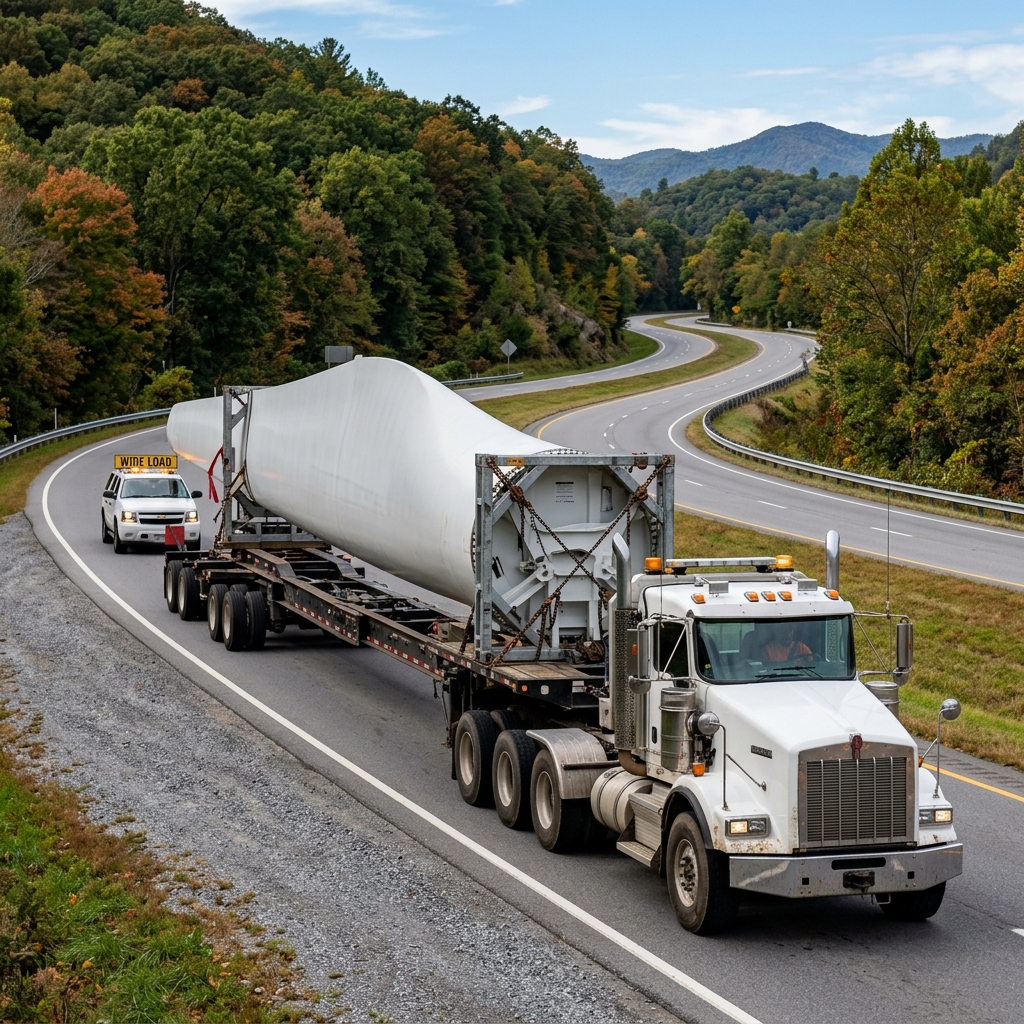
North Carolina Oversize Permits for Wind Turbine and Industrial Transport
Moving wind turbine blades, towers, and industrial machinery through North Carolina calls for the right permits from the start. Any carrier planning this kind of move needs to understand north carolina oversize permits and how they apply to large freight. This guide explains what the permit process looks like, what NCDOT expects, and how pilot cars and route planning fit into a smooth move.
Understanding North Carolina Oversize Permits for Heavy Freight
Carriers request north carolina oversize permits whenever a load goes past standard legal limits for height, width, length, or weight. As a general guideline, permits apply when height passes 13’6″, width passes 8’6″, trailer length passes 48 feet, or total weight passes 80,000 pounds. NCDOT reviews each application based on the exact load dimensions and the planned route.
Wind Turbine Transport Needs In North Carolina
Wind turbine blades and tower sections often reach sizes far past typical oversize freight. Blades can extend past 150 feet in length, and tower pieces frequently pass both the width and weight limits that trigger a standard permit. Because of this, most wind turbine moves fall under superload permitting alongside north carolina oversize permits, giving NCDOT the full picture of the load before approval.
NCDOT Superload And Engineering Approval Process
NCDOT applies extra review steps to superload moves, adding to the standard north carolina oversize permits process. This includes a DOT bridge analysis to confirm bridges can support the load, utility approvals for any overhead lines near the route, and a state engineering review for extreme dimensions. Route surveys often follow, checking clearances and turning space along the planned path.
Pilot Car Requirements For Wind Turbine Hauls
Pilot car escorts support most wind turbine and industrial moves across the state. The number of escorts depends on the load’s width, length, and height, with wider and taller loads calling for extra escorts and high pole vehicles to check for clearance ahead of the load. Planning escorts early keeps a move connected to its north carolina oversize permits timeline and ready for the road.
Route Restrictions For Industrial Transport In North Carolina
Bridge weight limits, road work, and local curfews shape the routes available for large industrial loads. Some roads stay open only during daylight hours, and others close to superload traffic due to bridge conditions. Route consulting before submitting north carolina oversize permits helps confirm a workable path and keeps the application moving forward.
How To Speed Up Your Oversize Permit Application
A few steps consistently shorten NCDOT turnaround times for wind turbine and industrial loads. Submitting accurate dimensions and weights up front supports a faster review, and starting superload applications early gives engineering review and utility approvals room to move. Coordinating pilot cars ahead of time also keeps escort availability organized and ready.
Reliable Permit Solutions manages the full range of north carolina oversize permits, along with engineering surveys, utility approvals, route surveys, and pilot car coordination. This keeps wind turbine and industrial transport moving on schedule from application to delivery. Call (888) 949-4220 to start a move, or visit the Superloads page for more on superload permitting.
Frequently Asked Questions
Do wind turbine blades need a superload permit in North Carolina?
Most wind turbine blades pass the size and weight limits covered by a standard north carolina oversize permits application. This means the move calls for a superload permit, complete with engineering review and bridge analysis. A permit specialist can confirm the right permit type for a specific load.
What size load calls for an oversize permit in North Carolina?
A general guideline places the need for a permit at 13’6″ in height, 8’6″ in width, 48 feet in trailer length, or 80,000 pounds in weight. Local roads and specific routes can adjust these limits further. A quick call with a permit specialist confirms exact requirements for a given load.
How long does an NCDOT superload permit take to process?
Processing time depends on route complexity, bridge count, and utility coordination needs. Superload permits generally call for extra lead time compared to standard oversize permits, given the added engineering steps involved. Early planning gives the whole process room to move smoothly.
How many pilot cars does a wind turbine move need in North Carolina?
The number of pilot cars depends on the load’s width, length, and height. Wider and taller loads often call for multiple escorts, including a high pole vehicle to check overhead clearance ahead of the load. A permit specialist can confirm exact escort counts for a planned route.
What is a bridge analysis for an oversize permit?
A bridge analysis is an engineering review confirming a bridge along the route can support a load’s weight and axle setup. This step supports safe travel for wind turbine and industrial superload moves across North Carolina. Most superload applications include this review as part of the standard process.
Can standard oversize permits cover industrial machinery moves in North Carolina?
Standard oversize permits cover machinery that stays within typical size and weight limits. Larger equipment, including turbine towers and nacelles, calls for a superload permit instead. A permit specialist can review load specs to confirm the right permit path.
Who handles utility approvals for superload moves in North Carolina?
Utility approvals involve direct coordination with utility companies along the planned route. Permit services managing a superload application often handle this coordination for the carrier. This keeps the process organized and moving toward approval.
What documents does an NC superload permit application need?
A superload application calls for accurate load dimensions, weight, and axle configuration. Supporting documents often include route information, a bridge analysis report, and any needed utility approvals. Working with an experienced permit team keeps documentation complete and ready for review.