

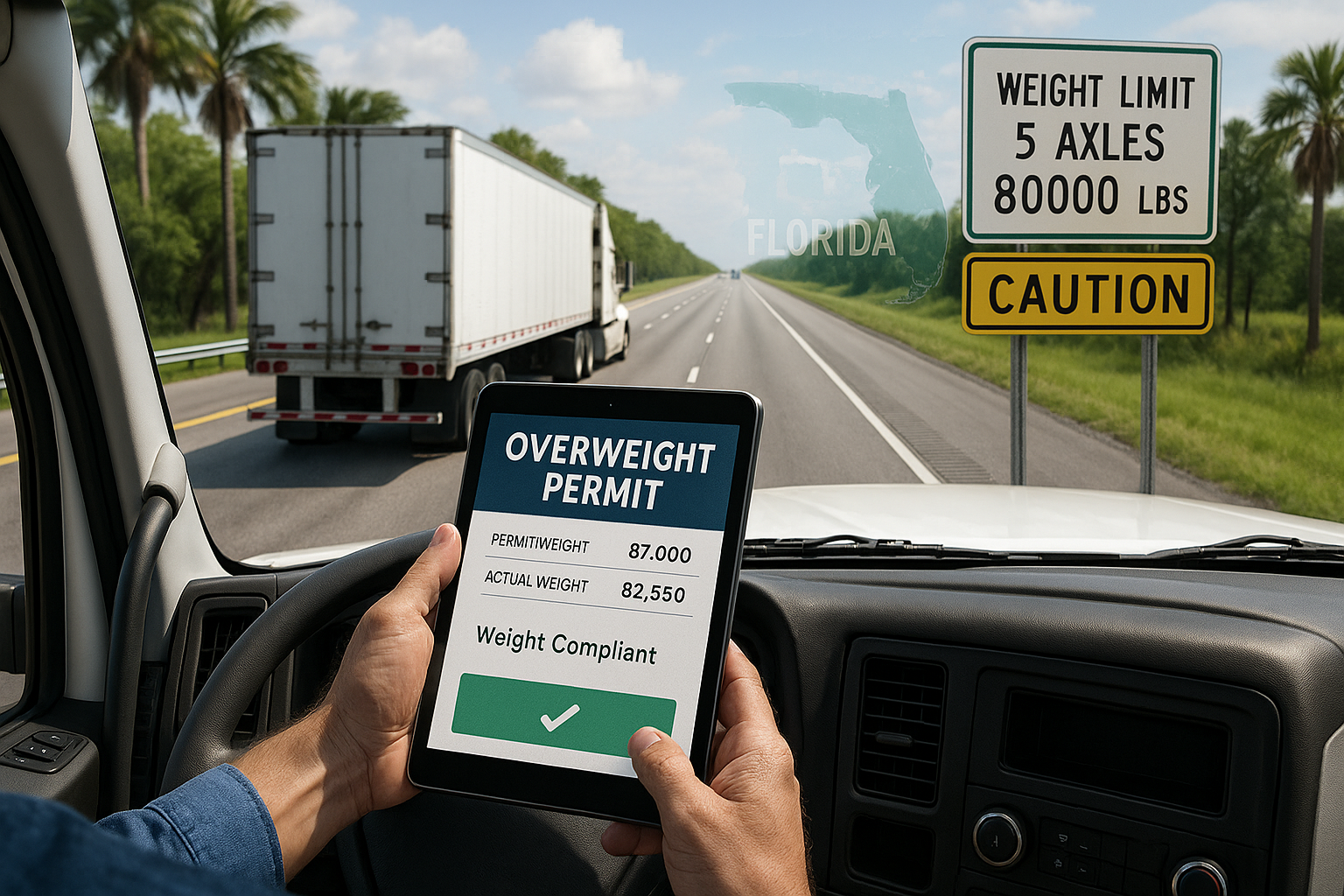
If you’re moving freight in the Sunshine State, chances are you’ve already run into the complexities of weight regulations. Florida’s highways are busy, its infrastructure is critical, and its industries—from agriculture to construction—rely heavily on the ability to transport loads efficiently. But once your vehicle tips over the 80,000-pound gross vehicle weight threshold, the rules change. That’s when an overweight permit Florida becomes your lifeline to staying legal, protecting your bottom line, and keeping your deliveries on schedule.
At Reliable Permit Solutions, we’ve seen firsthand how confusing the process can get for both local operators and out-of-state carriers entering Florida. Between Florida DOT weight regulations, axle distribution calculations, and the infamous bridge formula, it’s not something you want to leave to guesswork. Here’s the breakdown you need to navigate it with confidence.
Why Florida Enforces Strict Overweight Rules
The first thing to know is that overweight enforcement isn’t about red tape for the sake of it. Florida has one of the largest state-maintained highway systems in the U.S., not to mention thousands of bridges that need to withstand heavy daily traffic. Infrastructure protection is the priority, but so is balancing economic activity. Every extra pound over the legal weight limit accelerates wear on roadways and bridges. Without permits, operators risk fines, delays, and even liability for damages.
That’s why securing an overweight permit Florida isn’t just about compliance—it’s about maintaining long-term access to critical routes for your business.
Florida Weight Limits and the Bridge Formula
Florida follows federal standards but with its own unique applications. The general cap is 80,000 pounds gross vehicle weight, but axle group distributions determine whether your load is considered overweight. The Florida bridge formula applies these weight limits based on the number of axles and the spacing between them. For example, a five-axle semi might be legal at 80,000 pounds, while a seven-axle configuration could distribute more weight legally without triggering a permit.
Florida also honors certain grandfathered weight allowances, particularly for agricultural hauls, but those exemptions are narrow and time-sensitive. If you’re unsure whether your cargo qualifies, it’s better to assume you’ll need an overweight load permit FL than risk the fines.
Types of Overweight Permits in Florida
The state offers flexibility depending on your operation:
- Single-trip permits for one-time hauls on a designated route.
- Multi-trip permits for carriers who frequently transport similar loads.
- Annual blanket permits for recurring heavy haul Florida operations, ideal for construction or port-related activities.
- Superload authorizations for anything exceeding 150,000 pounds, requiring detailed route analysis, escort vehicles, and sometimes even police coordination.
Choosing the right permit type is critical because costs vary and conditions can be restrictive. Reliable Permit Solutions helps clients evaluate not just what’s legal, but what’s efficient for their business.
What You’ll Need to Apply
The Florida DOT requires specific documentation before issuing an overweight permit Florida:
- Vehicle specs, including axle counts, spacings, and tire sizes.
- Cargo documentation showing the nature and weight of the load.
- Route planning details, including entry and exit points.
- Proof of insurance meeting state minimums.
Skimping on any of these details can cause application delays. In industries like construction or port logistics, even a 24-hour delay can have ripple effects on project timelines.
Florida’s Special Considerations
Every state has quirks in its permitting, but Florida’s are particularly unique:
- Hurricane season restrictions may suspend certain permits due to evacuation priorities.
- Port and intermodal operations around Miami, Tampa, and Jacksonville create frequent bottlenecks.
- Agricultural exemptions apply to citrus, sugarcane, and other seasonal commodities, but only within strict mileage and time windows.
- Construction industry permits are in high demand given Florida’s rapid growth, making route availability a challenge during peak building months.
Understanding these nuances is what makes working with a permitting service essential.
Why Work with Reliable Permit Solutions
At the end of the day, securing an overweight permit Florida isn’t just about filling out forms—it’s about strategy. Route optimization, avoiding costly detours, and staying ahead of compliance changes are all part of the game. That’s where Reliable Permit Solutions shines.
We specialize in helping carriers and operators cut through the confusion, saving both time and money. With our expertise, you don’t just get a permit—you get a partner who understands how to maximize efficiency while protecting your operation from unnecessary risks.
Final Takeaway
Florida is a state where commerce moves as fast as the traffic on I-95, and compliance can’t be an afterthought. Whether you’re hauling construction equipment, agricultural products, or oversized industrial loads, securing the right overweight permit Florida is non-negotiable. By working with Reliable Permit Solutions, you ensure your operations run smoothly, your costs stay predictable, and your trucks keep moving without the headaches of fines or downtime.