
Fuel Permits by State: What a Temporary Fuel Permit Costs, How Long It Lasts and When IFTA Is Cheaper
A fuel permit is a state's temporary stand-in for an IFTA license. A truck over 26,000 pounds with no IFTA decals buys one for each state it enters: $30 for 4 days in California, $45 for 10 days in Florida, $50 for one entry in Texas.
Dispatchers call it a fuel permit, a temporary fuel permit, a fuel trip permit or a fuel-use permit. The states can't agree on the name either. It is the same piece of paper, and it is not the same thing as a trip permit, which covers registration. Below is what ten states charge, how long each permit runs, and the limits that catch people. Every figure comes from the state's own statute or agency page, checked November 26, 2026.
In this article
1What a fuel permit is, and who needs one
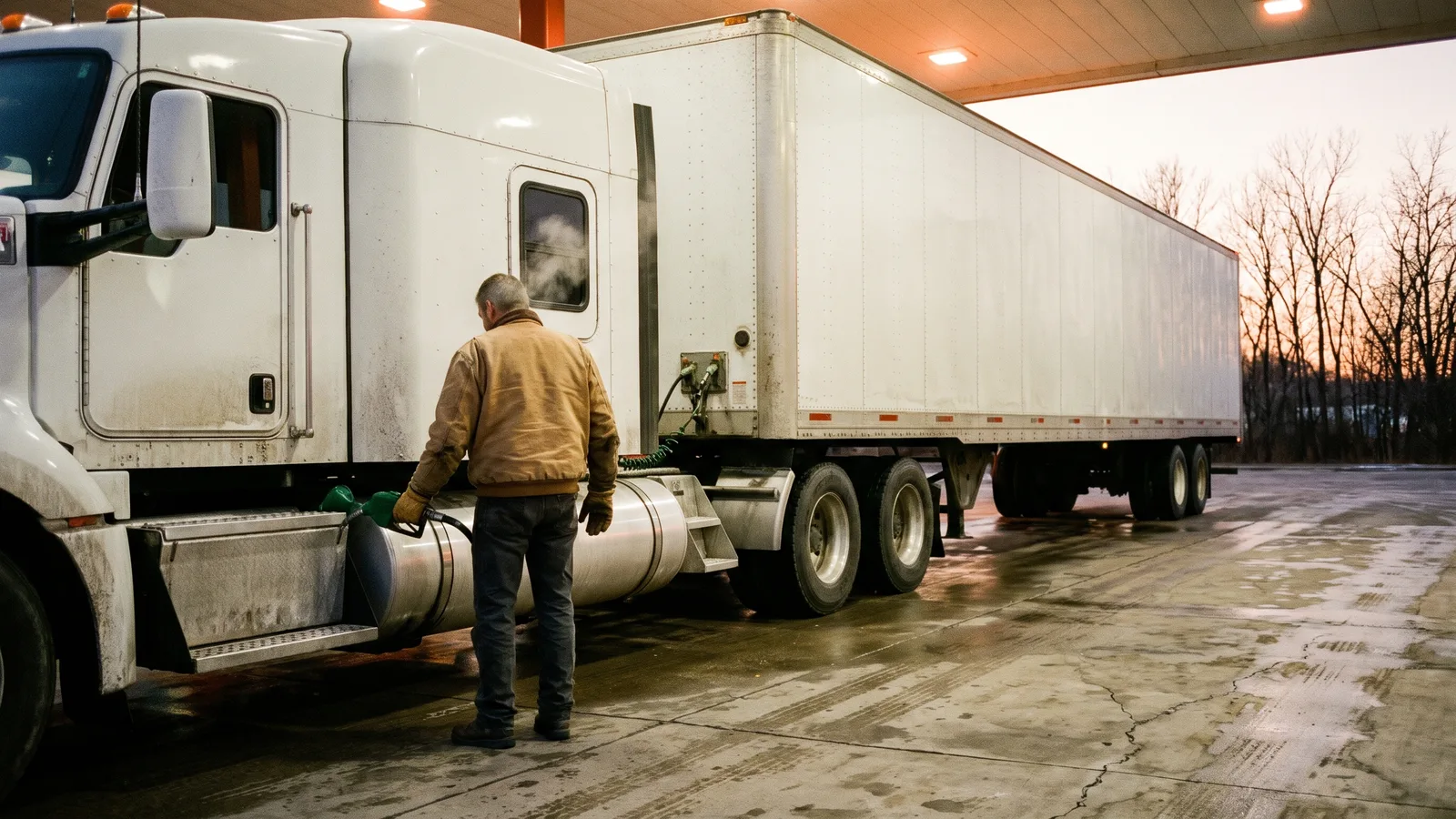
Every state taxes the fuel a heavy truck burns on its roads, whether or not the fuel was bought there. Most interstate carriers settle that with an IFTA license: two decals on the cab and one tax return a quarter. A fuel permit is the other way to do it. Tennessee's Highway Patrol puts the rule in one sentence: "In lieu of licensing under the IFTA, persons may elect to satisfy motor fuels use tax obligations on a trip-by-trip basis."
Who needs one comes down to the truck. The Texas Comptroller defines a qualified motor vehicle as one used to transport persons or property that meets any one of these:
- two axles and a gross or registered gross vehicle weight over 26,000 pounds;
- three or more axles, regardless of weight;
- used in a combination that weighs more than 26,000 pounds.
If your tractor fits that and carries IFTA decals, you can stop reading. If it fits that and has no IFTA license, it needs a fuel permit in each state it runs through. The Texas page says so directly: "A trip permit is required for each state in which travel occurs, and each state has its own instructions for obtaining a permit."
One more thing before the numbers. A fuel permit covers fuel tax only. A truck that isn't apportioned for a state also needs a registration trip permit there, so a base-plated truck with no IFTA is buying two permits per state. Our trip permit explainer covers the registration side, and IRP versus IFTA sorts out which credential covers what.
2Fuel permits by state: fee and days
These are the state fees only. A permit service's fee, ours included, comes on top, and several states say so on their own pages.
| State | State fee | How long it runs | What to know |
|---|---|---|---|
| California | $30 | 4 consecutive days | Covers any reentry inside the four days. |
| Florida | $45 | Expires within 10 days after issuance | Does not excuse fuel tax at the pump. |
| Minnesota | $25 | 5 consecutive days | Dates are printed on the face of the permit. |
| North Carolina | $50 | 3 days | Sold only through authorized permitting services, arranged before you enter. |
| Tennessee | $30 plus wire service fees | Up to 7 consecutive days | Required before entering Tennessee. Good for one vehicle. |
| Texas | $50 | One entry, 20 days from the date of entry | No more than five entries in a calendar year. |
| Washington | $30 | 3 consecutive days | No refund, exchange or credit. No mileage report. |
| Oregon | $9 pass plus weight-mile tax for every mile | 10 days, or until the miles you bought are used | Not a fuel permit. Oregon taxes trucks over 26,000 pounds by weight and mile. |
| New York | $4 per required decal, plus the permit service's charge | 30 days from issuance | Ordered through a permit service. The state decides whether to issue it. |
| Michigan | Bought through a permit agency | Ask when you order | Three fuel permits per USDOT number per calendar year. |
The fees are small. The spread is the problem. Run Interstate 5 from the Mexican border to Canada and you have bought three different products: a $30 California permit good for four days, a $9 Oregon pass with a mileage bill attached, and a $30 Washington permit good for three days.
3Four different clocks
The number of days is only half the answer. The other half is when the clock starts, and the states use four different rules.
- From the dates on the permit. Washington's special fuel trip permit is good for "three consecutive days beginning and ending on the dates shown on the face of the permit." Minnesota's runs "five consecutive days beginning and ending on the dates specified on the face of the permit." Give us the wrong crossing date and the permit is right, just for the wrong days.
- From issuance. Florida's permit "shall expire within 10 days after date of issuance." New York's is valid "30 days from the date of issuance." Order a Florida permit on Monday for a Thursday crossing and three of the ten days are gone before the truck moves.
- From entry. Texas counts "20 days from the date of entry," and the permit is good for one entry.
- From the miles. Oregon's pass lasts "10 days or though the operation of the miles purchased," and you can buy it up to 10 days ahead of its effective date.
A delay changes the answer in each of these. A load that sits two days for a part, a storm or a holiday closure can outlive a three-day permit before it reaches the state line. Around a holiday, check the closure list first. North Carolina's own IFTA office, for one, works "Monday through Friday from 8:00 a.m. to 5:00 p.m."
4The limits nobody mentions
Fuel permits are built for the occasional trip. Three states in the table say so with a number.
- Texas: five entries a year. You may buy a trip permit in place of a license "if there are no more than five entries into the state during a calendar year." And an entry is not a trip: "A round trip through Texas constitutes two separate entries, even when the round trip is completed within 20 days." Texas's own example is Arkansas to New Mexico and back, which takes two permits. Three round trips and you are over.
- Michigan: three permits a year. Michigan Treasury "limits the purchase of fuel permits to 3 permits per USDOT # per calendar year for carriers traveling into Michigan." That is per carrier, not per truck. Past that, Michigan says the carrier needs to be licensed for IFTA in its base jurisdiction.
- Oregon: a pass limit. ODOT's page reads, "Pass Limit: Five or more for one unit or 35 in a rolling 12 month period, per account."
Tennessee does it without a number. Its permit is for vehicles operated in the state "on an occasional or infrequent basis." If a truck is in Tennessee every week, that is not what the permit was written for.
When a customer keeps ordering the same state, we say so. Hitting one of these limits in October with freight still on the books is a bad way to find out.
5It does not cover the pump
This one surprises people every month. The fuel permit settles what you owe the state for driving through it. It does not make the diesel at the truck stop tax-free, and it does not get that tax back.
Florida's statute says the permit exempts the vehicle from the fuel-use tax for the days it is valid, then adds: "However, the vehicle is not exempt from paying the fuel tax at the pump." California says any use fuel tax paid to a vendor for fuel taken out of the state under a fuel trip permit "shall not be refunded to the holder of the permit." Washington calls its fee "in lieu of the special fuel tax otherwise assessable," asks for no mileage report, and says the permits "are not subject to exchange, refund, or credit."
So the permit is a flat price for a few days of road. With IFTA, tax paid at the pump is credited on the quarterly return. With permits, you pay the pump and the permit both. On one trip it doesn't matter. Over a year it does.
6How a fuel permit fails at the scale
Four ways, and we have seen all of them.
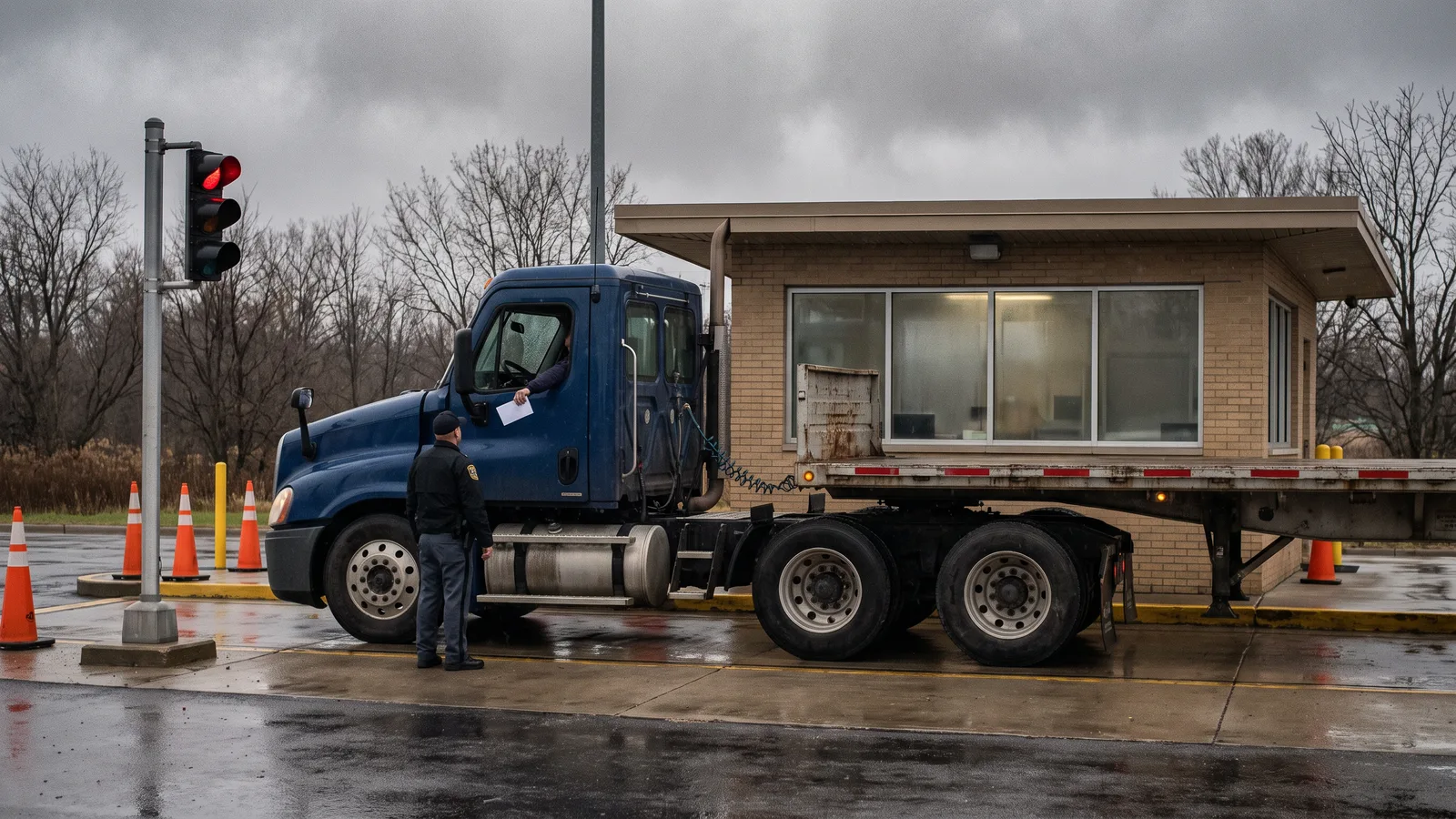
- Bought on the wrong side of the line. Tennessee's permit "is required prior to entering Tennessee." North Carolina wants "prior arrangements" made with a permitting service "before entering North Carolina." Washington's has to be "completed in its entirety, signed, and dated by the operator before operation of the vehicle on the public highways of this state." Planning to buy it at the first truck stop inside the state is planning to drive without one. Our older post on buying fuel permits at weigh stations covers that question.
- Fixed with a pen. In Washington, "correction of data on the permit such as dates, vehicle license number, or vehicle identification number invalidates the permit." In Florida, "any erasure, alteration, or unauthorized use" renders the permit "invalid and of no effect." A VIN is 17 characters. If one is wrong, the fix is a new permit.
- Wrong truck. Every one of these permits is tied to a vehicle. Tennessee's is "valid only for the particular vehicle for which it has been issued." Swap tractors in the yard the morning of the run and the permit stays with the truck that didn't go.
- Trip permit, no fuel permit. The registration permit and the fuel permit are two purchases. A driver holding a trip permit and no decals is half legal.
7When IFTA is the cheaper answer
I sell fuel permits, so take this from someone with a reason to say the opposite: if your trucks leave the state every month, get the IFTA license.
The decals themselves cost almost nothing. Florida charges "$4 per year or any fraction thereof" for each one. A single Florida temporary permit is $45 and lasts ten days. New York's decal fee is also $4. What IFTA really costs is the record keeping and a tax return every quarter, not the sticker.
The permit earns its place in three situations:
- The one-off. A truck that runs in-state all year and takes one load across the line.
- The new truck. A tractor added to the fleet before its decals arrive.
- The gap. A carrier whose license is being set up or renewed while freight is waiting.
For the last two, ask your base state about its IFTA temporary permit before you buy state-by-state permits. North Carolina, for example, issues one to its own IFTA carriers in good standing: "There is no charge for an IFTA temporary permit and it is valid for 30 days," and it lets the truck operate in all IFTA member jurisdictions as long as a copy of the IFTA license rides along. That one document replaces a stack of single-state permits.
The registration side has its own version of this math, and we worked it through in IRP versus trip permits. The short form is the same: a few trips a year, buy permits; the same states every month, license the truck.
When permits are the right call, the order is quick. We ask whether the truck has IFTA and what the cab card says, then take the tractor's VIN and plate, the states and the date it crosses each line. The permits go to the driver's email as each state issues them. Start at our trip and fuel permits page, and if the load is also wide or heavy, the same call covers the oversize and overweight permits. If you are comparing companies, we wrote down seven questions to ask any permit service, us included.
If you ever need a permit, click to call.
A specialist picks up. Oversize, overweight, superload, trip and fuel permits in every U.S. state and Canadian province.
Call (888) 949-4220
Questions drivers ask us
What is a temporary fuel permit?
It is a state's short-term substitute for an IFTA license. A qualified truck with no IFTA decals buys one for each state it enters, and the fee settles the fuel-use tax for the days the permit is valid.
Do I need a fuel permit if I have IFTA?
No. A truck with a current IFTA license and decals does not need single-state fuel permits. Oregon is the exception to know: it taxes trucks over 26,000 pounds by weight and mile, so a carrier without an Oregon account buys a temporary pass there.
How much does a fuel permit cost?
It depends on the state. The state fee is $25 in Minnesota, $30 in California, Washington and Tennessee, $45 in Florida and $50 in Texas and North Carolina. A permit service's fee is added to that.
How long is a fuel permit good for?
Three consecutive days in Washington and three days in North Carolina, four in California, five in Minnesota, up to seven in Tennessee, ten days from issuance in Florida, and one entry for 20 days in Texas.
Is a fuel permit the same as a trip permit?
No. A trip permit is temporary registration for a state that isn't on your cab card. A fuel permit covers fuel-use tax when you have no IFTA license. A base-plated truck with no IFTA needs both in each state.
How many fuel permits can I buy in a year?
Some states cap it. Texas allows a trip permit only if there are no more than five entries in a calendar year, and a round trip counts as two. Michigan limits carriers to three fuel permits per USDOT number per calendar year.
Sources
Rules checked November 26, 2026. Penalties change, and the permit in your cab plus the issuing state's current rule are always the final word.
- Texas Comptroller of Public Accounts, Trip Permits (fee, entries, qualified motor vehicle definition)
- Fla. Stat. 207.004, Registration of motor carriers; temporary fuel-use permits (Florida Senate, 2025)
- Cal. Rev. & Tax. Code section 8708, Issuance of California fuel trip permit (CDTFA Business Taxes Law Guide, Revision 2026)
- RCW 82.38.100, Special fuel trip permits (Washington State Legislature)
- RCW 46.17.400, Permit fees by permit or temporary license plate type (Washington State Legislature)
- Minn. Stat. 168D.12, Temporary fuel permit (Minnesota Revisor of Statutes)
- North Carolina Department of Revenue, IFTA and Fuel Use Tax Temporary Trip Permits
- Tennessee Highway Patrol, Temporary Fuel Use Permits
- ODOT Commerce and Compliance Division, Weight-Mile Temporary Tax Pass
- 20 NYCRR 491.5, Temporary permits (Cornell Legal Information Institute)
- Michigan Department of Treasury, IFTA FAQ: short-term interstate travel and fuel permits