
How to Choose an Oversize Permit Service: Seven Questions to Ask Before the First Load
Pick the permit service that answers the phone when the state office is closed, reads your route back before it orders, and puts in writing who pays when a permit is wrong. Price matters less than those three, because the permit in the cab is the driver's problem, not the service's.
I run a permit company, so read this with that in mind. Here is the honest part first. A lot of permit companies are good. It is a big industry with plenty of loads to go around, and some of our competitors are as good as we are. J. J. Keller, the big compliance company, sells permits too, and for a fleet that already buys its safety program from them, one vendor can make sense. What follows is how to tell a good service from one that will leave a driver parked at a scale house, using the states' own rules, checked November 22, 2026.
In this article
1Do you need a service at all?
Not always, and anyone who tells you otherwise is selling something. Most states let a carrier order its own permits. Washington's DOT says it plainly: "Most routine permits may be self-issued online 24 hours a day, 7 days a week." Texas runs its own system, TxPROS, with a Permit Wizard that tells you which permit types you can buy.
If your trucks run the same two states with the same load, set up the accounts and do it yourself. You will save the service fee and learn the rules.
The math changes when the load changes. A new state means a new account, a new set of conditions and a new office to learn. A load that is not "routine" in Washington's sense, too wide, too heavy or too tall for the self-issue screen, goes to a person at the state anyway. And the permit is one state at a time. A run from Texas to Oregon is five or six separate permits from five or six separate offices, each with its own hours. That is the work a service does. Our permit checklist lists what every one of those offices will ask for.
2Who answers after the state closes?
Ask every service you are considering what their hours are, then compare them with the states'. The Texas Oversize/Overweight Permits Office is open "Monday – Friday, 8 a.m. – 4:30 p.m.," and its page adds that "the toll-free phone line closes at 4:30 p.m. each business day."
Truckers don't run on office hours. A driver wins a load on Friday afternoon, gets the first state's permit, starts rolling and calls from the road for the next four. If the service closes when the state does, you have paid a fee for a website.
A good answer is a person on the phone early and late, and a plain statement of what they can and can't get when the state is closed. Some permits self-issue around the clock. Some need a state employee, and no service on earth can get those on a Saturday night. A service that says otherwise is guessing. Our honest turnaround guide goes state by state, and around a holiday, check the closure list before you promise a delivery date.
3Who pays when the permit is wrong?
This is the most important question on the list, and most people never ask it.
The law puts the permit on the carrier and the driver. California's permit conditions, revised December 2025, say the use of a permit is "prima facie evidence that the driver has checked the load and/or vehicle" and "has verified the routing accuracy." The same page lists when a California permit is "null and void and hereby declared non-existent." The list includes a permit used outside its dates, a permit for a load "not specifically described on the face of the permit," a permit used by a company "not specifically named on the permit," and a permit whose "dimensions and weights do not match the field verification."
Read that last one again. If the service typed 12 feet wide and the officer's tape says 12 feet 4 inches, you are not running on a bad permit. In California you are running on no permit at all.
So ask: when your agent makes the mistake, who pays for the new permit, and who pays for the day? Get the answer in writing. A service that has been doing this a long time will have a straight answer, because it has happened to them. It has happened to us. When the mistake is ours, we pay for it, not the customer. Our post on seven ways a permit gets voided walks through the ones we see most.
4Do they check the route, or just order it?
A permit route is not a suggestion. It is the only road the permit covers. California's conditions say "the permittee is responsible for verifying that all routes are clear to travel for their vehicle and load configuration." For a load over legal height, the permittee has to "check all underpasses, over-crossings, bridges, overhead wires or other structures" and "arrange clearance or request alternate routing before commencing travel." Texas puts it more briefly on its restrictions page: "Permittees are responsible for ensuring they have the most up-to-date restrictions before traveling." Texas publishes those restrictions for each of its 25 TxDOT districts.
A service that only passes your origin and destination to the state is a typist. A good one reads the route back to you before it orders, tells you about the construction zone and the low bridge, and notices when the state's route sends a 15-foot load under something it shouldn't. Ask who on their staff actually knows the roads. Then ask them to route a load you already know well and see if they get it right. For anything tall, heavy or unusual, our route consulting page explains what a real route check involves.
5Do they cover the county and the city?
A state permit covers state roads. The last few miles to a job site usually aren't. Minnesota's statute splits the job in one sentence: the commissioner issues permits "with respect to highways under the commissioner's jurisdiction," and "local authorities, with respect to highways under their jurisdiction." Washington's DOT keeps "county and city permit contact information for local permits" because those are separate permits from separate offices.
This is where self-issuing carriers and weak services get caught. The state permit is perfect, the load gets off the interstate, and the county road to the wind farm or the city street to the plant needs a permit nobody ordered. Ask any service how many counties and cities it orders from in a normal week. If the answer is vague, so is your coverage. We work with more than 4,000 states, counties and cities, and the local ones are where twenty years of knowing who to call pays off.
6How do they take the order?
Every permit starts as a list of numbers: overall width, height and length, overhang front and rear, gross weight, axle weights and spacings, the truck, the trailer and the company. A single wrong character in any of them can void the permit at the scale. A VIN is 17 characters. That is 17 chances to be wrong.
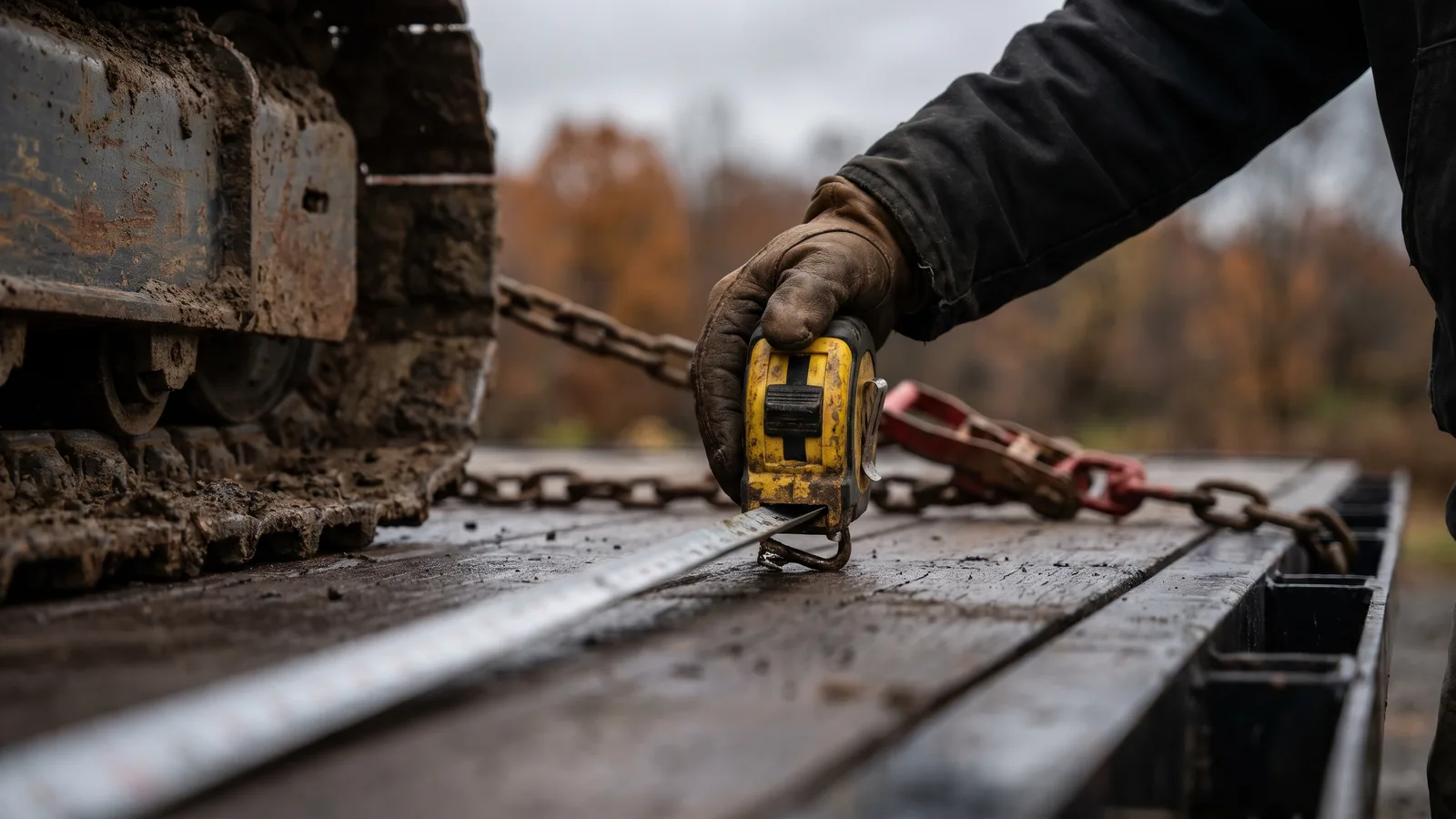
So watch how they take the order. A good agent asks for every dimension, reads the numbers back to you, and asks the question you forgot: "Is that width with the mirrors or without?" A bad one takes whatever you emailed and pastes it into the state's form.
We take most of our orders by phone, and that is on purpose. Years ago we built an online ordering portal. Our customers stopped using it almost immediately, because they had figured out they were doing our data entry for free. The order is the service. When you email us instead, the order is in our system in about 20 seconds, and the permit goes to you the moment the state issues it. Ask any service how the permit gets to the cab. Minnesota, for one, allows a permit "carried in electronic format if it is easily read," and California accepts paper or electronic.
7Will they show you the state fee?
Every permit service charges a fee on top of what the state charges. That is how we get paid, and it is fair. What isn't fair is a single number that hides the split.
Ask for an invoice that shows the state's fee and the service fee on separate lines, every time. The state fee you can check yourself on the state's own fee page. The service fee is what you are actually comparing between companies. Then ask what happens to the fee when a permit has to be reissued, when a load is cancelled, and when the state refunds. Our breakdown of what an oversize permit really costs shows the state fees, escort costs and other bills that come with a permitted load, so you know what a fair total looks like.
Cheapest is not the goal. A service that saves you a few dollars a permit and costs you one day parked at a scale has cost you money.
8The ten-minute test
You don't have to take anyone's word for any of this, including mine. Call the services you are considering with a real load and ask the same questions. Here is what to listen for.
| Ask | An answer worth trusting | An answer that should worry you |
|---|---|---|
| When can I reach a person? | Specific hours, early and late, and which states they can't get after hours | "We're always available," with no detail |
| Who pays if your agent gets it wrong? | "We do," in writing | "The permit is your responsibility" |
| Will you read the route back to me? | Yes, before it's ordered, with the restrictions on it | "The state picks the route" |
| Do you order county and city permits? | Yes, and they can name the ones on your route | "Most loads don't need those" |
| How do you take the order? | Every dimension asked for and read back | "Just fill in the form" |
| Can I see the state fee separately? | Yes, on every invoice | One total, no breakdown |
| What about escorts, superloads, trip and fuel permits? | One call covers the whole trip, or they tell you who does | A second company for every piece |
That last row matters more than it looks. A load that needs an oversize permit often needs pilot cars, and a truck that isn't apportioned in a state needs trip and fuel permits to get there. Our pilot car requirements by state and superload guides show how fast one load turns into four kinds of paperwork. Fewer handoffs means fewer places for a number to get copied wrong.
Then send them one real load. Not your hardest one, and not your easiest. See how the order is taken, how long the permit takes, and whether the permit in the cab matches the load on the trailer. You will know more after one load than after any sales call, including ours.
If you want the short version of what we would tell a friend: pick the service whose people know the roads, who answer when you call from the shoulder, and who pay for their own mistakes. If that turns out to be someone else, good. We would rather you get the right permit than get it from us. If you want to compare, here is how we handle oversize and overweight permits.
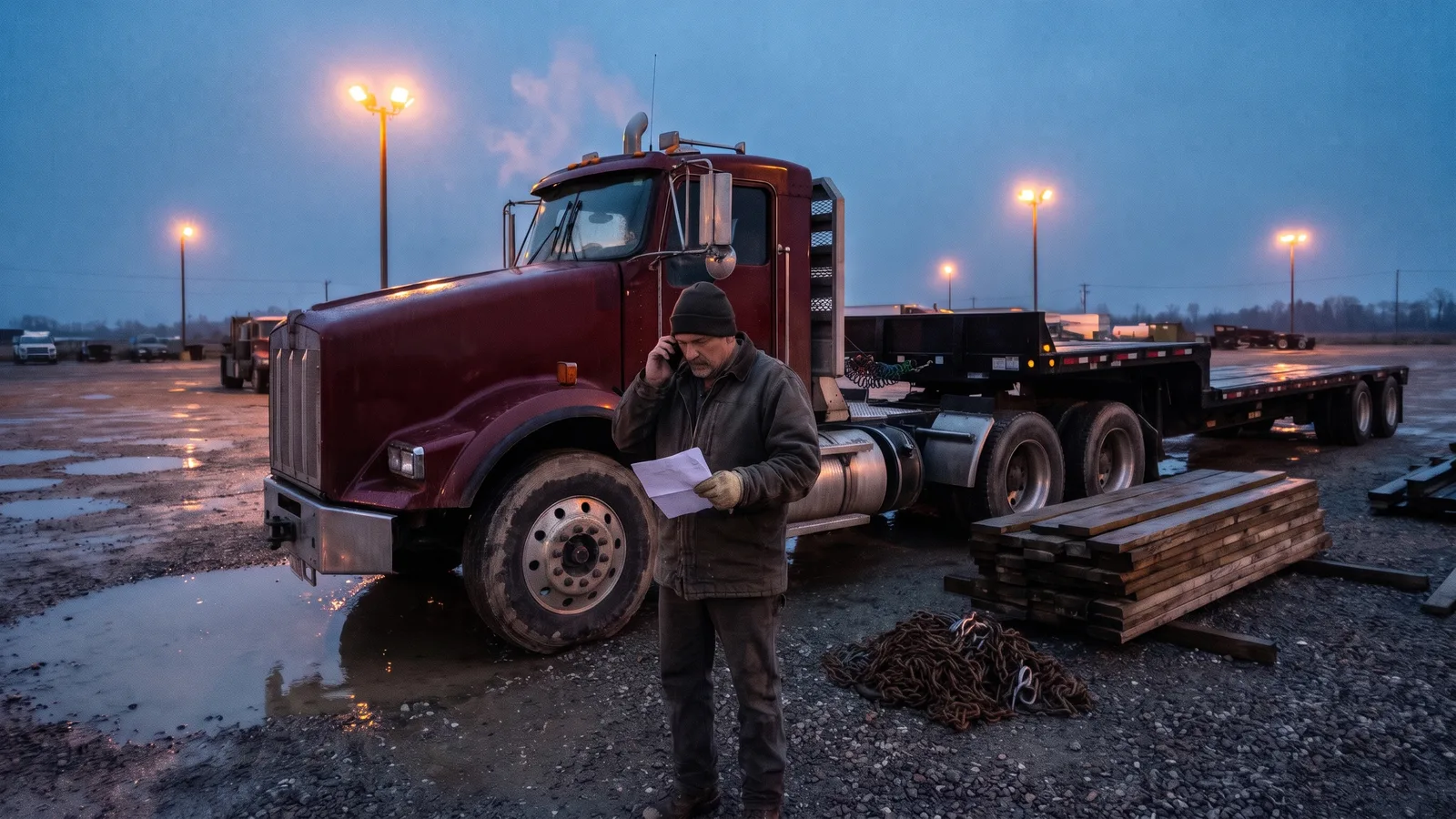
If you ever need a permit, click to call.
A specialist picks up. Oversize, overweight, superload, trip and fuel permits in every U.S. state and Canadian province.
Call (888) 949-4220Questions drivers ask us
Do I need a permit service, or can I get oversize permits myself?
You can get them yourself. Most states sell permits directly, and Washington says most routine permits can be self-issued online around the clock. A service earns its fee when a load crosses several states, needs county or city permits, or isn't routine enough for a state's self-issue screen.
Who is responsible if the permit service makes a mistake?
On the road, the carrier and the driver are. California's permit conditions say using a permit is prima facie evidence the driver checked the load and verified the routing. That is why you should get the service's error policy in writing before the first load.
What makes an oversize permit void?
California lists several causes, including use outside the permit's dates, a load or company not named on the permit, an altered or illegible permit, and dimensions or weights that don't match what the officer measures. A void permit is treated as no permit at all.
Does a state oversize permit cover county roads and city streets?
Usually not. Minnesota's statute gives the state the highways under its jurisdiction and local authorities the roads under theirs, and Washington's DOT keeps separate county and city contacts for local permits. Ask your service to name the local permits on your route.
What is the penalty for violating an oversize permit in California?
Under Vehicle Code section 35784, a fine of up to $500, up to six months in county jail, or both. If the load is over its permitted weight, an additional fine on the excess weight is added.
How should a permit service show its fees?
On separate lines: the state's fee and the service fee. The state fee can be checked on the state's own fee page, so the service fee is what you are really comparing between companies.
Sources
Rules checked November 22, 2026. Penalties change, and the permit in your cab plus the issuing state's current rule are always the final word.
- Caltrans, Transportation Permit Conditions (revised December 2025): responsibility of permittee, void permits, verification, overhead clearance
- California Vehicle Code section 35784, violation of special permit terms (California Legislative Information)
- 43 Tex. Admin. Code § 219.82, Falsification of Information on Application and Permit (Cornell Legal Information Institute)
- TxDMV, Oversize/Overweight Permits (TxPROS, office hours)
- TxDMV, Permit Restrictions by County and District
- Minn. Stat. 169.86, Special permits (Minnesota Revisor of Statutes, 2026)
- WSDOT, Commercial vehicle permits