

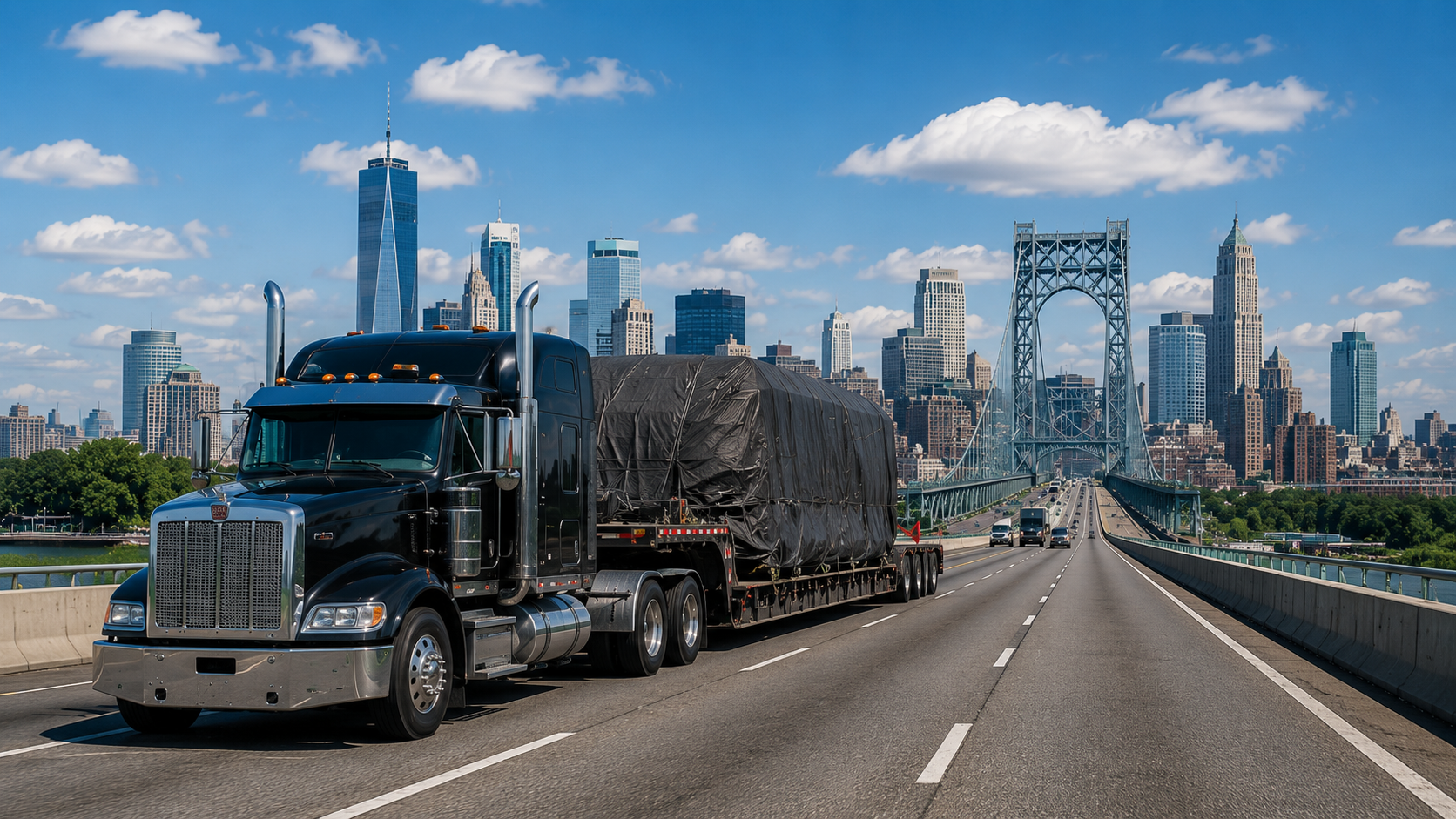
Moving an oversize or overweight load through New Jersey requires advance planning and the right permits in hand before your truck ever crosses the state line. New Jersey enforces strict dimensional and weight limits on its roadways, and operating without the proper authorization can result in costly fines, load holds, and significant delays to your delivery schedule. Understanding New Jersey oversize and overweight load permitting requirements — and working with an experienced permit service — is the most effective way to keep your operation running on time.
What Triggers a Permit Requirement in New Jersey
New Jersey follows standard general guidelines for when an oversize permit is required. A load or vehicle exceeds legal limits when the overall height is greater than 13 feet 6 inches, overall width exceeds 8 feet 6 inches, the trailer length exceeds 48 feet, or the gross vehicle weight surpasses 80,000 pounds. These thresholds apply to most New Jersey roadways, though certain routes, bridges, and municipalities may have additional or more restrictive requirements. Any movement that exceeds these dimensions without an active permit is considered an illegal oversize or overweight movement.
New Jersey also enforces seasonal weight restrictions during spring thaw periods, which can affect routing and scheduling for heavy haul operations. Carriers who are unfamiliar with these temporary restrictions risk having their loads turned back at the border or detained at weigh stations.
Types of New Jersey Oversize Permits
New Jersey issues several types of permits depending on the nature of the load and the frequency of travel. Single-trip permits authorize a one-time movement from a specified origin to a destination along an approved route. Annual permits are available for carriers who make frequent oversize or overweight movements within the state, offering a more efficient option for high-volume operations. Superload permits are required for loads that significantly exceed standard oversize thresholds and involve a more intensive application process that may include engineering reviews, utility coordination, and bridge analyses.
Travel restrictions are a standard part of any New Jersey oversize permit. These may include prohibited travel during peak traffic hours, restrictions on holiday weekends, nighttime movement requirements, or mandatory pilot car provisions depending on the load dimensions.
Routing and Application Requirements
One of the most important aspects of securing a New Jersey oversize permit is submitting an accurate route. The New Jersey Department of Transportation evaluates permit applications based on the proposed route and may reject or modify applications that include roads not rated for the load in question. Submitting an incorrect route can result in application delays, forcing carriers to wait for re-review while their load sits.
A thorough route analysis before filing the application helps identify any low clearances, weight-restricted bridges, or restricted roadway segments along the proposed path. This upfront work saves significant time and reduces the chance of rejection.
How Reliable Permit Solutions Simplifies the Process
At Reliable Permit Solutions, our team of permit specialists has extensive experience securing New Jersey oversize permits for carriers across the country. We handle the full application process on your behalf — from route analysis and documentation to submission and permit delivery. Our agents understand the specific requirements of the New Jersey permitting system and work to get your permits issued as quickly as possible so your operation stays on schedule.
Whether you need a single-trip permit for an immediate move or ongoing permit management for a fleet operating in New Jersey, Reliable Permit Solutions is ready to help. Call us today at (888) 949-4220 or request a rate quote online.