

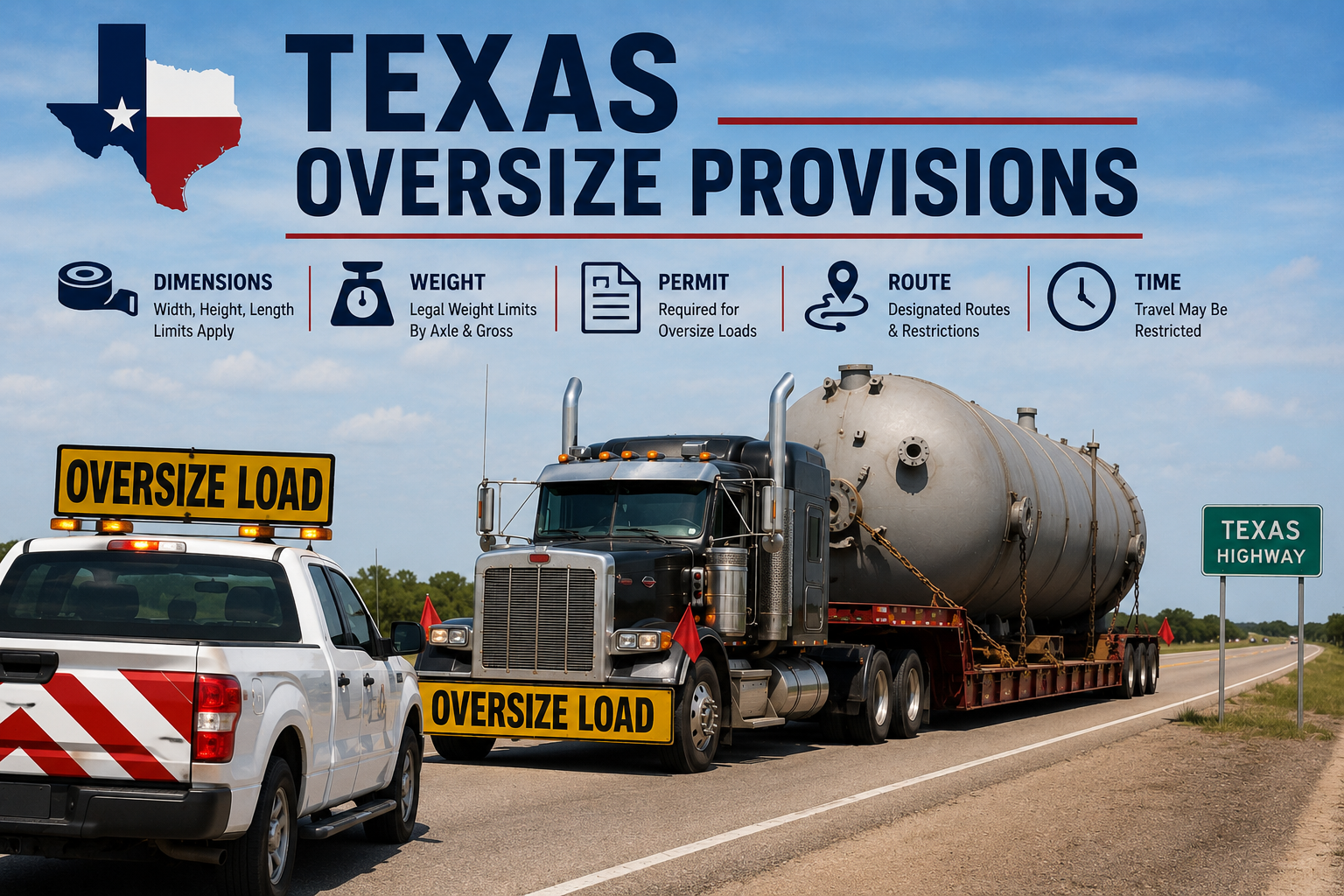
Texas is one of the most active states in the country for oversized load movement. Its extensive highway network, energy sector freight, and agricultural economy generate a constant demand for wide-load transportation. But moving an oversized load through Texas requires more than just a permit number — it requires a solid understanding of Texas oversize provisions, including dimensional thresholds, travel restrictions, and routing rules that differ from what you’ll encounter in other states.
This guide covers what carriers and permit agents need to know about Texas’s regulatory framework for oversized loads, and how Reliable Permit Solutions makes the permitting process faster and less stressful.
Texas Oversize Thresholds: When a Permit Is Required
Under TxDOT (Texas Department of Transportation) regulations, a permit is required when a vehicle or load exceeds any of the following standard legal limits:
- Width: Over 8 feet 6 inches
- Height: Over 14 feet
- Length: Over 65 feet for a single vehicle; over 81 feet 6 inches for combination vehicles
- Weight: Over 80,000 lbs gross vehicle weight, or axle weight limits set by the bridge formula
Texas also sets specific permit categories that go beyond standard oversize, including “manufactured housing” permits, “rig-up” permits for oil field equipment, and permits for superheavy or oversized loads that exceed routine oversize dimensions. Each category comes with its own set of conditions and requirements.
Travel Restrictions Under Texas Oversize Provisions
Simply holding a permit doesn’t guarantee unrestricted travel. Texas oversize provisions include a number of operational constraints that must be followed:
- Travel hours: Most oversized loads in Texas may only travel from 30 minutes before sunrise to 30 minutes after sunset. Nighttime travel requires special authorization.
- Holiday blackout periods: Travel is restricted during certain holiday windows, including Memorial Day, Labor Day, and other high-traffic periods.
- Weekend restrictions: Some load types face weekend travel limitations, particularly on high-volume corridors.
- Weather conditions: Loads may be restricted during poor weather, including high winds or reduced visibility.
Understanding how these restrictions interact with your haul schedule is essential for planning. For insight into how peak periods affect permitting timelines, our article on strategies for handling trip permits during peak logistic seasons provides valuable context.
Pilot Car Requirements in Texas
Texas oversize provisions include some of the most detailed pilot car requirements in the country. Escort vehicles are required when loads exceed certain width, height, or length thresholds, and the number of escorts required increases with load dimensions. Texas also has strict equipment requirements for pilot cars, including sign specifications, lighting, and communication gear.
For detailed guidance on when escorts are triggered and what they must carry, our guide on when do I need a pilot car walks through the key thresholds.
Routing and Load Restrictions
Not all Texas roads can accommodate oversized loads. Permit routes are subject to bridge load ratings, clearance heights, and local ordinance restrictions. TxDOT uses its own routing system for permitted moves, and applicants must specify accurate route information — any deviation from the permitted route can result in penalties or permit cancellation.
Working with experienced route consultants who understand Texas infrastructure can significantly reduce turnaround time and eliminate costly application rejections. Our route consulting services are designed specifically to help operators identify the most direct and practical corridors for their loads.
Fees and Application Process
Texas permit fees vary based on load dimensions, weight, and number of trips. Single-trip permits are available for one-time moves, while annual permits cover unlimited moves within defined parameters. The TxDOT online permitting portal handles many standard oversize permits, but complex loads — particularly those involving superload conditions or utility coordination — benefit from professional handling.
For a deep dive into oversize and overweight permitting specific to Texas, including cost factors and real-world examples, our article on overweight and oversize permits in Texas is an excellent resource.
How Permit Regulations Shape Oversized Operations in Texas
Texas’s permitting rules are not static — TxDOT updates provisions regularly, and load operators who aren’t staying current risk non-compliance. The impact of permit regulations on oversized freight load transportation is felt directly in how loads are scheduled, routed, and priced.
Work with Reliable Permit Solutions for Texas Oversize Permits
Reliable Permit Solutions has been processing Texas oversize permits for more than two decades. Our agents understand TxDOT’s requirements inside and out and stay current with every regulatory update. Whether you’re moving oil field equipment across West Texas, transporting manufactured housing through the Hill Country, or hauling industrial machinery into a port facility, we make the process efficient and compliant.
Call us at (888) 949-4220 or visit our overweight/oversize permitting page to get a rate quote and start your permit application today.