
How Long Does an Oversize Permit Really Take? Honest Turnaround, State by State
A routine oversize permit takes minutes to a business day. A permit that needs a bridge analysis takes ten business days or more, and the heaviest superloads take weeks. Your dimensions and weight decide which clock you are on, not the permit office, and not us.
I get asked "how fast can you get it?" more than any other question, and the honest answer is that there are three different clocks, and the load picks the clock before anyone types a thing. I've been getting permits into drivers' hands since September 2006. The states below publish their own numbers, and I checked each one this week.
In this article
1The three clocks
Clock one: the computer issues it. Most states run a routing system that checks your numbers against the road and bridge data and prints the permit. Texas says its TxPROS system is available 24 hours a day, seven days a week for permits that are eligible for self-issue. Michigan says electronically submitted single-trip permits are processed in the order received and are usually issued within 24 business hours. When your load fits inside the state's routine envelope, this is your clock. Minutes to a business day.
Clock two: a permit specialist routes it. Over a certain width, height or length, the system hands the application to a person. The person checks the route by hand and may ask for a survey, escorts and travel hours. Oregon's superload page says a permit could take up to 10 days to issue, and special circumstances may require longer. This clock runs in days, and it runs only during office hours.
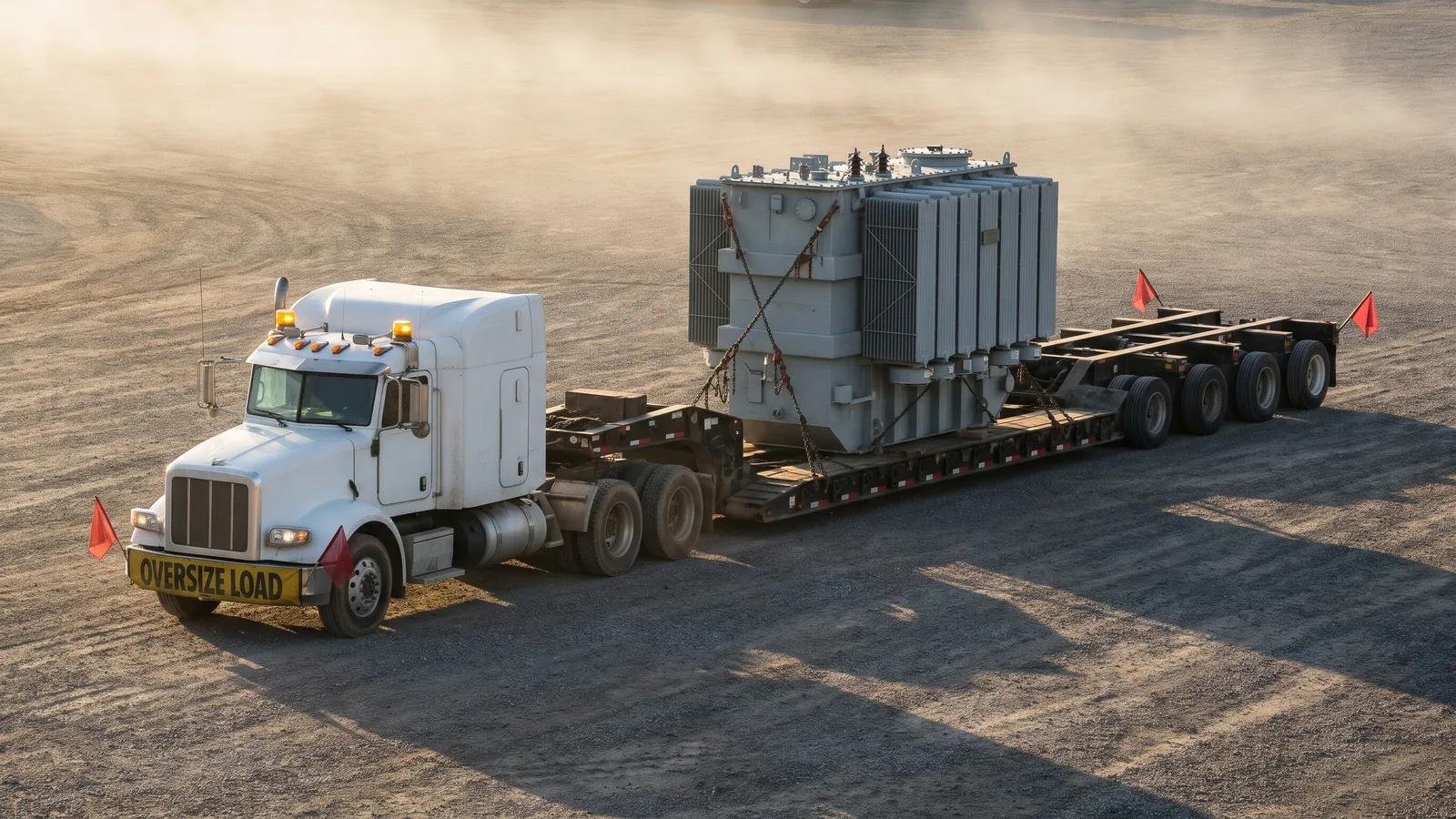
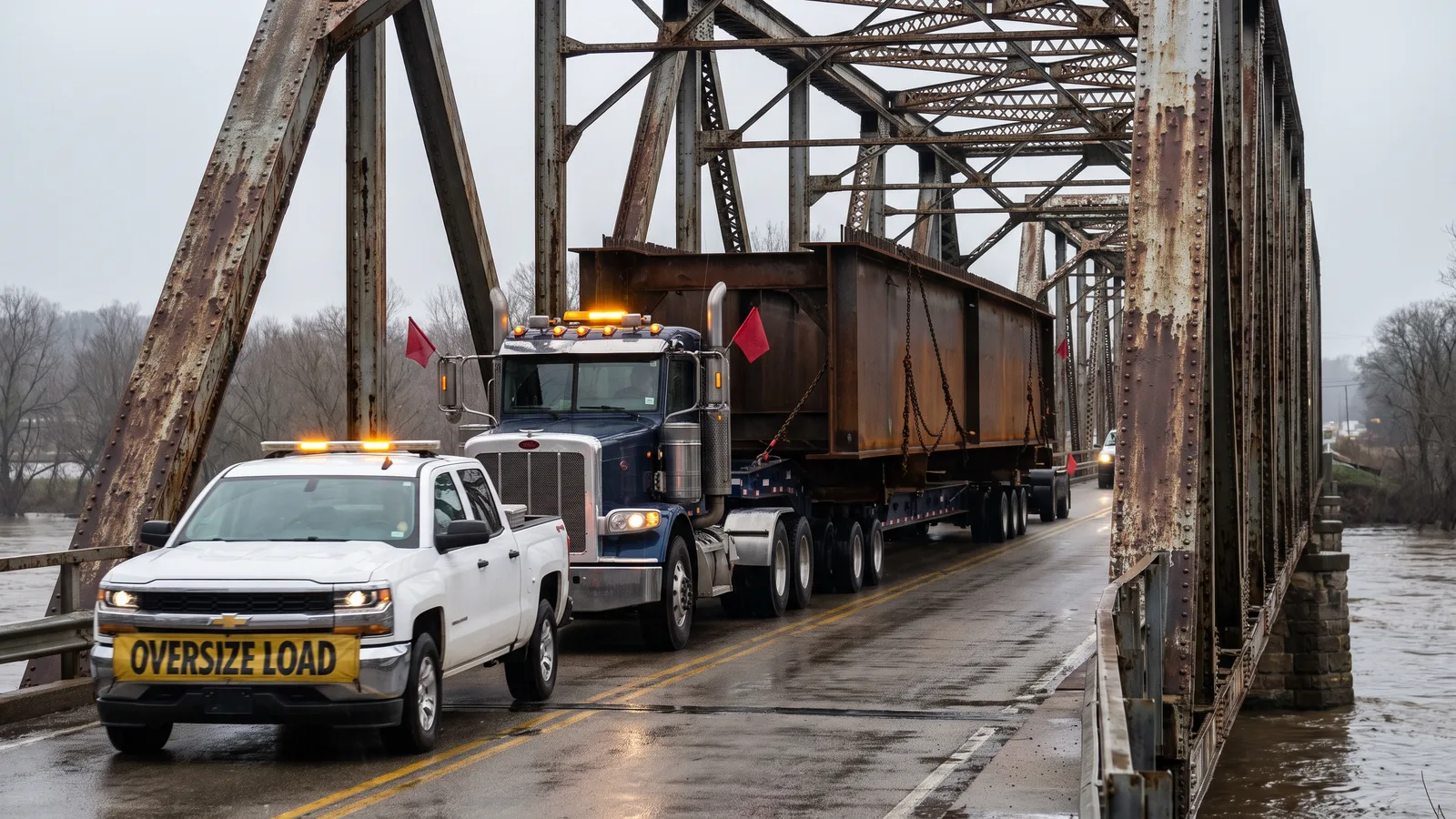
Clock three: an engineer analyzes it. Over a certain weight, the state has to confirm that every bridge on the route will carry you. That is a structural calculation on your axle spacings and weights. North Carolina asks for superload applications at least 10 business days before the move "to allow for internal and bridge engineering reviews." Washington asks for 30 calendar days on loads over 200,000 pounds, and says plainly that the lead time exists so the department can analyze the pavements and structures the move would affect. This clock runs in weeks.
2What drops you off the fast clock
Every state draws its own line between a routine permit and a reviewed one, and a load that is routine in one state can be a superload at the next state line. Here is where the states I checked draw theirs.
| State | Where the slow clock starts |
|---|---|
| Texas | A Route Inspection Certification must be on file before a permit is issued for a load over 20 ft wide, 18 ft 11 in high, or 125 ft long |
| North Carolina | Superload: gross weight over 132,000 lb, or width 17 ft or greater |
| Washington | Superload: over 200,000 lb, or over 16 ft high or 16 ft wide, or trailer plus load over 125 ft long |
| Oregon | Superload: over 16 ft wide on the Interstate and multi-lane highways, over 14 ft wide on a two-lane state highway, over 17 ft high, or over 150 ft long |
| Delaware | Superload: 15 ft or more wide, 15 ft or more high, 120 ft or more long, or gross weight over 120,000 lb |
| Georgia | Superload Single: width or height over 16 ft, or 150,001 to 180,000 lb. Superload Plus: over 180,000 lb. Mega Load: 300,000 lb and up |
| Alaska | Superload: over 150 ft long, over 18 ft wide, over 18 ft high, or 250,000 lb and up |
Look at the weight column. The same 140,000-pound load is a superload in North Carolina and Delaware, and a routine permit in Washington and Alaska. Plan against the strictest state on the route, because it sets the clock for the whole trip. Our post on oversize versus superload goes deeper on where the ordinary permit stops.
3Turnaround by state, from the states themselves
These are the numbers the states publish, in their words. "Business days" means office days. "Calendar days" counts the weekend. "Up to" is a ceiling on a normal week, not a promise.
| State | Routine permit | Reviewed or superload permit |
|---|---|---|
| Texas | Self-issue in TxPROS, available 24/7 for eligible permits | Route Inspection Certification on file before issuance above the thresholds in the table above; no published day count |
| Michigan | Single trip usually issued within 24 business hours | Extended permits usually issued within 15 to 21 business days |
| Florida | Not published | Non-routine permit requests must be received at least 10 business days before the scheduled movement |
| North Carolina | Not published | Submit at least 10 business days before the move; wait 16 business hours before calling for status; bridge studies expire after 90 days |
| Georgia | Not published | Superload Single up to 3 days; Superload Plus up to 3 weeks; Mega Load at least 30 business days from the engineering submittal |
| Washington | Not published | Over 200,000 lb: apply at least 30 calendar days ahead. Dimension only: at least 7 calendar days ahead |
| Oregon | Not published | Superload permit could take up to 10 days; special circumstances longer |
| Delaware | Not published | Type 1 superload typically 5 business days; Types 2 to 4 typically 10; Type 5 typically 14, and the review may take up to 14 |
| Alaska | Not published | Superloads need 5 business days' advance notice |
Two things stand out. First, "not published" is normal for a routine permit, because the system issues it and the state doesn't state a turnaround for something that prints. Second, the review clocks differ wildly for the same load. A 190,000-pound move is 3 weeks in Georgia, 30 calendar days in Washington, and 10 business days in North Carolina, before anyone mentions a county or a city.
4What actually eats the time
The published numbers assume a clean application. Here is where I have watched the days go.
- The bridge analysis. This is the whole reason the weight clock exists, and nobody can hurry a state bridge section. Washington says the 30-day lead time is for exactly this. North Carolina's bridge studies are good for 90 days and then the application is void, so a move that slips past 90 days starts the analysis over.
- The route survey. Texas wants a Route Inspection Certification on file before it issues a permit above 20 feet wide, 18 feet 11 inches high or 125 feet long. Delaware wants its route survey completed within 14 business days before the move. Somebody has to drive the route with a height pole first. Book that before anything else.
- An incomplete application. Oregon lists what a superload request must include: contact, move date, commodity, loaded dimensions, a diagram when anything is over 16 feet wide, axle spacings and weights, origin, destination, proposed route, travel speeds, and year, make, VIN and plate. Leave one out and the application sits. Our permit checklist is built to catch that before the order goes in.
- Calling too early. North Carolina asks for 16 business hours before you call about status. Every early status call is a specialist answering a phone instead of routing a load.
- Office hours. The Texas permit office runs Monday through Friday, 8 a.m. to 4:30 p.m., and its toll-free line closes at 4:30. A reviewed application filed Friday at 5 p.m. starts Monday. Michigan's "24 business hours" is closer to three office days than one if you file at closing time.
- Counties and cities. The state permit is one clock. The county road off the ramp and the city street at the plant each run their own, rarely faster.
- Holidays. Offices close, and on the big ones the roads close to oversize loads too. The closure list shows which days are gone before you file, and our December processing guide covers the worst month of the year for it.
5How to stay on the short clock
You can't change the state's number. You can change whether you earn it on the first try.
- Measure loaded, then decide what you are. Width, height, length, overhang and gross weight of the whole combination, taped. One inch over a superload line is the slow clock.
- Find the strictest state on the route first. If any state on the trip calls your load a superload, order that state first, because it sets the delivery date.
- Have the axle sheet ready. Weight permits are written on axle spacings and axle weights, not just gross. Every bridge analysis starts with them.
- Get the survey moving before the application. Where a state wants a route survey or inspection certification on file, the application can't start until it is.
- Don't change the truck. A reviewed permit is written to a specific tractor, trailer and axle layout. Swap the trailer after the analysis and you are back at the start of the clock. Our post on how permits get voided covers what happens if you roll anyway.
- Watch the window. North Carolina holds an approved superload application for 90 days and voids it after. Michigan's extended permits run 15 to 21 business days. Order inside the window the state gives you, and keep the move date you gave them.
For loads that live on the slow clock every trip, our superload desk and route consulting exist to get the survey, the axle sheet and the application right the first time. For everything else, the oversize and overweight permit page is the place to start.
6What our desk can and can't speed up
I'll be straight about this. We can't make a bridge engineer in Raleigh or Olympia work faster, and nobody else can either. Anyone who promises a 10-business-day state in three days is promising something they don't control.
What we can do is make sure nothing on our side adds a day. When your dimensions come in by email, our system reads them into the order in about 20 seconds, so nothing gets retyped. When you call, our phone system prompts the agent if a dimension is missing. The moment a state issues a permit, it goes to you automatically. And because we have worked these offices since 2006, we know which state wants the survey first, which wants the axle sheet in its own format, and which will sit on an application missing a plate number without telling anyone.
Most of our customers get the first state, start rolling, and call from the road for the next four. That works on the fast clock. On the slow clock, call the day the load is booked. The states that take weeks don't care when your pickup is.
If you ever need a permit, click to call.
A specialist picks up. Oversize, overweight, superload, trip and fuel permits in every U.S. state and Canadian province.
Call (888) 949-4220Questions drivers ask us
How long does it take to get an oversize permit?
A routine permit inside the state's normal envelope usually issues in minutes to a business day; Michigan says single-trip permits are usually issued within 24 business hours. A route review or bridge analysis runs 10 business days in North Carolina and Florida, and 30 days or more in Washington and Georgia.
Why does a superload permit take weeks?
An engineer has to confirm every bridge on the route will carry your axle weights. Washington says its 30-day lead time for loads over 200,000 pounds exists so the department can analyze the pavements and structures the move affects.
Can a permit service get my permit faster than I can?
Not on the state's side of the clock. A good service makes sure nothing on its side adds a day: a complete application, the right axle sheet, the survey booked first, and the permit forwarded the moment it issues.
What makes a load a superload?
Each state draws its own line. North Carolina starts at 132,000 pounds gross or 17 feet wide. Washington starts at 200,000 pounds, 16 feet wide or high, or 125 feet long. Alaska starts at 250,000 pounds.
Do weekends and holidays count toward the processing time?
Only when the state says calendar days, as Washington does. Business days skip weekends and holidays, and permit offices close on the big ones. Check the closure list before you file; on several holidays the roads close to oversize loads too.
What if my move date slips after the permit is approved?
Ask the state before it expires. North Carolina holds an approved superload application for 90 days and its bridge studies expire after that; a move that slips past the window restarts the analysis.
Sources
Rules checked October 23, 2026. Penalties change, and the permit in your cab plus the issuing state's current rule are always the final word.
- NCDOT, Superload Permits Publication SL-6
- Oregon Department of Transportation, Oregon Superloads
- Alaska DOT&PF, Superload Notice
- Fla. Admin. Code R. 14-26.00411, Procedure for Issuance of Permits (Cornell Legal Information Institute)
- Georgia Department of Public Safety, Oversize Permit Types
- 2 Del. Admin. Code § 2405-5.0, Superload Permit Application Review Lead Time (Cornell Legal Information Institute)
- 2 Del. Admin. Code § 2405-3.0, Permit Descriptions and Procedures (Cornell Legal Information Institute)
- WAC 468-38-405, Superloads (Cornell Legal Information Institute)
- MDOT, Oversize/Overweight Permits FAQ
- TxDMV, General Single-Trip Oversize/Overweight Permit
- TxDMV, Oversize/Overweight Permits (office hours)
- TxDMV bulletin, Oversize/Overweight Permits Office Days of Operation (TxPROS self-issue 24/7), Nov. 25, 2019