

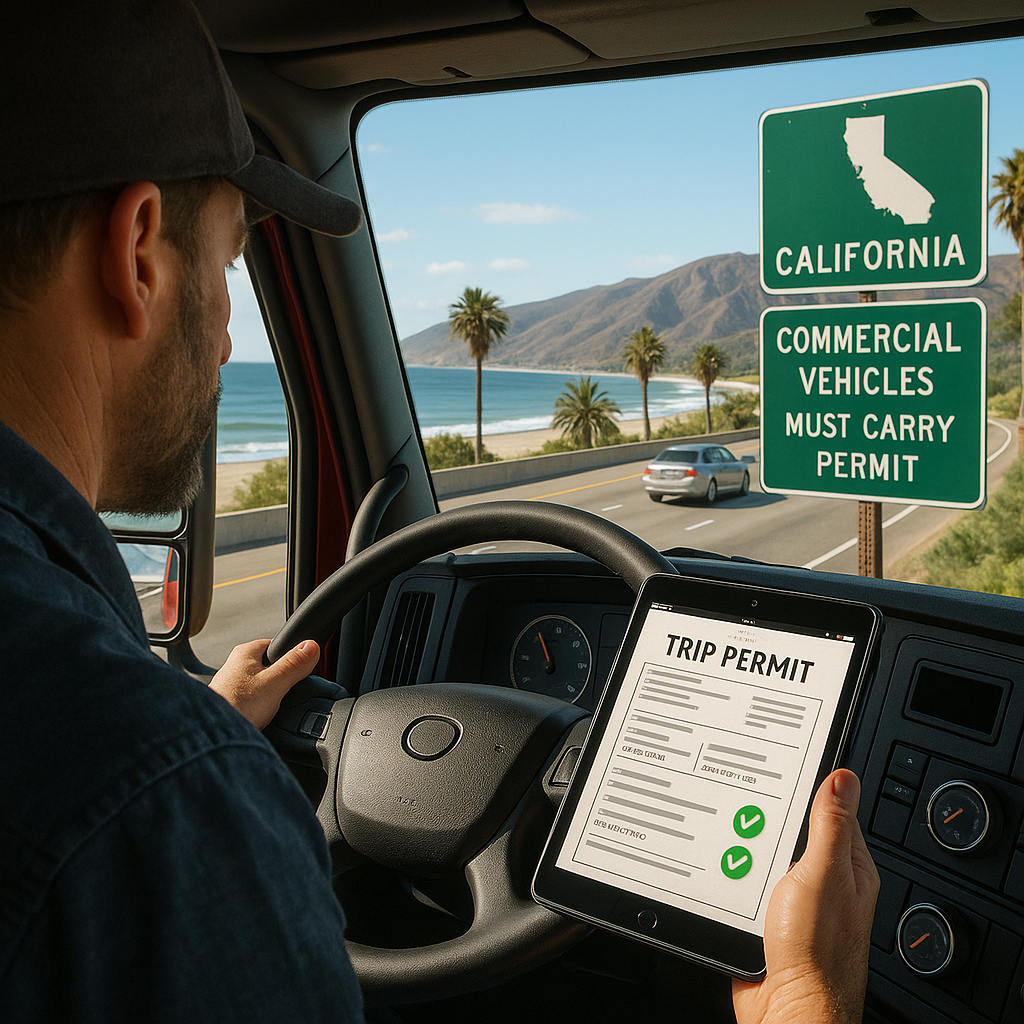
California isn’t just another stop on the map—it’s the nation’s largest state economy, home to sprawling ports, vast agricultural zones, and a transportation network that drives commerce coast to coast. But with that scale comes complexity. For carriers, securing a California commercial trip permit isn’t optional—it’s the law. California enforces some of the strictest regulatory standards in the country, blending traditional weight and registration requirements with unique environmental mandates like CARB compliance and port-specific restrictions. Missing a step can mean hefty fines, delays, or even being sidelined entirely.
This guide breaks down exactly what you need to know about California’s trip permits, who they apply to, and how Reliable Permit Solutions helps carriers navigate this high-stakes landscape.
Who Actually Needs a California Commercial Trip Permit?
The California commercial trip permit applies to any commercial vehicle operating in the state without valid California registration or International Registration Plan (IRP) credentials. Think of it as a temporary permission slip that keeps you legal while you’re on California’s roads.
But California adds extra layers of enforcement:
- Weight and configuration thresholds: Vehicles exceeding 10,001 pounds fall under commercial rules, but specialized equipment and oversize loads face additional scrutiny.
- Interstate vs. intrastate: Out-of-state carriers without California IRP credentials need permits just to haul across the border. Local carriers sometimes require them for temporary operations outside their regular routes.
- Industry-specific cases: Port drayage, agriculture, and construction carriers all face extra checks, especially in zones like Los Angeles, Long Beach, and the Central Valley.
- Environmental triggers: If you’re running older engines, you may also need CARB compliance documentation alongside your permit.
Types of Permits You’ll Encounter
The California commercial trip permit isn’t one-size-fits-all. Depending on your operation, you may also need:
- Standard Trip Permits: Temporary registration when IRP credentials aren’t in place.
- Fuel Tax Permits: For carriers not enrolled in IFTA but operating in California.
- Oversize/Overweight Permits: Required when your load exceeds state-defined dimensions or weight.
- CARB Compliance Permits: Certificates ensuring your fleet meets California Air Resources Board emissions standards.
For many carriers, it’s not just one permit—it’s a stack, and each has its own requirements.
The Application Process
California’s permit process may look straightforward on paper, but timing and accuracy are everything. To secure a California commercial trip permit, carriers typically:
- Apply online through the California DMV or via an authorized permit provider.
- Submit documentation such as vehicle registration, proof of insurance, and trip details.
- Wait for processing, which can vary depending on the type of permit and load.
- Present permits at the port of entry, weigh stations, or when stopped for inspections.
This is where Reliable Permit Solutions shines—handling the paperwork, anticipating delays, and making sure no details slip through the cracks.
California-Specific Regulations You Can’t Ignore
California doesn’t just regulate size and weight—it redefines how freight moves. Key considerations include:
- Emissions standards: CARB regulations impact which vehicles can legally operate, especially in urban corridors.
- Urban restrictions: Certain zones in Los Angeles and the Bay Area have time-of-day or equipment restrictions.
- Agricultural exceptions: Seasonal harvests often trigger temporary movement allowances, but only with the right permits.
- Disaster preparedness: California’s earthquake-prone infrastructure means some routes carry special inspection and permit requirements.
Without expert guidance, these nuances can create costly setbacks.
Navigating the Complexity with Reliable Permit Solutions
California’s permit system isn’t designed for simplicity—it’s designed for compliance. That’s why carriers across the country rely on Reliable Permit Solutions. With deep expertise in state-specific requirements, the company helps fleets coordinate multiple permits, maintain CARB compliance, and minimize costs.
Instead of piecing together regulations from DMV manuals, port authorities, and agricultural boards, Reliable Permit Solutions consolidates the process into one streamlined service. For carriers, that means less downtime, fewer fines, and more confidence on California’s highways.
The Bottom Line
Operating in California requires more than just showing up with your rig—it requires foresight, paperwork, and compliance with some of the strictest rules in the country. A California commercial trip permit is your first step toward staying legal, but it’s rarely the only step. With layers of regulation spanning fuel, emissions, ports, and weight thresholds, carriers need a partner who can connect the dots.
Reliable Permit Solutions isn’t just a permit provider; it’s a compliance partner built for modern trucking. Whether you’re hauling containers from the Port of Los Angeles, moving produce out of the Central Valley, or running cross-country freight into the Bay Area, the right permits keep your business moving. And in California, getting those permits right is the difference between profit and penalty.