

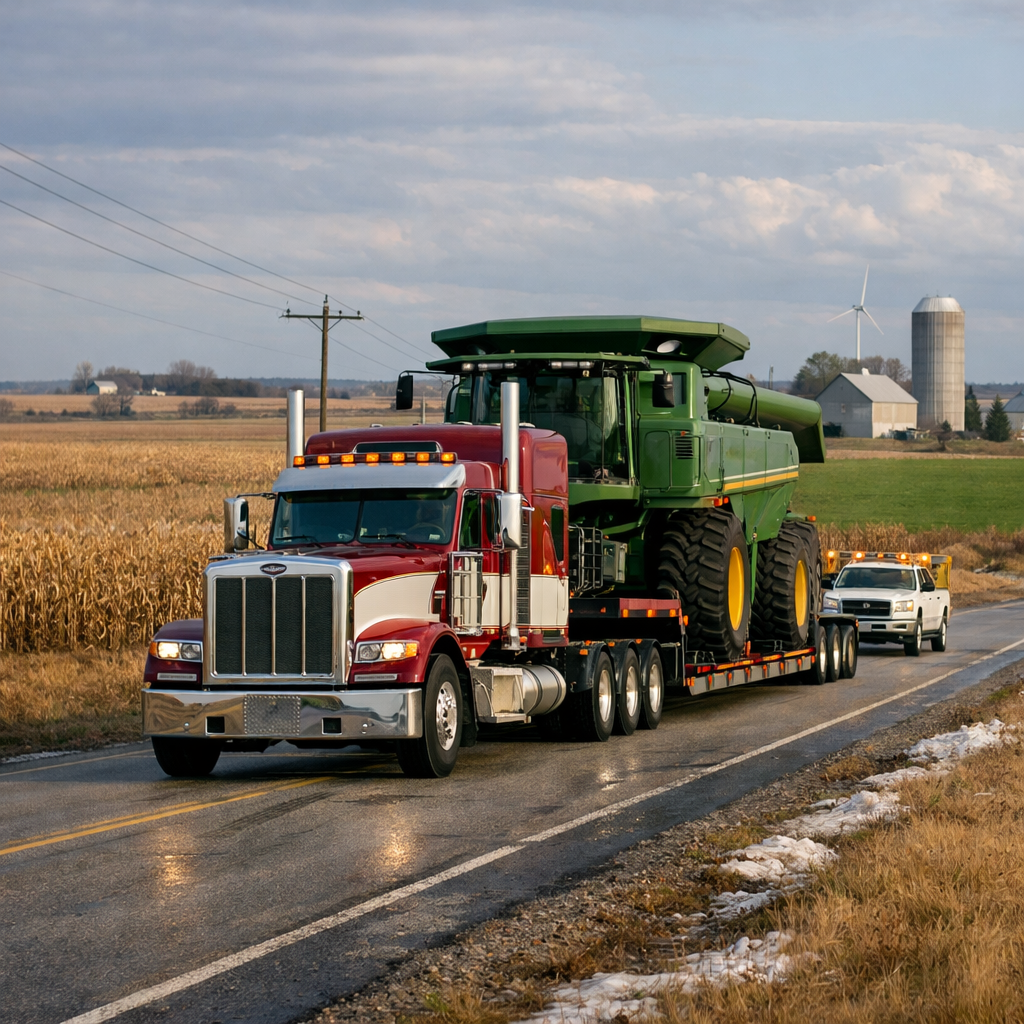
Iowa oversize permits are essential for commercial carriers moving large loads through the state year-round. Seasonal road postings during the spring thaw and fall harvest can affect approved routes and create delays. Knowing how Iowa’s road posting system works helps carriers stay prepared and keep deliveries on schedule.
Iowa’s road posting system is managed by the Iowa Department of Transportation and individual county engineers. Authorities place weight restrictions on secondary and county roads when road conditions deteriorate due to frost heave, saturated soil, or heavy seasonal traffic. Restrictions can drop load limits significantly, and carriers holding active permits need to stay informed before and during every haul.
Posted roads are listed through the Iowa DOT’s online road conditions system and county-level databases. Restrictions can be applied with little advance notice, making regular monitoring a key part of haul planning. Carriers who travel Iowa routes frequently benefit greatly from working with a permit service that tracks these changes in real time.
Spring Thaw Restrictions and How They Affect Iowa Secondary Roads
Iowa’s spring thaw period runs generally from February through May each year. Frozen ground thaws from the surface down, causing the soil beneath road bases to lose load-bearing capacity. County engineers respond by posting weight restrictions on secondary roads to protect road infrastructure from damage.
Weight limits on posted roads may be reduced significantly from their standard posted limits during this period. Carriers with Iowa oversize permits routed over secondary roads face an immediate challenge when new postings are applied to their approved route. Requesting a revised permit routing or identifying alternate state highways are the most effective ways to stay on schedule.
Fall Harvest Season and Routing Challenges for Oversize Haulers
Fall harvest in Iowa generally runs from September through November. The season brings increased enforcement activity, heavier agricultural equipment sharing roadways, and added coordination requirements with county engineers. Carriers moving wind energy components and heavy industrial loads through Iowa face more congestion along rural road corridors during this time.
Iowa frost laws can also come into play earlier in the fall as temperatures drop, adding weight restrictions on top of already active routing challenges. Iowa oversize permits approved for fall hauls need to account for both harvest traffic patterns and early frost conditions. Planning routes with extra lead time gives permit services the room needed to secure the right approvals.
How Iowa Road Postings Affect Your Approved Permit Route
An Iowa oversize permits approval specifies the exact authorized route, and that route remains valid only as originally approved. When road postings are applied to any segment of a permitted route after the permit is issued, carriers are responsible for verifying current conditions before traveling. Checking posting status before every haul prevents costly mid-trip complications.
Iowa DOT provides a road conditions resource for monitoring active postings, and secondary and county road postings are often tracked at the county level. Carriers or their permit service need to check multiple sources to get a complete picture of current restrictions. Identifying posted roads ahead of departure is the most effective way to keep hauls moving without interruption.
Iowa DOT Oversize and Overweight Permit Requirements During Restricted Seasons
Iowa DOT continues issuing Iowa oversize permits during spring and fall restriction periods. Approved routes within those permits must reflect current road conditions at the time of travel. Carriers with time-sensitive hauls benefit from applying earlier.
Some oversize loads qualify for state highway routing that bypasses the most heavily posted secondary roads. Iowa’s primary and interstate highway network is generally free from the same seasonal restrictions applied to county and secondary roads. State highway routing is a practical option for large oversize loads during restricted seasons.
Planning and Routing Around Iowa’s Most Posted Roads
Effective planning for Iowa oversize permits during restricted seasons starts at the route selection stage. Prioritizing state highways and avoiding secondary roads in counties with historically early or lengthy postings saves time and reduces amendment requests. Building seasonal timing into haul scheduling gives carriers the flexibility to avoid peak restriction windows.
The following steps support smoother haul planning during restricted seasons. First, scheduling loads to travel before February or after May keeps hauls away from the core spring thaw window. Second, monitoring Iowa DOT road conditions resources weekly during February through May and September through November helps carriers stay ahead of new postings.
Get Expert Help With Your Iowa Oversize Permit and Route Planning
Navigating Iowa’s seasonal road postings adds complexity to every haul that standard permit applications alone are unlikely to resolve. At Reliable Permit Solutions, the route consulting team carries deep Iowa corridor experience to identify posting risks before they affect a haul. We handle permit amendments quickly when conditions change, so carriers can keep moving.
Iowa oversize permits handled through RPS reflect current road conditions and are built around routes that hold up through the season. Our specialists coordinate state approvals, county contacts, and route adjustments to keep loads on track. Call us at (888) 949-4220 to get started with a permit specialist today.
Frequently Asked Questions
What triggers road postings on Iowa secondary roads?
Iowa road postings are triggered by deteriorating road conditions, most commonly during spring thaw when saturated soil loses load-bearing capacity. County engineers and the Iowa DOT issue postings to protect road infrastructure from damage caused by overweight vehicles. Postings during fall harvest are also common due to increased agricultural traffic on rural roads.
Do Iowa oversize permits get issued during the spring thaw?
Iowa DOT continues issuing Iowa oversize permits during the spring thaw, and the approved routes must work around posted roads. Permits are approved for routes that account for current road weight requirements at the time of travel. Carriers with time-sensitive hauls should apply earlier to allow time for route adjustments.
How do I know if my Iowa permit route includes posted roads?
Iowa DOT provides a road conditions portal, and county-level postings may be tracked separately at the county engineer’s office. Checking both state and county sources gives carriers the most complete picture of active restrictions. Working with a permit service that monitors postings against specific routes is the most reliable approach.
Can I travel a posted Iowa road with an active permit?
Carriers must confirm that all roads on their approved route meet current weight requirements before traveling. When a road is posted below a vehicle’s weight, the existing permit route needs to be amended before the haul proceeds. Contacting a permit service as soon as a posting conflict is identified helps minimize delays.
How long do Iowa spring weight restrictions typically last?
Iowa spring weight restrictions generally run from February through May, though timing varies by year and location. Northern Iowa counties may see restrictions extend slightly longer, depending on how quickly the ground dries. Carriers planning hauls through Iowa during this window should build flexibility into their schedules.
Does fall harvest affect Iowa oversize permit processing times?
Fall harvest can slow permit processing for routes through heavily agricultural counties due to increased coordination with county engineers and higher overall permit volumes. Carriers should plan for additional lead time on Iowa oversize permits during September through November. Applying early and working with an experienced permit service helps manage those delays.
What is the weight limit on a posted Iowa secondary road?
Posted weight limits on Iowa secondary roads vary by road and posting level, and restrictions commonly bring load limits down to 10 tons or a percentage of the road’s standard limit. The specific limit will be stated on the posting for that road segment. Carriers need to review the exact posting before determining whether a route amendment is needed.
Are Iowa interstate highways affected by spring posting restrictions?
Iowa’s interstate and primary state highway system is generally free from the seasonal weight restrictions applied to secondary and county roads. Routing Iowa oversize permits on state highways during restricted seasons is a standard strategy for avoiding posting conflicts. Carriers moving large oversize loads benefit from state highway routing options during the spring thaw and fall harvest.
How far in advance should I apply for an Iowa oversize permit during restricted seasons?
Applying at least five to seven business days in advance is recommended during the spring thaw and fall harvest. Longer lead times are advisable for complex or superload moves that require additional coordination. Early applications give permit services the time needed to identify routing issues and secure approvals before the haul date.
What is the difference between an Iowa oversize permit and an overweight permit?
An Iowa oversize permits authorization covers loads that exceed standard dimensional limits, including height over 13 feet 6 inches, width over 8 feet 6 inches, or trailer length over 48 feet. An overweight permit covers loads exceeding the 80,000-pound gross weight limit. Many large hauls require both, and both are subject to the same seasonal road posting restrictions.