

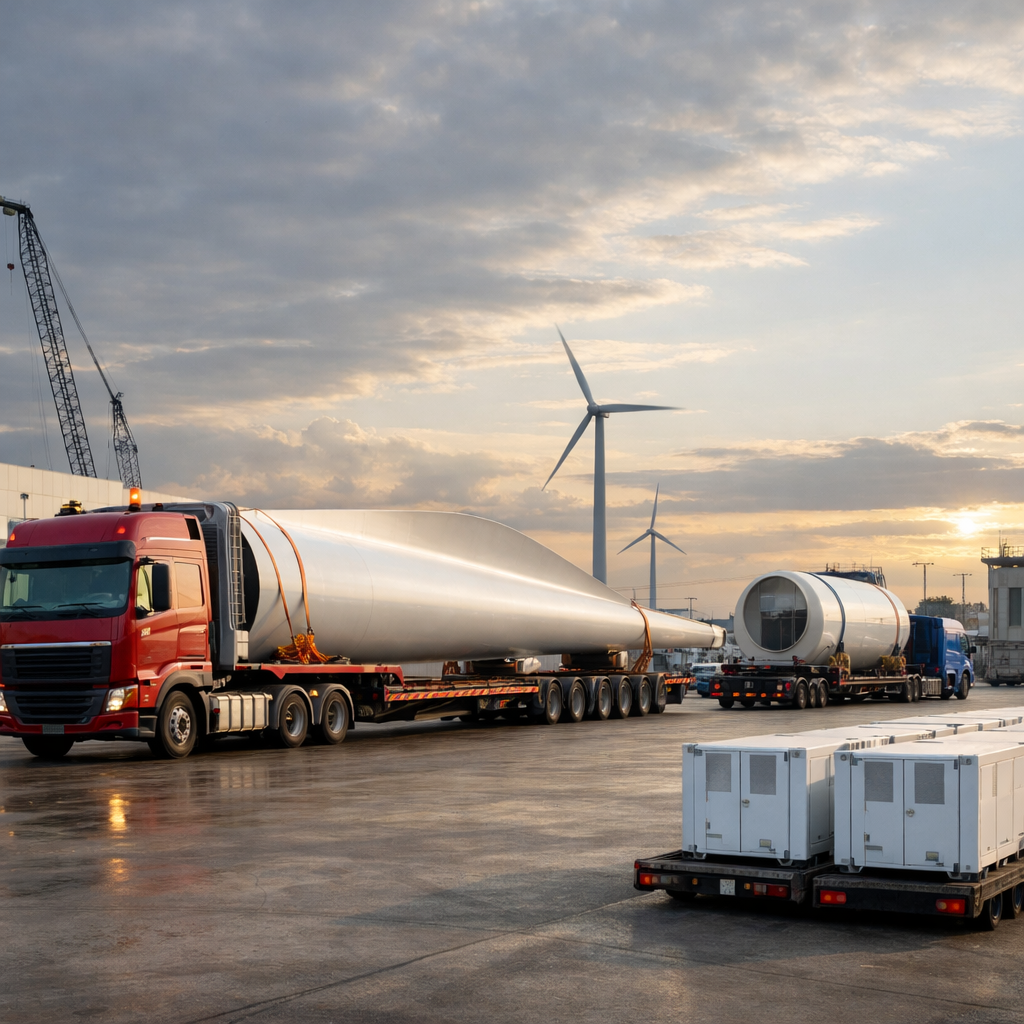
Renewable energy projects depend on safely and legally transporting massive equipment from one place to another, and that process starts with oversize permits. Wind turbine blades, power transformers, and utility-scale battery racks all exceed standard road limits, requiring proper permitting before any truck rolls. Reliable Permit Solutions has the experience and the network to handle every step of that process.
The Growth of Renewable Energy Transport
Renewable energy construction is moving at a pace the industry has never seen before. The United States added over 53 GW of new generating capacity in 2025, and solar and battery storage led the way. Wind, solar, and battery storage projects combined are projected to add over 69,000 MW of capacity in 2026, meaning more heavy equipment will be on the road.
Every wind turbine, solar transformer, and battery rack that gets built must first arrive at its project site. These components are almost always large, heavy, and subject to strict transport regulations. Logistics teams and fleet operators need a permit solution that keeps pace with the demand and keeps projects on schedule.
Wind Turbine Component Transport and Permit Requirements
Wind turbine blades on modern utility-scale turbines commonly reach 200 feet or greater in length. Tower sections run 14 to 16 feet in diameter, placing them well above the standard 8 feet 6 inches width limit. Nacelles, which house the generator assembly, can weigh 200,000 to 400,000 pounds, putting most configurations into overweight territory.
Each component requires a permit issued by every state along the transit route. Blade length forces careful routing to avoid low bridges, sharp turns, and overhead utilities. Accurate permit applications that reflect full dimensions, vehicle configuration, and the intended route are essential to prevent rejections and project delays.
Solar Farm Equipment and When Oversize Permits Apply
Large power transformers and central inverter stations are the solar equipment most likely to require oversize permits. Utility-scale power transformers can weigh anywhere from 100,000 to several hundred thousand pounds. Central inverter units are wide enough to require width permits in most states.
Solar farm construction timelines are tight, and a transformer held up at a state line because of a missing permit can stall an entire project. Permit applications for solar equipment must account for specific transformer dimensions, the axle configuration of the transporting vehicle, and any weight restrictions on roads and bridges along the route. Route consulting is often a smart first step before the permitting process even begins.
Battery Storage Units and Transport Thresholds
Utility-scale battery energy storage systems represent the fastest-growing category in renewable energy transport. The United States storage industry installed a record 57.6 gigawatt-hours of new battery capacity in 2025, with developers planning to add another 24 GW of utility-scale battery storage in 2026. These systems are shipped in large rack enclosures or modular container units that frequently exceed standard width or height limits.
Battery storage units are sometimes transported in coordinated convoys, with multiple racks destined for the same site. Each vehicle in a convoy may require its own oversize permits, and all permits must account for the combined logistical scope of the move, including pilot car requirements. Planning for the full convoy keeps delivery schedules intact.
When Renewable Energy Loads Become Superloads
A superload is a load that exceeds standard oversize thresholds. The general markers are a width above 16 feet, a height above 16 feet, a length above 150 feet, or a gross weight above 150,000 to 200,000 pounds, depending on the state. Superloads require a more intensive review process that includes state engineering approval, bridge analysis through the DOT, and utility coordination.
Wind turbine nacelles, large power transformers, and some oversized battery enclosures commonly fall into superload territory. Reliable Permit Solutions has dedicated permit specialists with over 20 years of experience coordinating the full superload documentation package. This includes Engineering Surveys, State Approvals, Utility Approvals, Bridge Analysis, and required drawings across every state.
Pilot Car Requirements for Renewable Energy Moves
Most oversize permits in the renewable energy sector require a pilot car escort, and the specifics vary by state and load configuration. Loads exceeding 12 feet in width generally require at least one rear escort. Loads exceeding 14 feet in width often require both front and rear escorts, while loads exceeding 14 feet 6 inches in height require a high-pole escort for clearance checks.
Blade transport moves require multiple escorts due to their extreme length and may require law enforcement accompaniment through certain jurisdictions. Reliable Permit Solutions coordinates pilot car requirements through an extensive database of experienced escort companies. This gives operators access to high-quality services and competitive rates across every state without having to source escorts separately.
Multi-State Corridor Planning for Energy Project Cargo
Renewable energy projects regularly span multiple states, which means oversize permits must be coordinated across every jurisdiction along the route. A wind farm in West Texas might receive turbine components port-offloaded in Louisiana, which then transit through several states before reaching the site. A solar transformer destined for Nevada may pass through California first.
Each state along that corridor has its own permitting authority, dimensional thresholds, approved routes, and processing timelines. Missing a single state’s requirement, whether it is a weight-restricted bridge, a county road permit, or a utility line that requires advance coordination, can delay or even ground a load. Multi-state corridor planning by experienced permit specialists identifies those obstacles before the truck moves, keeping project deliveries on schedule.
Get Your Renewable Energy Oversize Permits Handled by Specialists
Renewable energy cargo moves on tight timelines, and a permit problem can stop a project in its tracks. Reliable Permit Solutions has the experience, the relationships, and the state-by-state expertise to keep wind, solar, and battery storage loads moving. We handle oversize permits from start to finish, whether you need a straightforward permit for a solar inverter shipment or a full superload package for a turbine blade convoy.
Call us today at (888) 949-4220 or get a rate quote online. Spanish-speaking agents are available.
Frequently Asked Questions
Do wind turbine blades require oversize permits in every state they travel through?
Yes, oversize permits are state-issued, meaning a separate permit is required for each state the load transits. A turbine blade moving from a Gulf Coast port to a Midwest wind farm may require permits from four or more states, each with its own application process, routing approval, and travel restrictions. Working with a full-service permit company covers all of those states in one coordinated process.
What dimensions trigger oversize permits for renewable energy equipment?
A load generally requires oversize permits when it exceeds 13 feet 6 inches in height, 8 feet 6 inches in width, 48 feet in trailer length, or 80,000 pounds in gross vehicle weight. Individual states may apply lower limits on certain roads or bridges. Most utility-scale wind and solar components exceed at least one of these thresholds.
What is a superload, and do solar transformers qualify?
A superload is a load that significantly exceeds standard oversize thresholds, generally over 16 feet wide, 16 feet tall, 150 or more feet long, or above 150,000 to 200,000 pounds, depending on the state. Large power transformers are often considered superloads and require state engineering review, bridge analysis, and utility coordination before a permit is issued. Reliable Permit Solutions manages the full superload documentation package.
How far in advance should permit applications be submitted for a renewable energy move?
For standard oversize loads, lead times of one to five business days are common, depending on the state. Superloads may require two to eight weeks or more due to engineering reviews and utility coordination. Starting the permitting process as early as possible in project logistics planning is always the better path.
Are pilot cars required for all renewable energy oversize loads?
Pilot car requirements are triggered by width, height, and length thresholds that vary by state. Loads over 12 feet wide, 14 feet 6 inches tall, or of extreme length, such as turbine blades, typically require one or more escorts. Some jurisdictions also require law enforcement accompaniment for certain load configurations.
Can one permit company handle all states in a multi-state renewable energy corridor?
A full-service permit company like Reliable Permit Solutions manages the entire multi-state application process, submitting to each state’s permitting authority, coordinating route consulting, and tracking approvals across all jurisdictions. Working with a single permit partner reduces administrative burden and minimizes the risk of missing a state requirement. This approach keeps the project timeline intact from start to finish.
What documents are required for a superload permit for a wind turbine nacelle?
Superload documentation requirements vary by state and typically include an Engineering Survey, Bridge Analysis from the state DOT, Utility Approval for overhead lines, a Route Survey, a Shipper’s Letter, and detailed drawings of the load and transport configuration. Reliable Permit Solutions coordinates all of this documentation as part of its superload permitting service. Every state gets the documentation package it requires.
Do battery storage transport loads require oversize permits?
Many utility-scale battery storage units and container modules require oversize permits because their dimensions, particularly width and, sometimes, height, exceed standard legal limits. When transported in coordinated convoys, each vehicle may need its own permit. Weight permits may also apply depending on the loaded weight and the vehicle configuration.
What states are most commonly involved in renewable energy oversize permit corridors?
Texas, California, and Arizona account for the majority of planned utility-scale solar and battery storage capacity additions in 2026. Major wind energy corridors run through Texas, Oklahoma, Kansas, Iowa, and the Great Plains states. Coastal port-to-project routes through Louisiana, Alabama, and the Gulf states are common for wind turbine component shipments.
How does route consulting help with renewable energy oversize permits?
Route consulting identifies the most direct and cost-effective path for an oversize load before the permit application is filed. This matters especially for heavy renewable energy cargo because weight-restricted bridges, low clearances, and county road limitations can make otherwise logical routes unusable. Accurate route selection on the application prevents rejections and avoids costly re-routing once the truck is already in motion.