


Obtaining a DOT permit refers to securing authorization from state Departments of Transportation for commercial vehicle operations that exceed standard legal limits or require temporary credentials. DOT permits encompass oversize/overweight permits, trip permits, fuel permits, and special hauling authorizations issued by state transportation agencies. Whether you’re moving oversized equipment across state lines, operating without permanent registration credentials, or hauling loads that exceed dimensional limits, understanding how to obtain DOT permits through proper channels ensures legal compliance and prevents costly delays or violations during commercial transportation operations.
Understanding DOT Permits
When commercial carriers reference “DOT permits,” they’re typically referring to permits issued by state Departments of Transportation that authorize vehicle operations exceeding standard legal dimensions, weights, or requiring temporary operating credentials. These permits differ from a DOT number, which is a federal identification number for interstate carriers. DOT permits are state-level authorizations that allow specific movements or operations that would otherwise be illegal.
State DOT agencies issue various permit types to accommodate different commercial transportation needs. The most common include oversize and overweight permits for loads exceeding dimensional or weight limits, trip permits serving as temporary vehicle registration for interstate travel, and fuel permits acting as temporary fuel tax credentials. Each permit type serves a distinct purpose and addresses specific regulatory requirements that carriers must meet to operate legally across jurisdictions.
Understanding the distinction between federal and state DOT requirements is crucial for carriers. While the Federal Motor Carrier Safety Administration oversees interstate commerce and assigns DOT numbers for company identification, individual state DOTs manage permitting for vehicles that exceed standard limits or lack proper credentials within their jurisdictions. Carriers must navigate both federal requirements and state-specific permitting processes to maintain full compliance during commercial operations.
Types of DOT Permits
Oversize and Overweight Permits
Oversize and overweight permits authorize the movement of vehicles and loads that exceed standard legal dimensions or weight limits on public roadways. States typically require these permits when vehicles exceed width of 8 feet 6 inches, height of 13 feet 6 inches, length of 48 feet for trailers, or gross weight of 80,000 pounds. These thresholds represent general guidelines, with specific requirements varying by state and sometimes by road type within states.
These permits contain essential information including authorized dimensions, maximum weight, approved routing, travel time restrictions, and required safety equipment such as flags, lights, and escort vehicles. Carriers must understand whether their loads are divisible (can be broken into smaller shipments) or non-divisible (cannot be separated without compromising the load), as this distinction affects permitting requirements and allowable dimensions in many states.
Trip Permits
Trip permits, also known as temporary registration permits or IRP permits, serve as temporary vehicle registration when commercial vehicles travel into states where they lack permanent registration credentials. The International Registration Plan (IRP) allows properly apportioned vehicles to travel across member jurisdictions, but carriers operating outside their registered jurisdictions need trip permits for legal operation.
Trip permits typically authorize vehicle operation for specific time periods ranging from 24 hours to several days, depending on state regulations. Carriers need trip permits when their vehicles don’t have current IRP credentials for intended travel states, when operating vehicles not yet permanently registered, or when traveling through jurisdictions outside their apportionment. These permits ensure carriers remain compliant with state registration requirements during temporary or one-time movements through various states.
Fuel Permits
Fuel permits provide temporary fuel tax authorization for commercial vehicles traveling in states where they lack International Fuel Tax Agreement (IFTA) credentials. Under IFTA, qualified motor vehicles with two or more axles and gross vehicle weight exceeding 26,000 pounds can travel across member jurisdictions with a single license and quarterly reporting. However, carriers without current IFTA credentials need temporary fuel permits for legal fuel tax compliance.
States issue fuel permits to ensure carriers pay appropriate fuel taxes during their travel through the jurisdiction. These permits typically cover specific time periods and may require upfront payment of estimated fuel tax based on mileage or fuel consumption. Carriers must maintain records of fuel purchases and mileage traveled to support their permit usage and ensure accurate tax payment.
Superload Permits
Superload permits authorize the movement of extremely large or heavy loads that significantly exceed standard oversize and overweight permit limits. These permits involve extensive coordination with state transportation departments, engineering reviews, route surveys, utility company approvals, and often require bridge analysis to ensure infrastructure can safely support the load.
The superload permitting process is substantially more complex and time-consuming than standard oversize permits, often requiring weeks or months for approval. States scrutinize these movements carefully due to the potential impact on infrastructure and public safety. Carriers transporting superloads typically work with specialized permit services that coordinate the numerous agencies, approvals, and logistics required for these exceptional movements.
Determining Which DOT Permits You Need
Determining the correct DOT permits requires careful assessment of your vehicle specifications, load characteristics, and planned route. Start by measuring your vehicle and load dimensions including height, width, length, and total weight. Compare these measurements against the legal limits for each state you’ll travel through, recognizing that limits vary significantly between jurisdictions.
Consider your vehicle’s registration and fuel tax status for each state on your route. If you’re traveling through states where your vehicle isn’t permanently registered, you’ll need trip permits. Similarly, if you lack IFTA credentials for specific states, fuel permits become necessary. Many carriers require multiple permit types simultaneously, such as an overweight permit combined with trip and fuel permits for a single journey.
Multi-state movements add complexity as you must secure separate permits from each state’s transportation department. Each jurisdiction has unique requirements, fees, and processing times. Professional permit services help carriers navigate these complexities by coordinating applications across multiple states and ensuring all necessary permits are secured before movement begins.
General DOT Permit Requirements
Most DOT permit applications require similar core documentation regardless of permit type or state. Carriers need current vehicle registration information including license plate numbers, VIN, and vehicle type. Insurance documentation proving adequate liability coverage is essential, with many states requiring specific minimum coverage amounts for permitted moves.
Load specifications must be detailed and accurate. This includes exact dimensions (height, width, length), total weight, axle configuration, and weight distribution across axles. Many states require load descriptions, cargo type, and value for certain permit categories. Inaccurate information can result in permit denial or violations during transit.
Route planning details are crucial for oversize and overweight permits. Carriers must specify origin and destination points, proposed routes including specific highways and roads, and estimated travel dates and times. States review routing to ensure proposed paths avoid infrastructure limitations such as low bridges, weight-restricted bridges, or roads unsuitable for oversized vehicles.
How to Apply for Oversize/Overweight DOT Permits
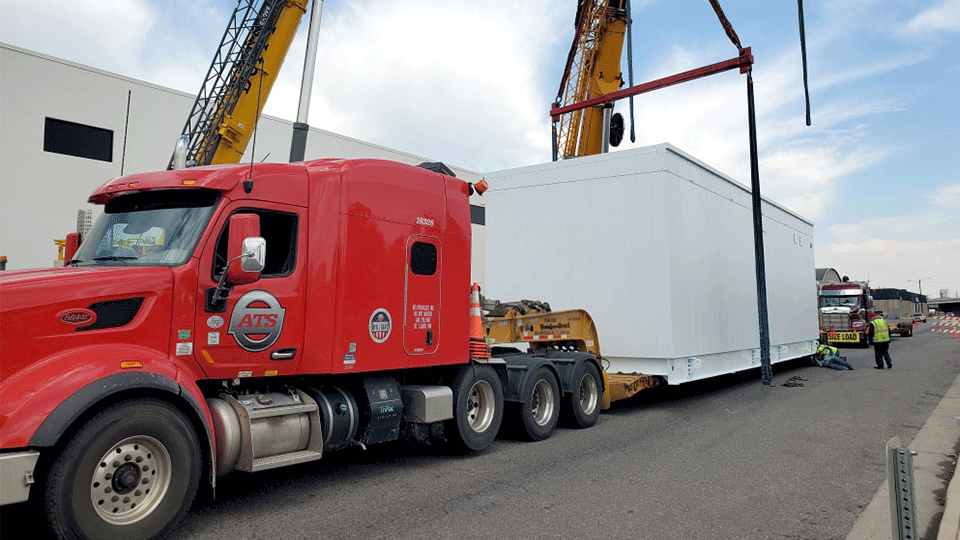
The application process for oversize and overweight permits has evolved significantly with most states now offering online systems. These web-based portals allow carriers to submit applications, upload required documents, pay fees, and receive permits electronically. The efficiency of these systems varies, with some states providing instant permits for certain load configurations while others require several business days for processing and route approval.
To begin the application process, carriers access the state DOT’s permitting website and create an account or log into existing credentials. The application requires detailed vehicle and load information including dimensions, weights, axle configurations, and proposed routing. Many states provide automated routing systems that analyze proposed paths against infrastructure databases, identifying potential conflicts with bridge clearances, weight restrictions, or road width limitations.
Processing times vary significantly based on load characteristics and routing complexity. Routine oversize loads on well-traveled routes may receive approval within hours, while complex moves or unusual routing can require several days for engineering review. Some states offer expedited processing for additional fees when carriers face urgent deadlines. Understanding each state’s processing timeframes is critical for planning movements and meeting customer commitments.
Common Application Mistakes to Avoid
Incomplete applications represent the most frequent cause of processing delays. Missing information such as incomplete vehicle specifications, unclear routing descriptions, or absent insurance documentation forces permit reviewers to request additional information, extending processing times. Carriers should verify all required fields are completed and supporting documents are attached before submission.
Inaccurate measurements cause serious compliance issues. Underreporting dimensions or weights may result in permits that don’t cover the actual vehicle, creating violations during transit. Overreporting can trigger unnecessary restrictions or higher fees. Accurate measurements are essential for proper permitting and legal compliance.
Insufficient lead time for permit acquisition creates unnecessary stress and potential delays. Carriers who wait until the last minute to apply may find that processing times exceed their schedule, forcing trip delays. Planning ahead and submitting applications well in advance of planned travel dates prevents these situations and allows time to address any issues that arise during review.
How to Apply for Trip Permits
Trip permit application processes vary significantly between states, with some offering online systems while others require in-person acquisition at ports of entry or DOT offices. States with advanced online portals allow carriers to obtain trip permits before entering the jurisdiction, providing greater convenience and certainty. These systems typically issue permits immediately upon payment, allowing carriers to print or display electronic versions.
Port of entry locations at state borders offer trip permit purchase for carriers entering the state. These facilities typically operate during business hours, with some major border crossings providing extended hours or 24-hour service. Carriers should verify port of entry locations and operating hours before travel to ensure they can obtain required permits without significant delays.
Some states allow telephone applications for trip permits, where carriers call a designated number, provide vehicle information, and receive permit authorization. Payment is typically processed via credit card during the call. Phone systems offer advantages when electronic or in-person options aren’t available, though processing may take longer than automated online systems.
How to Apply for Fuel Permits
Fuel permit applications require carriers to estimate fuel consumption or mileage for their intended travel through the jurisdiction. States use these estimates to calculate temporary fuel tax amounts due under the permit. Carriers must provide vehicle information including gross vehicle weight, axle configuration, and fuel type to determine applicable tax rates.
Many states offer online fuel permit applications with instant issuance upon payment. These systems calculate fuel tax based on carrier-provided information about expected mileage and vehicle specifications. Some states require in-person fuel permit purchase at ports of entry or DOT offices, particularly for carriers without online accounts or when entering the state for the first time.
Fuel permits typically cover specific time periods ranging from one trip to several days. Carriers must maintain records of actual fuel purchases and mileage traveled in the jurisdiction to support permit compliance. Some states conduct audits or require trip reports to verify that fuel tax payments matched actual consumption during the permitted period.
State-by-State Application Processes
Application processes vary dramatically between states, reflecting different priorities, resources, and technological capabilities. States with modern online systems offer streamlined experiences where carriers can submit applications, receive automated routing analysis, and obtain permits within minutes for routine loads. These systems integrate infrastructure databases, automatically checking proposed routes against bridge clearances, weight restrictions, and other limitations.
Other states maintain more traditional processes requiring paper applications, mail submission, or in-person visits to DOT offices. These states typically have longer processing times and less predictable approval timelines. Carriers must plan accordingly when routing through states with manual processing systems, allowing extra time for permit acquisition.
Processing time differences create significant planning challenges for multi-state movements. A trip crossing several states might involve permits obtained instantly online from one state, permits requiring three business days from another, and permits needing in-person acquisition from a third. Successful permit coordination requires understanding each state’s unique requirements and timelines, then scheduling applications appropriately to ensure all permits are secured before travel begins.
Required Documentation for DOT Permits
Vehicle registration documentation forms the foundation of most permit applications. States need to verify vehicle ownership and current registration status before issuing permits. Carriers should have copies of current registration documents readily available, including registration cards and, for commercial vehicles, cab cards showing IRP apportionment.
Insurance certificates proving adequate liability coverage are mandatory for virtually all permit types. Many states specify minimum coverage amounts that increase for oversized or overweight loads. Carriers must ensure their insurance certificates are current and meet or exceed state requirements. Some states require certificates to be submitted with applications, while others verify coverage through electronic systems.
Load documentation includes weight tickets from certified scales showing actual vehicle and load weights. Dimensional measurements must be verified and accurate, as these form the basis for permit issuance. Carriers may need to provide load descriptions, cargo types, and photographs showing load configuration, particularly for unusual or exceptionally large loads.
DOT Permit Costs and Fees
DOT permit fees vary significantly based on permit type, load characteristics, and state policies. Base permit fees might range from modest amounts for simple single-trip permits to substantial fees for annual oversize permits or complex superload authorizations. Each state establishes its own fee structure based on infrastructure costs, administrative expenses, and policy objectives.
Oversize and overweight permits typically include surcharges based on the degree to which vehicles exceed legal limits. Width, height, length, and weight each may trigger additional fees as dimensions increase. Some states use graduated fee structures where costs increase significantly as loads exceed certain thresholds. Understanding these fee structures helps carriers accurately estimate total permit costs when bidding on loads or planning movements.
Trip permit costs generally reflect the temporary nature of the authorization, with fees covering short-term registration. Fuel permits charge based on estimated fuel consumption and applicable tax rates per gallon. Processing fees may apply for expedited service, with rush permits costing substantially more than standard processing. Payment methods accepted vary by state, though most modern systems accept credit cards for online applications.
Processing Times and Planning
Standard processing timeframes vary dramatically by state and permit type. Routine oversize permits in states with automated systems may be issued instantly, while permits requiring engineering review can take three to five business days. Trip and fuel permits generally process more quickly, with many states offering instant issuance through online portals or at ports of entry.
States with longest processing times typically require manual review of permit applications, particularly for complex oversize loads or unusual routing. These jurisdictions may need five to ten business days or longer for permit approval. Carriers planning routes through such states must submit applications well in advance of planned travel dates to avoid delays.
Expedited processing options exist in many states for carriers facing urgent deadlines. Rush processing fees vary but typically represent significant premiums over standard fees. However, even expedited processing has limits – same-day permits may be impossible for complex loads requiring engineering analysis. Carriers should plan movements with adequate lead time rather than relying on rush processing whenever possible.

Online DOT Permit Systems
States with advanced online portals have revolutionized the permitting process, allowing carriers to manage applications, track status, and receive permits electronically. These systems typically require account creation with company information, vehicle fleet details, and payment methods. Once established, accounts allow rapid permit applications using saved vehicle and company data.
Navigating online applications requires attention to detail and understanding of each state’s specific requirements. Systems prompt users for required information including vehicle specifications, load characteristics, routing details, and supporting documentation. Many portals provide automated route analysis, checking proposed paths against infrastructure databases and suggesting alternative routes when conflicts are identified.
Digital permit delivery has become standard in most states, with permits issued as PDF documents that carriers can print or display electronically during transit. Some states offer mobile applications allowing drivers to access permits on smartphones or tablets. This eliminates concerns about lost or damaged paper permits and provides instant access to permit documentation during inspections.
Port of Entry and In-Person Permit Acquisition
Port of entry locations serve as critical access points for carriers needing permits upon entering a state. These facilities, typically located at major border crossings on interstate highways, provide permit services during business hours. Well-equipped ports of entry offer trip permits, fuel permits, and sometimes basic oversize permits for standard configurations.
Carriers should verify port of entry locations and hours of operation before travel. Not all border crossings have permit facilities, and hours may be limited particularly at smaller locations. Major ports of entry on heavily traveled routes often provide extended hours or even 24-hour service, while others may close evenings and weekends.
Required documents to bring for in-person permit acquisition include current vehicle registration, proof of insurance, driver’s license, and load documentation such as bills of lading or weight tickets. Having these documents organized and readily accessible speeds the permit acquisition process and prevents delays at port of entry facilities.
Route Planning and Approval
Route planning represents a critical component of oversize and overweight permitting. Proposed routes must avoid infrastructure limitations including low clearance bridges, weight-restricted bridges, narrow roads, and tight turns unsuitable for oversized vehicles. State DOT agencies review routing carefully, often using sophisticated mapping systems that identify potential conflicts.
Route survey requirements vary by state and load characteristics. Routine oversize loads on interstate highways may not require detailed surveys, while extreme dimensions or weights trigger comprehensive route analysis. Surveys verify bridge clearances, road widths, turn radii, and other factors critical for safe passage. Professional route surveys may be mandatory for superloads or particularly challenging movements.
Alternative route planning becomes necessary when preferred routing encounters restrictions. States may require carriers to use specific routes, detour around restricted areas, or travel during designated time windows when routing through congested areas. Understanding and accommodating these requirements is essential for permit approval and legal operation.
Multi-State DOT Permit Coordination
Planning routes across multiple states creates complex permitting challenges as carriers must secure separate permits from each jurisdiction. Each state maintains independent permitting systems, requirements, fees, and processing times. Successful multi-state movements require coordinating applications across all jurisdictions to ensure permits are valid and overlapping for the entire journey.
Timing applications appropriately prevents situations where permits expire before travel is complete or where carriers can’t enter a state because permits aren’t yet issued. This requires understanding each state’s processing timeline and scheduling applications so permits become valid in sequence as the carrier progresses through their route.
Border crossing procedures demand attention as carriers transition between jurisdictions. Ensuring permits are properly displayed, documentation is accessible, and routing complies with each state’s specific requirements prevents delays at borders and during roadside inspections. Professional permit services excel at coordinating these multi-state movements, ensuring seamless transitions between jurisdictions.
Pilot Car and Escort Requirements
Many oversize and overweight movements require pilot cars or escort vehicles to ensure public safety. Requirements vary by state and load characteristics, with extreme dimensions or weights triggering mandatory escort requirements. States specify when escorts are necessary based on factors like load width, length, height, and weight, as well as routing through congested areas.
Coordinating pilot cars involves engaging qualified escort companies with proper certification and equipment. Pilot car drivers must meet state-specific training and certification requirements, and their vehicles must display appropriate signage, lighting, and safety equipment. Including escort information in permit applications is often required, with some states needing escort company details before issuing permits.
Permit Conditions and Restrictions
DOT permits contain numerous conditions and restrictions that carriers must follow for legal operation. Travel time restrictions commonly limit oversize movements to daylight hours only, typically from sunrise to sunset. This safety requirement ensures adequate visibility for other motorists and the carrier’s driver to safely navigate with oversized loads.
Weekend and holiday prohibitions prevent permitted movements during high-traffic periods. Many states ban oversize loads on Friday afternoons, weekends, and major holidays when recreational traffic increases. Understanding these restrictions is critical for scheduling movements and meeting delivery commitments.
Weather-related restrictions may suspend permits during adverse conditions such as high winds, heavy precipitation, or reduced visibility. Speed limitations often apply to permitted loads, with maximum speeds significantly below normal highway limits. Route-specific conditions might require carriers to use particular lanes, avoid certain times of day in congested areas, or follow prescribed paths through complex interchanges.
Receiving and Displaying DOT Permits
How permits are delivered has evolved with technology, though requirements vary by state. Electronic permits issued as PDF documents can be printed for display in the vehicle or stored on electronic devices. Some states require physical printed copies displayed prominently in the cab, while others accept electronic display on tablets or smartphones.
Proper permit display ensures compliance during inspections and roadside checks. Permits should be readily accessible to law enforcement and DOT inspectors, typically displayed on the dashboard or easily retrieved when requested. Carriers often keep multiple copies of permits to prevent issues if one is misplaced or damaged during transit.
During inspections, officers verify that permits cover the actual vehicle and load dimensions, routing matches permitted paths, and travel occurs within authorized timeframes. Supporting documentation such as insurance certificates, vehicle registration, and load documentation should accompany permits to facilitate thorough inspection without delays.
Common DOT Permit Mistakes and How to Avoid Them
Selecting the wrong permit type creates compliance issues even when carriers believe they’re properly permitted. Understanding the distinction between permit categories and choosing appropriate authorizations for specific movements prevents these situations. When uncertain, consulting with permitting professionals or state DOT offices clarifies requirements before submitting applications.
Insufficient processing time represents a common planning failure. Carriers who underestimate how long permits take to acquire may face trip delays when applications aren’t approved before scheduled travel dates. Building adequate lead time into planning accounts for potential processing delays and allows time to address issues that arise during application review.
Missing documentation causes application rejections or delays. Verifying that all required documents are complete, current, and properly submitted prevents these issues. Insurance certificate gaps are particularly problematic, as expired or insufficient coverage prevents permit issuance until updated certificates are provided.
Route approval oversights occur when carriers fail to follow approved routing or assume alternate paths are acceptable without confirmation. Deviating from permitted routes creates violations even when carriers hold valid permits. When route changes become necessary, carriers must contact the issuing state to request route modifications before altering their paths.
DOT Permit Compliance and Enforcement
Carrying proper documentation during permitted movements is mandatory. Drivers must have permits readily accessible along with supporting documents including vehicle registration, insurance certificates, load documentation, and any required route maps or special instructions. Failure to produce required documents during inspections can result in citations even when permits are valid.
Presenting permits at inspections requires cooperation with law enforcement and DOT officers. Drivers should have documents organized and ready for review, understand permit conditions and restrictions, and be prepared to explain their routing and load characteristics. Professional, courteous interaction with inspectors facilitates smooth inspections and demonstrates commitment to compliance.
Weigh station procedures for permitted vehicles often differ from standard commercial vehicle inspections. Permitted loads may receive additional scrutiny including verification of dimensions, weights, and permit accuracy. Weigh stations may also check escort vehicle compliance and equipment functionality for loads requiring escorts.
Common violations include operating without required permits, exceeding permitted dimensions or weights, deviating from approved routing, and violating time restrictions. Penalty structures vary by state but can include substantial fines, vehicle immobilization until proper permits are obtained, and in serious cases, impoundment. Understanding and complying with all permit requirements prevents these costly enforcement actions.
Working with Professional DOT Permit Services
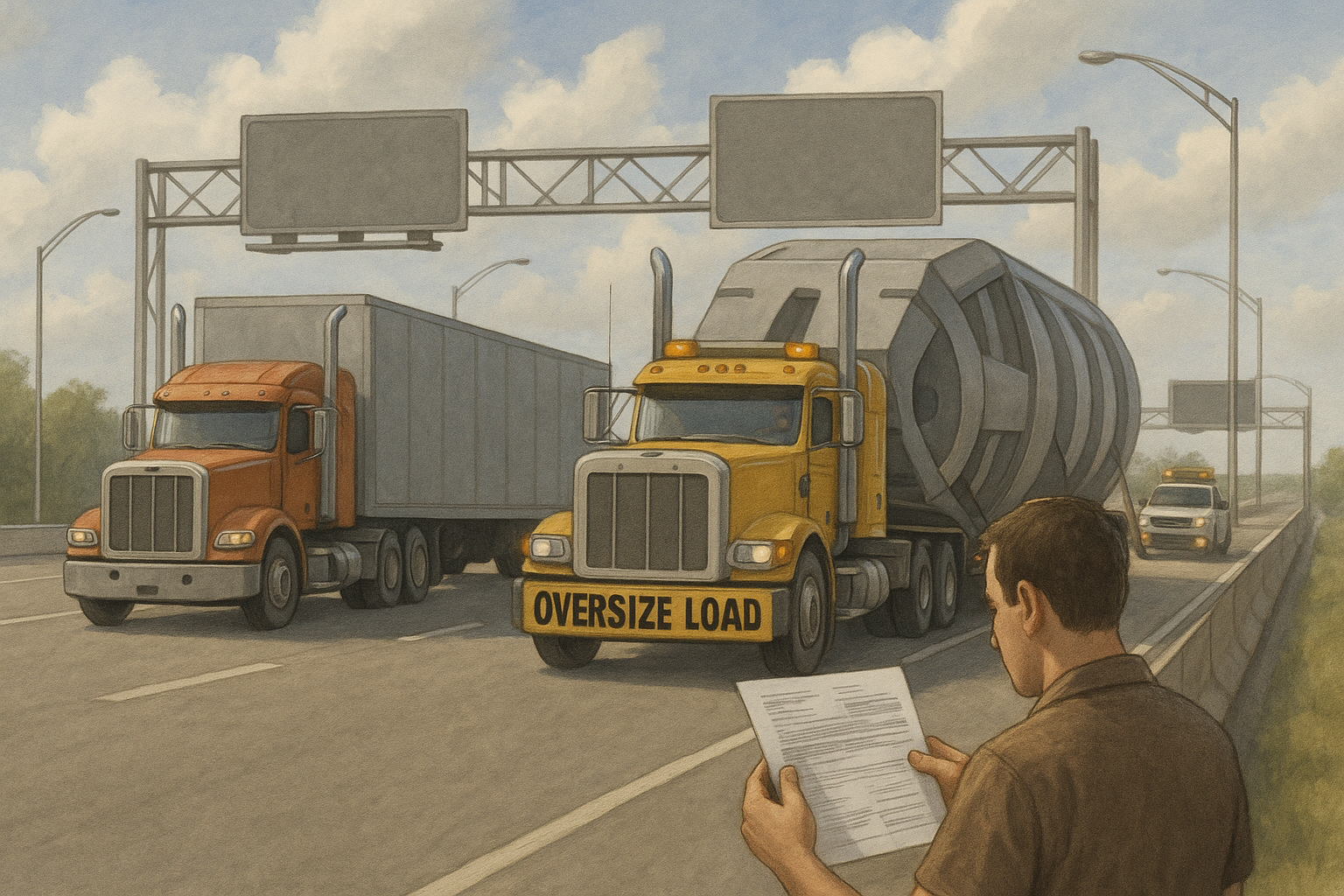
Professional permit services offer significant advantages for carriers navigating complex permitting requirements. These specialists maintain expertise in state-specific regulations, application procedures, and processing systems across all jurisdictions. Their knowledge of nuances that vary between states prevents common mistakes and ensures applications are complete and accurate.
How permit services work with state DOTs involves established relationships and streamlined communication channels. Professional services often have direct access to DOT personnel, allowing them to resolve issues quickly and expedite processing when possible. They understand each state’s preferences and requirements, submitting applications in formats that facilitate rapid approval.
Reliable Permit Solutions exemplifies professional DOT permit expertise with over 20 years of experience serving commercial carriers. The company specializes in coordinating oversize and overweight permits, trip permits, fuel permits, and superload authorizations across the United States and Canada. Their comprehensive services include permit acquisition, route consulting, compliance verification, and coordination of pilot car requirements.
Multi-state permit coordination represents a core strength of professional services. Managing applications across numerous jurisdictions, timing permit validity for sequential state travel, and ensuring all documentation is complete and compliant requires substantial expertise and attention to detail. Professional services eliminate the burden of coordinating these complex movements, allowing carriers to focus on their core operations.
Route consulting services help carriers identify the most direct and cost-effective paths for permitted movements. Experienced consultants understand state routing preferences, infrastructure limitations, and alternative paths that avoid restrictions. Their expertise prevents application rejections due to routing issues and ensures carriers use optimal paths for their specific loads.
Time and cost savings from using professional services often exceed the service fees. Avoiding permit delays, preventing application mistakes, ensuring compliance, and reducing the administrative burden on carrier staff creates value that justifies professional assistance. The compliance guarantee and risk reduction provided by experienced permit specialists protects carriers from violations and their associated costs.
Frequently Asked Questions About DOT Permits
How long does it take to get a DOT permit?
Processing times vary significantly by state and permit type. Simple trip or fuel permits in states with online systems may be issued instantly upon payment. Standard oversize permits typically process within one to three business days in most states, though some require five days or longer. Complex oversize loads, unusual routing, or superload movements can require weeks or even months for full approval due to engineering reviews and coordination with multiple agencies.
Can I get a DOT permit the same day?
Same-day permits are possible in many states for standard configurations using online systems or port of entry facilities. Trip permits and fuel permits commonly are available immediately. Some states offer instant oversize permits for routine loads on common routes. However, complex loads, unusual dimensions, or routes requiring engineering review typically cannot be approved same-day regardless of urgency. Planning ahead and submitting applications with adequate lead time prevents relying on same-day permit availability.
Do I need a DOT permit in every state?
Requirements depend on your specific situation. If you’re properly registered and apportioned under IRP and have current IFTA credentials, you may not need trip or fuel permits. However, if your vehicle exceeds legal size or weight limits, you need oversize or overweight permits from each state you travel through, regardless of your registration status. Each state maintains independent permitting authority, so multi-state movements typically require securing separate permits from each jurisdiction.
How much do DOT permits cost?
Costs vary widely based on permit type, load characteristics, and state fee structures. Trip permits might range from $15 to $50 per trip depending on the state. Fuel permits charge based on estimated fuel consumption and applicable tax rates. Oversize and overweight permits can range from under $100 for routine loads to several hundred dollars for extreme dimensions or weights. Annual permits cost more upfront but provide better value for carriers making frequent permitted movements. Superload permits involve substantial costs due to engineering reviews, route surveys, and coordination requirements.
What happens if I’m stopped without a DOT permit?
Operating without required permits results in citations and penalties. Officers may issue substantial fines that vary by state and severity of the violation. Vehicles may be immobilized until proper permits are obtained, creating costly delays. In serious cases, vehicles can be impounded. Additional charges may apply for falsifying permit information or intentionally avoiding permit requirements. Beyond immediate penalties, violations can affect a carrier’s safety rating and insurance costs. Ensuring all required permits are secured before travel prevents these serious consequences.
Conclusion
Successfully obtaining DOT permits requires understanding the various permit types, state-specific requirements, and application processes. Whether you need oversize and overweight permits for loads exceeding dimensional limits, trip permits for temporary registration, or fuel permits for temporary tax credentials, careful planning and attention to detail ensure smooth permit acquisition and compliant operations.
Start by accurately assessing your vehicle and load characteristics, determining which permits are required for each state on your route, and allowing adequate processing time for applications. Maintain complete documentation including vehicle registration, insurance certificates, and load specifications. Submit applications with accurate information and follow approved routing and permit conditions during travel.
For carriers facing complex multi-state movements or seeking to streamline their permitting processes, professional permit services like Reliable Permit Solutions provide expertise, efficiency, and peace of mind. With comprehensive knowledge of state requirements and established relationships with DOT agencies, professional services coordinate all aspects of permit acquisition, allowing carriers to focus on their transportation operations with confidence in their compliance.
For professional assistance with DOT permits, oversize and overweight permitting, trip permits, fuel permits, or route consulting services, contact Reliable Permit Solutions at (888) 949-4220. Their experienced team stands ready to help navigate permitting requirements and keep your trucks moving legally and efficiently across the United States and Canada.