

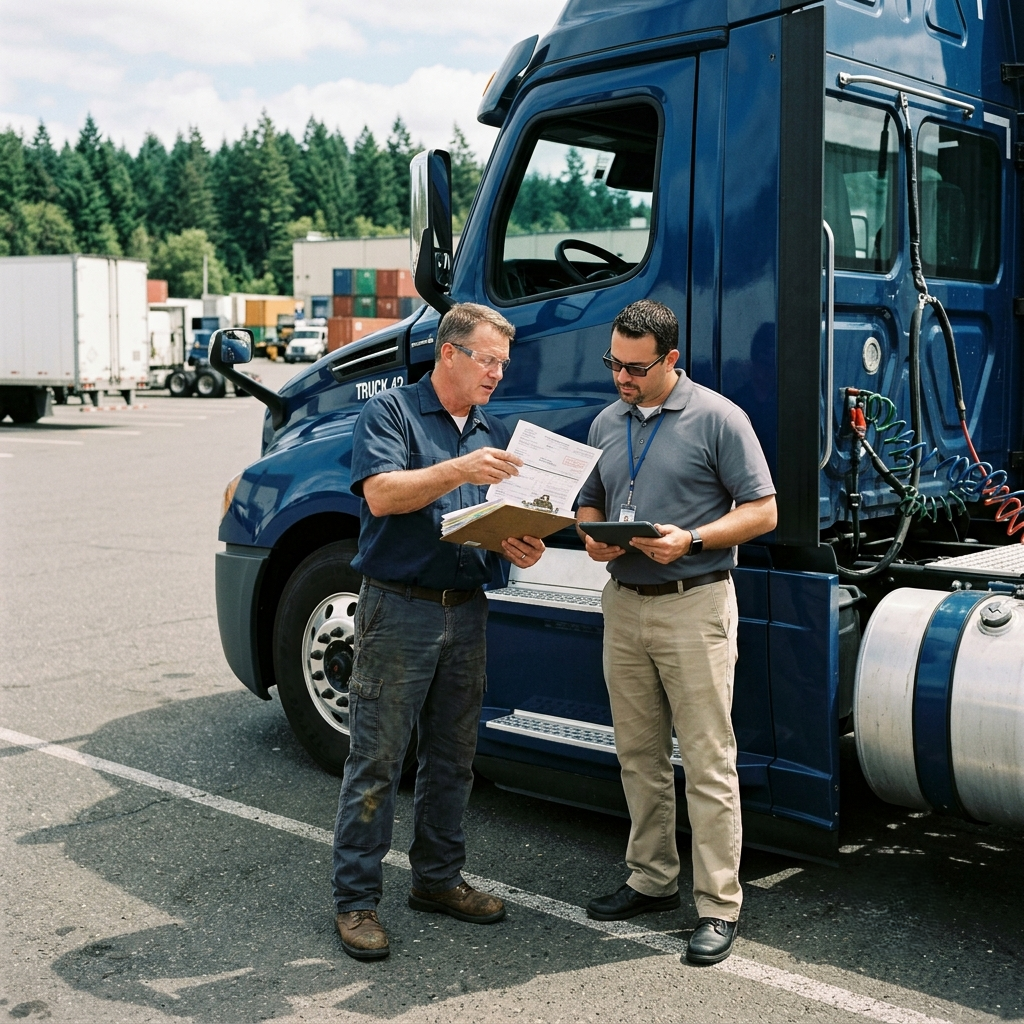
An Oregon trip permit is a temporary registration document that allows a commercial vehicle to operate legally on Oregon highways. It covers non-apportioned carriers who travel into the state without permanent IRP registration or an active Oregon Weight-Mile Tax account. Carriers with a gross vehicle weight over 26,000 pounds or three or more axles are required to secure one before entering the state.
What Is an Oregon Trip Permit, and Who Requires One?
An Oregon trip permit serves as proof that a carrier has paid the required temporary registration fees. It grants legal authority to operate on Oregon highways for a set period. Oregon stands apart from other states because it uses a weight-mile tax system, which charges commercial vehicles based on weight and miles traveled.
This system adds a layer of complexity for carriers unfamiliar with Oregon’s regulatory environment. Carriers use this permit to deliver or pick up loads within Oregon, pass through the state en route to another destination, or complete a time-limited transport operation. Securing the right permit in advance keeps operations running smoothly and avoids costly enforcement delays.
Non-Apportioned vs. Apportioned Vehicles: Understanding the Difference
Apportioned vehicles are registered under the International Registration Plan (IRP), a multi-state agreement that distributes registration fees based on miles traveled in each jurisdiction. Carriers with IRP plates can travel through all participating jurisdictions, including Oregon, under that registration. These carriers are generally exempt from the requirement to obtain a separate trip permit for registration purposes.
Non-apportioned vehicles operate outside that system. These are often owner-operators or small fleets registered only in their home state and hauling into Oregon on an occasional basis. Carriers in this category need an Oregon trip permit to operate legally within the state.
Who Holds Compliance Responsibility: Carrier vs. Driver vs. Lessor
The motor carrier is legally responsible for obtaining the permit before the vehicle enters Oregon. The driver must carry the permit in the cab and present it upon request at ODOT weigh stations. When vehicles are under lease, responsibility defaults to the carrier unless a written agreement assigns it to the lessor.
The permit must be secured before operation. Waiting until the vehicle is already in the state exposes the responsible party to fines, citations, and potential out-of-service orders. Carriers should confirm responsibility in writing with lessors before dispatch to protect all parties involved.
Oregon Weigh Station Requirements for Trip-Permitted Vehicles
ODOT’s Commerce and Compliance Division actively enforces commercial vehicle compliance at Oregon weigh stations. Officers look for the trip permit, registration card, and fuel permit in the vehicle’s cab. Trailers without existing registration must also carry their own permit.
Common violations include entering Oregon before the permit’s listed start date, using a single permit across multiple vehicles, and carrying an expired permit from a prior trip. Each vehicle must have its own permit issued separately. Keeping all documentation current and accessible in the cab is the most reliable way to move through weigh stations without delays.
Oregon Trip Permit Cost and Duration Breakdown
The Oregon DMV base fee for a heavy motor vehicle trip permit is $43 for 10 days. A heavy trailer trip permit costs $10 for the same 10-day window. Carriers using a third-party permit service can expect total costs of around $105 per vehicle, including processing fees.
For oversize or overweight loads, additional fees apply in addition to the base permit cost. Oregon charges around $80 per permit for most oversize or overweight permits, and many counties add an administrative fee of up to $80 per permit. Road use assessment fees also apply when gross weight exceeds legal limits and are calculated based on weight, axles, and mileage.
Do You Also Need an Oregon Fuel Permit?
Carriers without current IFTA credentials must obtain an Oregon fuel permit in addition to the Oregon trip permit. A Washington carrier making a single delivery into Portland must obtain Oregon IRP or IFTA registration before entering the state. Both permits must be in hand before the vehicle crosses the state line.
Reliable Permit Solutions handles both permit types simultaneously. This means carriers avoid piecing together two separate applications from different sources. Getting both permits processed together saves time and reduces the chance of compliance gaps.
Get Your Oregon Trip Permit Fast With Reliable Permit Solutions
Oregon’s weight-mile tax system and multi-permit requirements create real compliance complexity for small fleets and owner-operators. Missing a permit or securing the wrong type leads to fines, delays, and potential out-of-service orders at Oregon weigh stations. Working with an experienced permit service removes the guesswork and keeps operations moving.
Reliable Permit Solutions has experienced permit specialists who thoroughly understand Oregon’s requirements. The team can process an Oregon trip permit and fuel permit quickly, with same-day service available in most cases. Spanish-speaking agents are available, and carriers can call (888) 949-4220 or request a rate quote online today.
Frequently Asked Questions
What is an Oregon trip permit?
An Oregon trip permit is a temporary registration document that authorizes a non-apportioned commercial vehicle to operate legally on Oregon highways. It serves as a substitute for permanent IRP registration and is valid for up to 10 consecutive days. Carriers use it to cover short-term or one-time hauls into or through the state.
Who needs an Oregon trip permit?
Any commercial motor vehicle with a gross weight over 26,000 pounds or three or more axles that operates in Oregon without IRP registration or an active Oregon Weight-Mile Tax account needs a trip permit. The permit must be secured before the vehicle enters the state. Owner-operators and small fleets hauling into Oregon on an occasional basis are the most common applicants.
How much does an Oregon trip permit cost?
The Oregon DMV base fee is $43 for a heavy motor vehicle trip permit and $10 for a heavy trailer trip permit, both valid for 10 days. Through a third-party permit service, total costs, including processing fees, typically run around $105 per vehicle. Oversized and overweight loads carry additional state and county fees.
How long is an Oregon trip permit valid? Most Oregon trip permits are valid for 10 consecutive days from the carrier’s start date. No extensions are available, so carriers who need additional time must purchase a second permit. Planning the haul timeline carefully before purchasing helps avoid this situation.
Do you need a fuel permit in addition to the trip permit for Oregon?
Yes, carriers without current IFTA credentials must secure a fuel permit in addition to the trip permit. Both must be obtained before entering the state. Reliable Permit Solutions processes both permit types together to simplify the process.
Who is responsible for obtaining the Oregon trip permit?
The motor carrier is responsible for obtaining the permit before the vehicle enters Oregon. Drivers must carry it in the cab throughout the trip. When vehicles are leased, carriers should confirm responsibility in writing with the lessor before dispatch.
What do ODOT officers check at Oregon weigh stations?
Officers look for the trip permit, registration card, and fuel permit in the vehicle’s cab. Trailers without existing registration must also carry their own permit. Missing documentation can result in citations or an out-of-service order.
What is the difference between a trip permit and an IRP apportioned plate?
An IRP apportioned plate provides ongoing multi-state operating authority distributed across jurisdictions by mileage. An Oregon trip permit is a short-term authorization for carriers who operate in Oregon on an occasional basis. Carriers entering Oregon regularly will find that IRP registration is a more efficient long-term solution.
Can carriers get an Oregon trip permit the same day they need it?
Yes. Permit services like Reliable Permit Solutions process Oregon trip permits on the same day in most cases. The permit must be secured before the vehicle enters Oregon. Waiting until the vehicle is already on the road is a compliance risk.
What happens when an Oregon trip permit expires mid-haul?
A new permit is required to cover the remaining time. Operating on an expired permit is treated the same as operating without one and can result in fines and enforcement action at weigh stations. Carriers should build extra time into their planning to avoid permit gaps.