

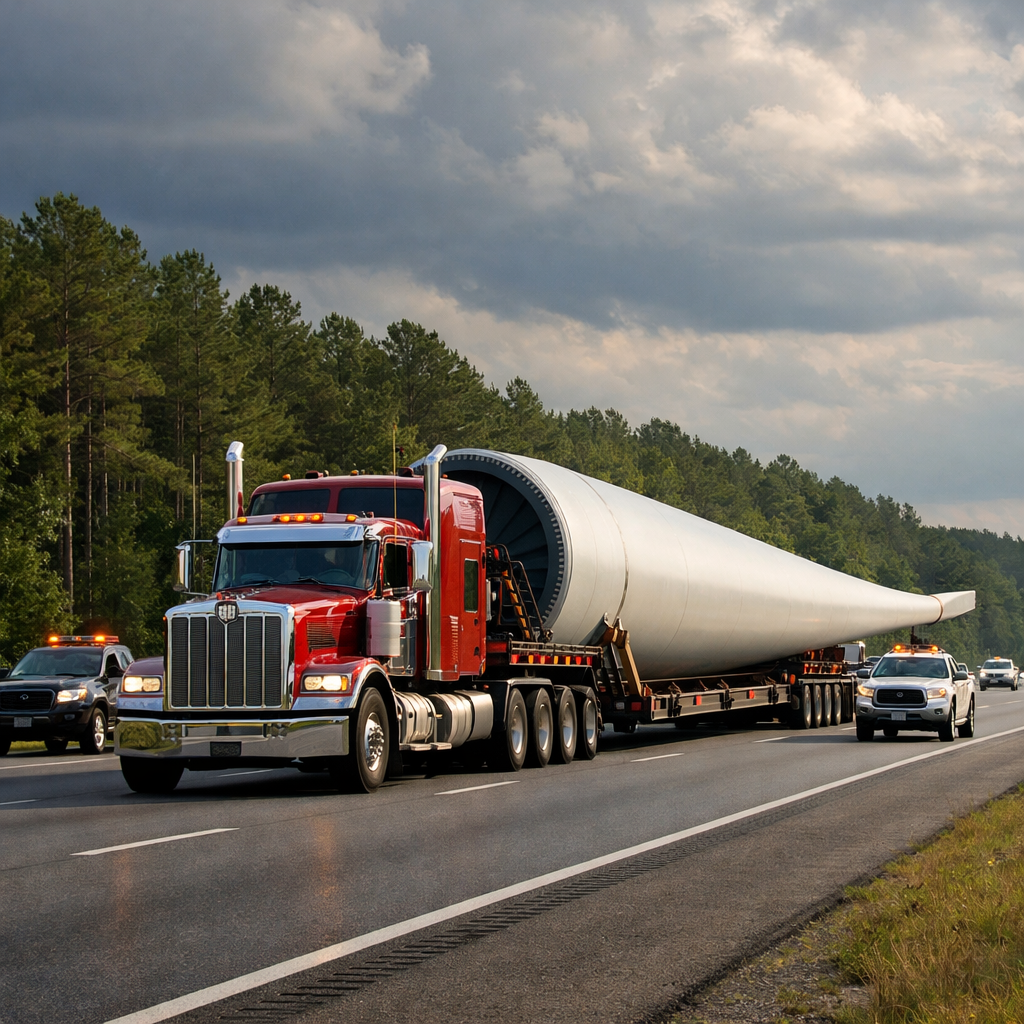
North Carolina oversize permits are required for any load that exceeds the state’s standard legal dimensions on height, width, length, or weight. Wind turbine blades, tower sections, nacelles, and heavy industrial cargo almost always fall into this category. Carriers and project cargo operators need to understand what NCDOT requires before any load moves.
North Carolina sits at the center of the Southeast’s expanding wind energy supply chain. Major wind farm developments across the Piedmont and coastal plains bring high volumes of dimensionally challenging loads through the state. That consistent demand means NCDOT’s permitting process is detailed and well-established.
Operators unfamiliar with state-specific requirements face application rejections and added costs. Working with an experienced permit specialist keeps applications accurate and on time. Reliable Permit Solutions has the expertise to guide every step of the process.
Why North Carolina Is a Key Corridor for Large-Scale Industrial Hauls
North Carolina handles a significant volume of heavy industrial transport beyond wind energy. Power generation equipment, refinery components, and manufacturing machinery move through its port facilities and interstate corridors into the broader Southeast. That variety of cargo makes the state one of the most active oversize freight corridors in the region.
Wind turbine blades can exceed 200 feet in length, tower sections can push 20 feet in diameter, and nacelles can weigh several hundred thousand pounds. Each of these loads triggers specific NCDOT documentation and review requirements. Permit specialists familiar with the state’s process help carriers avoid the delays caused by incomplete submissions.
NCDOT Oversize Permit Requirements for Wind Turbine Components
A load requires a permit when it exceeds 13’6″ in height, 8’6″ in width, 48 feet in trailer length, or 80,000 lbs in gross weight. Wind turbine components routinely exceed several of these thresholds at once. That combination triggers additional review layers within NCDOT’s approval process.
For wind turbine blades, nacelles, and tower sections, NCDOT requires detailed load configuration documentation, including axle spacing, overall length, and weight distribution. Route pre-approval is also required, often involving surveys of bridges, underpasses, and road surfaces along the intended route. Lead times for complex loads can stretch to several weeks, so early planning is essential.
Applications with missing or inaccurate information are rejected and must be resubmitted. Working with a permit specialist who knows NCDOT’s submission standards reduces that risk. Reliable Permit Solutions keeps applications complete and correct from the start.
Blue Ridge Parkway and Mountain Route Restrictions for Oversize Loads
The Blue Ridge Parkway is federally managed and closed to commercial oversize loads. Carriers moving industrial cargo to western North Carolina destinations must use alternative state or US highway routes. Each alternative requires its own route analysis and NCDOT approval.
Many of the mountain region’s available highway options involve steep grades, tight curves, and low clearances. These conditions may be incompatible with certain load configurations, particularly wind turbine blades and other long or wide loads. Route planning for western NC destinations must begin well ahead of the scheduled move.
A route that cleared for a previous load may require new approval when dimensions change even slightly. Reliable Permit Solutions’ route consultants assess each load individually to find the most direct, cost-effective route. That accuracy prevents rejections and keeps trucks moving on schedule.
Utility Coordination Requirements for Overhead Infrastructure in NC
When a load’s height requires temporarily displacing power lines or communication cables, carriers must coordinate with the relevant utility companies. That coordination adds time to the permitting process. NCDOT will hold permit issuance until utility coordination is confirmed.
The process involves identifying all overhead conflicts along the approved route through a height survey, contacting utilities to schedule lift crews and equipment, and setting outage windows that may restrict travel to specific times. For wind energy transport tied to construction schedules, late permit applications that trigger last-minute utility requests can create costly delays. Starting utility coordination early keeps the project timeline intact.
When North Carolina Oversize Loads Qualify as Superloads
A load qualifies as a superload in North Carolina when it exceeds 16 feet in width, 16 feet in height, approximately 150 feet in overall length, or certain gross weight thresholds. At that point, a standard North Carolina oversize permits application is no longer sufficient. A superload designation triggers a separate and more detailed NCDOT approval process.
The Superload review includes engineering analysis, a DOT bridge review, and additional state agency sign-offs. Shipper’s letters, specialized drawings or sketches, and route survey documentation are all part of the package. Every state handles superloads differently, and NC’s requirements are among the most detailed in the Southeast.
Reliable Permit Solutions has dedicated specialists with over 20 years of experience managing the full superload documentation package. Services include engineering surveys, state and utility approvals, bridge analysis, and required drawings. Carriers handle the haul while the team handles the paperwork.
Pilot Car Requirements for Wide and Long Industrial Loads in NC
Pilot car escort requirements in North Carolina are set by load width, length, and route type. Loads over 12 feet wide generally require at least one pilot car. Loads over 14 feet wide typically require both a front and a rear escort.
Loads over 100 feet in overall length require an escort regardless of width. Flagging and lighting requirements vary based on whether travel occurs on interstates, US highways, or secondary roads. Wind turbine blades, which are both long and wide, typically require full front- and rear-escort configurations.
Reliable Permit Solutions maintains an extensive database of certified and experienced pilot car companies throughout the Carolinas. The network has heavy-haul experience and offers competitive rates. Carriers get qualified escorts arranged in advance, so there is no scrambling close to the move date.
Coordinate Your Complex NCDOT Permit With a Specialist
North Carolina oversize permits for wind turbine and industrial cargo involve multiple coordinated approvals: route surveys, utility coordination, bridge analysis, superload documentation, and pilot car scheduling. Managing all of those pieces at once requires specific knowledge of NCDOT’s process. A missed step or inaccurate application can push a project schedule back by weeks.
Reliable Permit Solutions handles the full permitting process for oversize and superload moves throughout North Carolina and all 48 contiguous states. Whether the load is a single wind turbine blade or a full project cargo sequence, the team has the process and relationships to get permits issued on time. Spanish-speaking agents are available.
Call (888) 949-4220 or request a rate quote today. The team is ready to start planning the move. Every detail gets handled so the truck can stay on schedule.
Frequently Asked Questions
What are the oversize load limits in North Carolina?
A load is considered oversize in North Carolina when it exceeds 13’6″ in height, 8’6″ in width, 48 feet in trailer length, or 80,000 lbs in gross weight. Any load that goes past one of these limits requires an NCDOT oversize permit before travel. These are state-legal limits that apply to all commercial carriers operating in NC.
How long does it take to get an NCDOT permit for wind turbine components?
Standard oversize permits in NC can be processed within a few days for straightforward loads. Wind turbine components that require utility coordination, bridge analysis, or superload designation can take several weeks. Starting the permitting process well ahead of the move date is the best way to stay on schedule.
Are commercial oversize loads allowed on the Blue Ridge Parkway in North Carolina?
The Blue Ridge Parkway is a federally managed roadway that prohibits commercial oversize loads entirely. Carriers moving oversized industrial loads to western North Carolina destinations must use alternative state or US highway routes. Each alternative requires a separate route analysis and NCDOT approval.
What triggers a superload designation in North Carolina?
A North Carolina superload designation is triggered when a load exceeds 16 feet in width, 16 feet in height, approximately 150 feet in overall length, or certain gross weight thresholds. Superloads require engineering review, DOT bridge analysis, and additional state approvals beyond a standard NCDOT oversize permit. Working with a specialist ensures all required documentation is submitted correctly.
Do wind turbine loads in North Carolina require pilot cars?
Wind turbine blades and large industrial components typically require both front- and rear-pilot-car escorts due to their extreme length and width. Pilot car requirements in NC are based on load dimensions and the type of roadway being traveled. Escort operators must meet state certification requirements.
What is utility coordination, and why does it affect the NC permit timeline?
Utility coordination is the process of scheduling the temporary displacement of power lines or overhead infrastructure that would block a load’s path. NCDOT will hold permit issuance until that coordination is confirmed, which can add weeks to the timeline when initiated late. Early planning keeps the project schedule intact.
Can the same route be used for multiple wind turbine deliveries in North Carolina?
Each permitted route in NC is approved based on the specific load configuration submitted with that application. A route that was cleared for a previous load may require new approval when dimensions change. This is especially important in mountain corridors where clearance margins are tight.
Does Reliable Permit Solutions handle superload permits in North Carolina?
Reliable Permit Solutions has specialists with over 20 years of experience handling the full superload documentation package for North Carolina. Services include engineering surveys, state and utility approvals, bridge analysis, shipper’s letters, and required drawings. Call (888) 949-4220 to begin planning.
Are there travel time restrictions for oversize loads in North Carolina?
NCDOT oversize permits typically restrict travel to daytime hours on weekdays, with no movement allowed on holidays or during periods of heavy traffic. Loads requiring utility coordination may face additional time restrictions based on when utility crews are available. Permit specialists factor these windows into the move plan from the start.
What documents are needed for an NCDOT oversize permit for wind turbine transport?
Carriers generally need detailed load configuration information, including dimensions, axle weights and spacing, and overall length, along with a proposed route and carrier documentation. Superloads require additional materials, including engineering drawings, bridge analysis results, shipper’s letters, and utility coordination confirmation. Whether the load is a standard oversize or a full superload, Reliable Permit Solutions prepares the complete package.