
Superload Permits Explained: What Makes a Load 'Super' and Why the Permit Takes Weeks
A superload is a load too big or too heavy for a state's routine oversize permit. Each state draws that line itself: over 200,000 pounds in Washington, over 132,000 in North Carolina. Past it, an engineer reviews the move, and you plan on weeks, not hours.
Here is where seven states put the line, what they want in the file before anyone looks at a bridge, how long each one says to allow, what it costs, and the ways a superload stalls after the permit is approved. Every number below was checked against the state's own page or rule on November 13, 2026.
In this article
1What makes a load "super"
There is no federal definition of a superload. Each state has a routine oversize and overweight permit, the kind a permit office can issue from a table, and each state has a point where the table runs out. Above that point somebody has to study the route, and usually the bridges, before the state says yes. That is all "superload" means. Texas calls its version "superheavy." Pennsylvania writes it as two words.
You will also hear "over-dimensional." It isn't a third category. It means over legal size, and it covers everything from a 10-foot-wide excavator to a 20-foot-wide vessel. Virginia's superload rule calls the whole rig an "overdimensional configuration." Every superload is over-dimensional or overweight. Most over-dimensional loads are nowhere near a superload. Our older post on oversize loads versus superloads covers the basic split.
2Where seven states draw the line
Here is what six states publish. Exceed any one number in a row and you are in that state's superload process. A dash means the state's definition doesn't use that measurement.
| State | Width | Height | Length | Gross weight |
|---|---|---|---|---|
| Washington | Over 16' | Over 16' | Over 125' of load length | Over 200,000 lb |
| Oregon | Over 16' on the interstate and multilane highways. Over 14' on a two-lane, for non-divisible loads other than mobile and modular units. | Over 17' | Over 150' overall | — |
| Pennsylvania | Over 16' | — | Over 160' | Over 201,000 lb |
| North Carolina | 17' or greater | — | — | Greater than 132,000 lb |
| Mississippi | Over 17' | Over 15'7" | Over 120' | 189,999 lb or greater |
| Texas (superheavy) | — | — | — | Over 254,300 lb, or 200,001 to 254,300 lb with less than 95 feet of axle spacing, or over the maximum permit weight on any axle or axle group |
The seventh is Virginia, which issues every superload permit case by case and adds a second tier on top: a move over 18 feet wide, 16 feet high, 200 feet long or 250,000 pounds "may be required to submit a detailed travel plan."
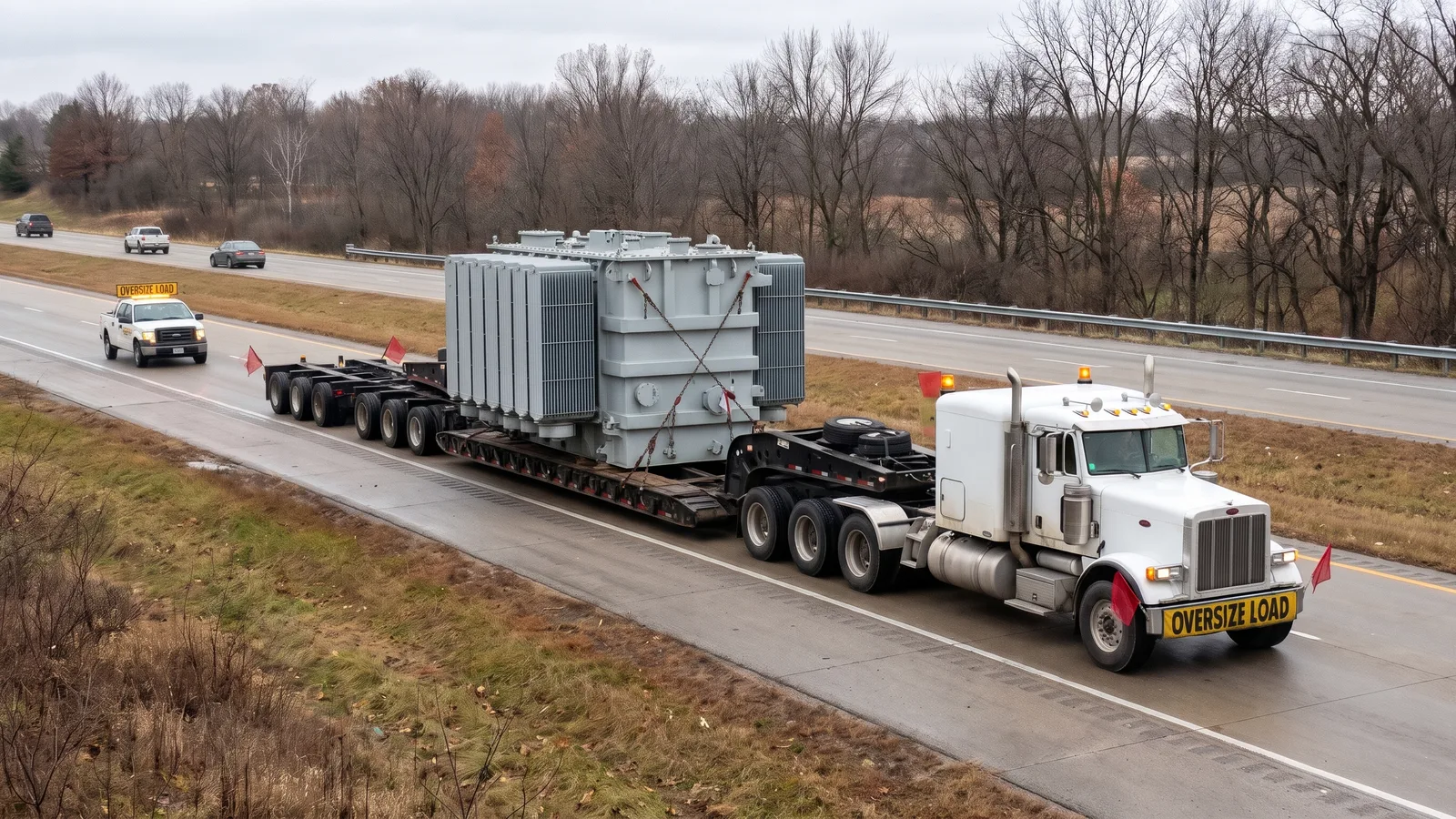
Now run one load through the table. Take a transformer on a multi-axle trailer: 180,000 pounds gross, 15 feet wide, 14 feet high, 110 feet long. In Washington, Pennsylvania and Mississippi it is under every line, so it moves on an ordinary oversize and overweight permit. In North Carolina it is 48,000 pounds past the line and it is a superload. Same load, same trailer, and the paperwork changes at the border.
Oregon's width line also moves with the road: over 16 feet on the interstate, over 14 on a two-lane. The route is part of the answer, which is why our route consulting looks at the road class on every leg.
3First, prove it can't come apart
Before the size matters, the state wants to know why the load is one piece. Federal rules call a load nondivisible if splitting it would make it unable to do the job it was built for, would destroy its value, or would "require more than 8 workhours to dismantle using appropriate equipment." The rule also says the applicant "has the burden of proof" on those workhours. That is you, not the state.
States take that seriously at superload size:
- Washington wants "a sketch or photograph of the item with an explanation of why it cannot be shipped in parts." If the load could go by barge or rail for all or part of the trip, the shipper has to review those options and show the data if it says they aren't reasonable.
- Virginia's travel plan asks for an "explanation of why the load cannot be reduced" and a second one for why it "cannot be transported by air, rail, or water."
- Mississippi asks for the "steps taken to lessen the load."
- North Carolina opens its superload sheet by saying it is the permittee's job to reduce the load "to the least possible dimension and weight prior to application."
So take off whatever unbolts in a shift. If what's left still crosses the line, you have a superload and a clean answer to the first question the state will ask.
4What goes in the file
A routine permit needs dimensions, weights and a route. A superload needs a file. The pieces states ask for most:
- An axle drawing. Washington wants a sketch of the loaded vehicle "showing axle loadings, axle spacings, tire sizes, tires per axle, width and height." Mississippi wants the number, spacing and weight of each axle and the number and size of the tires. The bridge review is run on this drawing.
- A route survey. Mississippi's has to list the route surveyed, the obstructions on it (signs, bridge rails, overhead signals, power lines, railroad crossings) and the pull-off areas big enough for the whole rig to clear the road. Texas requires a route inspection when a load is over 20 feet wide, 18'11" high or 125 feet long, and a representative of your company "must physically inspect the proposed route" and sign for it.
- A traffic control plan. Oregon wants pullout locations, side-road control, overnight parking and how the truck, the pilots and the flaggers will talk to each other. Mississippi wants every point where the load crosses into the oncoming lane: how far over, for what distance, for how long.
- Letters from other people. Mississippi requires written permission from utility and railroad companies when a load is over 16 feet high. Virginia's travel plan requires written authorization from local law enforcement agreeing to escort the move, with a name, phone number and email, and the permit staff call that person before the permit is issued.
- The local roads. If the route leaves the state system, Washington says the applicant "must show that permits from each of those jurisdictions will be issued."
Our oversize permit checklist has the basic numbers we ask for on every load. A superload starts there and adds the items above.
5Why the permit takes weeks
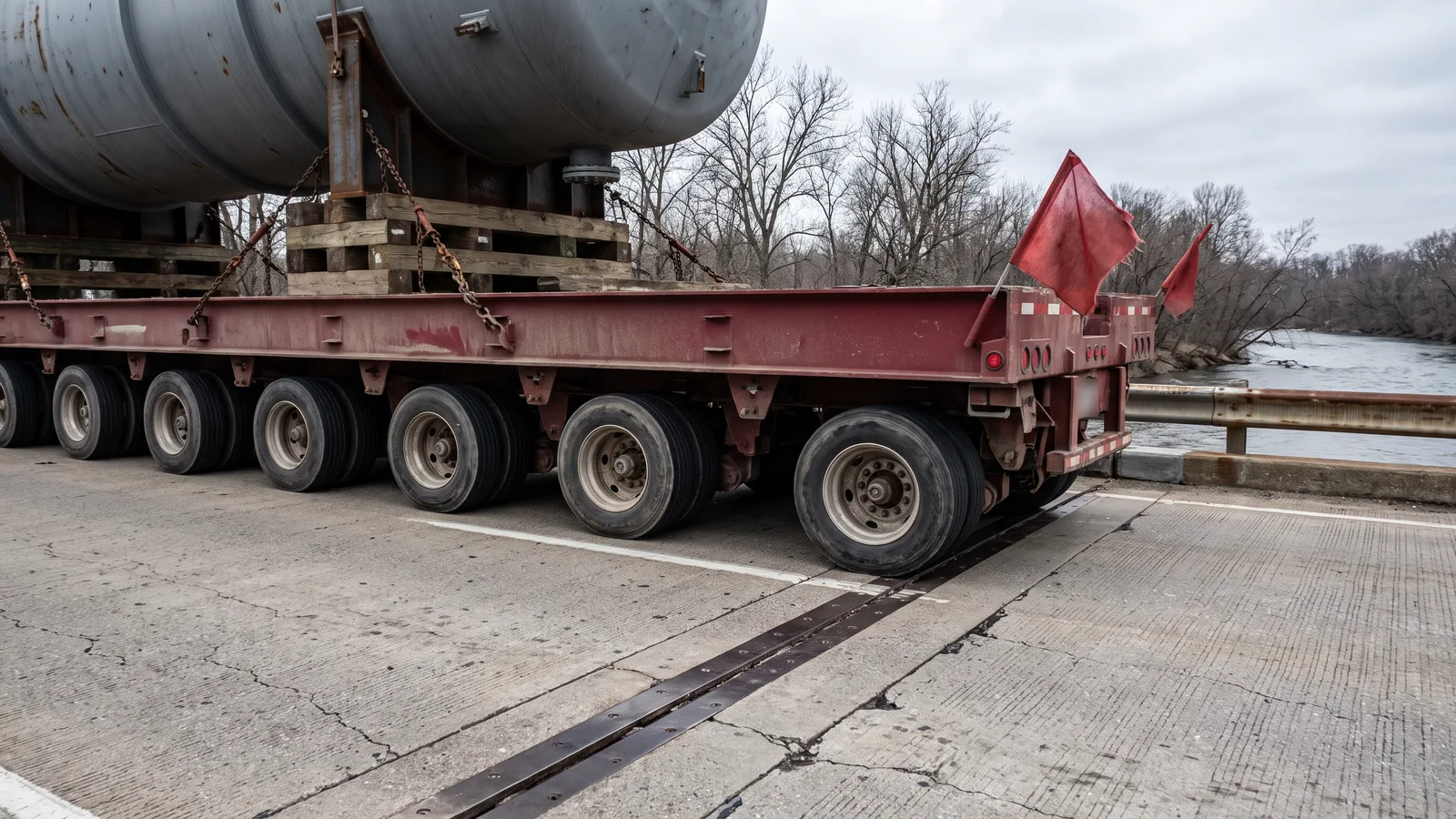
A routine permit is a lookup. A superload is a study: someone checks the axle drawing against every structure on the route, and the answer can be "not on that bridge." Here is what each state says to allow.
| State | What the state says |
|---|---|
| Washington | Over 200,000 lb: application received at least 30 days before the move. Over 16' wide or 16' high: at least 7 calendar days. |
| Texas | Apply "three to four weeks before the permit is needed unless an approved route is already on file." |
| Virginia | Submit "at least 10 working days prior to the anticipated date of movement." |
| North Carolina | At least 10 business days before the move, "to allow for internal and bridge engineering reviews." |
| Oregon | "A permit could take up to 10 days to issue," and special circumstances can take longer. |
Those are minimums for one state. A four-state superload is four reviews, and the slowest one sets the ship date. Our post on how long an oversize permit really takes has the timelines for routine loads; for a superload, start the clock the day the load is sold, not the day it is ready.
6Moving day: escorts, officers and daylight
The permit for a superload reads more like a schedule than a permission slip. Some of what the states put in it:
- North Carolina allows movement sunrise to sunset unless the permit says otherwise, and says continuous travel "is not authorized." Loads over 16 feet wide get three escorts, one of them the State Highway Patrol. Loads of 150,000 pounds or more get a front escort. Permitted loads from the same company or the same origin stay 2 or more miles apart.
- Oregon requires Oregon-certified flaggers working with the carrier's pilot cars, says "pilot vehicles may not stop traffic," and wants the places where the load stops to let traffic clear to come up within a maximum of 20 minutes.
- Virginia wants the plan to show where the load will pull over, and says traffic "shall not be detained for more than 10 minutes if at all possible."
- Washington negotiates the escort requirements and hours of movement into the permit itself once the structures check out.
Escort counts at superload size are their own subject. Our post on pilot car requirements by state has the triggers, including when a private escort becomes a police escort, and our pilot cars page is where to start if you need them arranged.
7Five ways a superload stalls
Getting approved is not the same as getting moved. Five ways it goes wrong, each one written into a state's own rules:
- The approval gets old. North Carolina holds an approved superload application for 90 days, and "bridge engineering studies expire after 90 days and the application is considered void." In Texas, TxDOT district approvals stay valid for 30 days from the movement date on the application. If the factory slips two months, the paperwork may have to start over.
- The truck changes. The review was run on the axle weights and spacings in the file. Virginia says its superload permits "are vehicle specific and cannot be transferred between vehicles." Show up on a different trailer and you are no longer the load the state approved.
- The last mile isn't permitted. The state approves state highways. The county road to the substation and the city street to the plant belong to someone else, and Washington won't finish its part until you show those permits will be issued.
- A letter is missing. One utility or one railroad that hasn't signed off on a load over 16 feet high holds a Mississippi application, however complete the rest of the file is.
- Nobody ordered the trip back. North Carolina says a return trip "must be submitted by separate application." An empty multi-axle trailer can still be over legal size, and it needs its own permit home.
A load that moves outside what its permit says is treated like a load without one. Our post on seven ways an oversize permit gets voided covers what that costs.
8How we work a superload
We start with the numbers: gross weight, every axle weight and spacing, width, height, length and overhang, origin and destination. From those we can tell you which states on the route will treat the load as a superload and which won't, what each one wants in the file, and how far ahead each one says to apply. Then we order each state on the route and watch the dates, so one approval doesn't expire while you wait on another.
Our superload permits page is the place to start, and oversize and overweight permitting covers the loads that fall under the line. One timing note: superloads sit out the same holidays as every other permitted load. Thanksgiving is November 26, so check the closure list and our Thanksgiving restrictions post before you promise a delivery date in the last week of November.
If you ever need a permit, click to call.
A specialist picks up. Oversize, overweight, superload, trip and fuel permits in every U.S. state and Canadian province.
Call (888) 949-4220Questions drivers ask us
What is considered a superload?
A load past the limits of a state's routine oversize or overweight permit. The line is different in every state: over 200,000 pounds or 16 feet wide in Washington, over 201,000 pounds or 160 feet long in Pennsylvania, and greater than 132,000 pounds or 17 feet wide in North Carolina.
Is there a federal definition of a superload?
No. Each state sets its own thresholds and its own process. Federal rules do define a nondivisible load, which is the test a load has to pass before any state will permit it over legal weight.
How long does a superload permit take?
Weeks, not hours. Washington wants the application at least 30 days ahead for loads over 200,000 pounds, Texas says three to four weeks for a superheavy permit, and Virginia and North Carolina ask for at least 10 working days.
How much does a superload permit cost?
State fees vary. Texas charges a $60 permit fee plus a $375 highway maintenance fee and a vehicle supervision fee on a superheavy permit. North Carolina charges a $100 application fee, $12 per over-legal dimension and $3 per 1,000 pounds over 132,000. Escorts, surveys and engineering usually cost more than the permit.
What is a nondivisible load?
Under 23 CFR 658.5, a load that can't be split without making it unable to do its job, destroying its value, or taking more than 8 workhours to dismantle with appropriate equipment. The applicant carries the burden of proof.
Can a superload travel at night?
Only if the permit says so. North Carolina limits superloads to sunrise to sunset unless the permit states otherwise and does not authorize continuous travel. Washington sets the hours of movement on each permit.
Sources
Rules checked November 13, 2026. Penalties change, and the permit in your cab plus the issuing state's current rule are always the final word.
- WSDOT, Superloads (commercial vehicle permits)
- Oregon DOT Commerce and Compliance Division, Oregon Superloads
- TxDMV, Superheavy Single-Trip Permits
- TxDMV, Route Inspections for Oversize/Overweight Permits
- 24VAC20-82-60, Superload single trip permits (Virginia Administrative Code)
- 67 Pa. Code section 179.1, Definitions: super load (Pennsylvania Code & Bulletin)
- NCDOT, Superload Permits, Publication SL-6 (Rev. 1/20)
- Mississippi DOT, Super Load Guidelines
- 23 CFR 658.5, Definitions: nondivisible load or vehicle (Cornell Legal Information Institute)